Keeping your baby's feeding equipment clean is obviously a fundamental part of day-to-day care. You'll be washing your milk bottles after every feed, getting them ready for the next feed, etc. One of the most commonly asked questions is, of course, 'when do you stop sterilising the bottles?' Particularly as your baby gets a bit older and starts on solids.
It might appear as if sterilisation is only something you need to do when you've got a newborn (as their immune systems are still developing). The actual UK health advice is that you should continue to sterilise your bottles and any other feeding equipment for a lot longer than the average parent would imagine. Knowing when you can stop will of course go a long way to helping you keep things clean without having to make any unnecessary changes to your baby's feeding.
This guide looks at the UK recommendations, the vital importance of sterilisation, which of the feeding items require particular attention, and the various ways in which you can sterilise your bottles. It also looks at the practical kit that can really make cleaning and sterilising a lot easier (Momcozy's bottle sterilising and washing range).
When do you cease sterilising the bottles?
As per the UK NHS, you should continue to sterilise all your baby's feeding equipment (bottles and teats) until they are at least 12 months old, regardless of whether you're feeding them expressed breast milk or infant formula.
In the first year, the baby's immune system is still being developed, so it is absolutely essential that you clean and sterilise properly. Their immune systems are still learning how to fight infection and germs, so milk residue in the bottle or around the teat, if the equipment isn't cleaned properly, is going to be a perfect breeding ground for bacteria.
As your baby grows, you'll probably find feeding becomes a whole lot easier to manage (they'll be on solids, drinking from a cup, using a different feeding system, etc.). That in no way means you can stop sterilising bottles, though. The NHS guidance is the same until your baby is 1 year old.
Once your baby is 12 months old, you can generally stop the routine sterilisation of the feeding equipment (of course provided that everything is washed properly after each use and allowed to dry properly).
Why sterilising is important
Sterilising helps to reduce the risk of any harmful germs getting into your baby's gut via the feeding equipment. A bottle can still have some microbes on it even after it's been washed in hot, soapy water.
Milk is a brilliant growth medium for bacteria, particularly if there's any residue in the bottles, teats and lids. The bits in the bits are notoriously difficult to get clean properly because of the small size of the apertures and the shape of the bits.
Babies have under-developed immune systems, so infections from contaminated feeding equipment are likely to be more serious in them than in older children and adults. That's why the NHS recommends sterilising feeding equipment throughout the first 12 months.
Here are some reasons why sterilising should remain part of your baby's feeding routine:
Helps to prevent infection: sterilising reduces the number of harmful microbes that may be left over after washing.
Protects your baby's developing immune system: they're still building up their natural defences against infection in the first year of life.
Reduces the risk of stomach bugs: contaminated feeding equipment can expose the baby to the germs that cause diarrhoea and vomiting.
Keeps the feeding equipment hygienic: regular sterilising ensures the bottles, teats and all the other feeding equipment are ready for the next feed.
What happens if you don't sterilise the bottles?
If you stop sterilising the bottles prior to your baby being 12 months old, you may in fact be increasing their risk of exposure to harmful bacteria. Washing will get rid of the milk and any dirt; sterilisation gives you an extra layer of protection against microbes.
A small amount of milk can remain around the teat, in the bottle neck or underneath the bottle lid. If that area isn't cleaned properly, then bacteria can grow, especially if the equipment is left damp or stored incorrectly.
A baby who drinks from contaminated equipment may develop symptoms such as:
- Diarrhoea or loose stools
- Vomiting
- Stomach discomfort
- Fever
- Signs of dehydration if vomiting or diarrhoea becomes severe
These symptoms can have a number of different aetiological bases, so they don't necessarily point to an unsterilised bottle. If your baby is unwell, then you should contact your GP or NHS 111 for advice. You should seek urgent medical advice if your baby is showing the signs of a serious illness or dehydration.

What should you sterilise?
In the first year of your baby's life, you'll need to sterilise all the equipment that comes into contact with the milk (i.e., the main bottle and all its bits and pieces), as it can very easily pick up milk residue during feeding.
The following items should be included in your cleaning and sterilising routine:
Baby bottles: sterilise the bottle (the bottle itself, including the inside and the rim where the teat joins).
Bottle teats: these need to be cleaned carefully as milk can collect in and around the small hole.
Bottle caps and lids: clean and sterilise to remove any milk residue and germs.
Screw rings: the ones that screw into the base to hold the teats in) can accumulate residue around the edges.
Breast pump parts: clean and sterilise any parts that come into contact with breast milk in accordance with the manufacturer's instructions.
Dummies: clean and sterilise as per the manufacturer's instructions, this is particularly important with younger babies.
Always ensure that the item is appropriate for the method of sterilisation you're using. Some plastic components may not be suitable for boiling or high-temperature steam, so always check the product instructions prior to placing them into the steriliser.
How to sterilise baby feeding equipment
Before you sterilise, you need to properly wash your baby's feeding equipment, as this will remove the milk, the grease, and the dirt, which would otherwise prevent the sterilisation from working.
The NHS advises that bottles, teats and any other feeding equipment should be washed in very hot soapy water as soon as possible after each feed. A clean bottle brush should be used to clean the inside of the bottles and a smaller teat brush for the teats. Everything should then be thoroughly rinsed under clean, cold running water prior to sterilisation.
Cold water sterilising solution
Cold water sterilising is an alternative for the parent who doesn't want to use heat or electricity. You mix in a specially formulated sterilising solution/tablet with the water to sterilise your baby's feeding equipment.
Here is how to use this method:
1. Clean all bottles, teats, lids and any other feeding equipment in hot, soapy water.
2. Rinse each item well under clean, cold running water.
3. Prepare the sterilising solution in a clean container as per the manufacturer's instructions.
4. Place the feeding equipment into the solution, making sure everything is fully submerged.
5. Blow out any air bubbles from the bottles and teats.
6. Use the container's floating cover or plunger to keep all that's underneath the water.
7. Leave the equipment in the solution for a minimum of 30 minutes.
8. Change the solution every 24 hours or as per the manufacturer's recommendations.
One benefit of cold water sterilisation is that you don't need a plug socket or a heater at all. You can also keep the equipment in the solution until you need it.
Remember to adhere to the recommended soak time and dilution rates. Using too little or too much solution will have an effect on the sterilisation.

Sterilising by boiling
Boiling is another method of sterilising your bottles (you don't need to buy a separate steriliser for this). It works by using high heat to kill the microbes. It will work on any suitable feeding equipment.
Follow these steps:
1. Wash the bottles, teats, lids and all other feeding equipment in hot, soapy water.
2. Rinse everything well in clean water.
3. Put the items into a large saucepan.
4. Fill the pan with enough water to cover all the equipment.
5. Bring the water to a boil and keep the items in it for a minimum of 10 minutes.
6. Set a timer so you don't leave the pan unattended.
7. Switch off the heat and carefully remove the items when it's safe to do so.
Always ensure your bottles and accessories are suitable for boiling before using this method, as repeated exposure to high temperatures can damage some of the teats and some of the plastic bits. Keep a close eye on them for any cracks, tears, or changes in shape, and replace any items that are damaged.
Microwave sterilising
Microwave steam sterilising uses heat and steam to sterilise your baby's feeding equipment. It's a very convenient option for parents who already have a microwave in the house and want a fairly quick method.
The vast majority of microwave sterilisers have a designated area for the bottles, teats, etc. You put the water in the steriliser and then microwave it to produce the steam.
Here is how to use a microwave steriliser:
1. Wash and rinse all feeding equipment before putting it in.
2. Add the recommended amount of water to the steriliser.
3. Fit the bottles, teats and lids in accordance with the manufacturer's instructions.
4. Make sure the items are in the correct position and aren't blocking the steam vents.
5. Screw the lid on very tightly.
6. Place the container in the microwave and select the recommended heating time.
7. Allow the steriliser to cool before opening it.
8. Carefully remove the items using clean hands or sterile tongs.
Never put the feeding equipment straight into the microwave without using a suitable sterilising container. Check the microwave power setting and the steriliser instructions as the heating times can vary. Steam will cause burns, so don't open the container straight after the cycle. Allow it to cool first and be very careful when handling everything.
Electric steriliser
An electric steam steriliser is another option (particularly useful for parents who are sterilising a number of bottles throughout the day). It works by using hot water to produce steam, which will kill the nasty germs on properly cleaned feeding equipment.
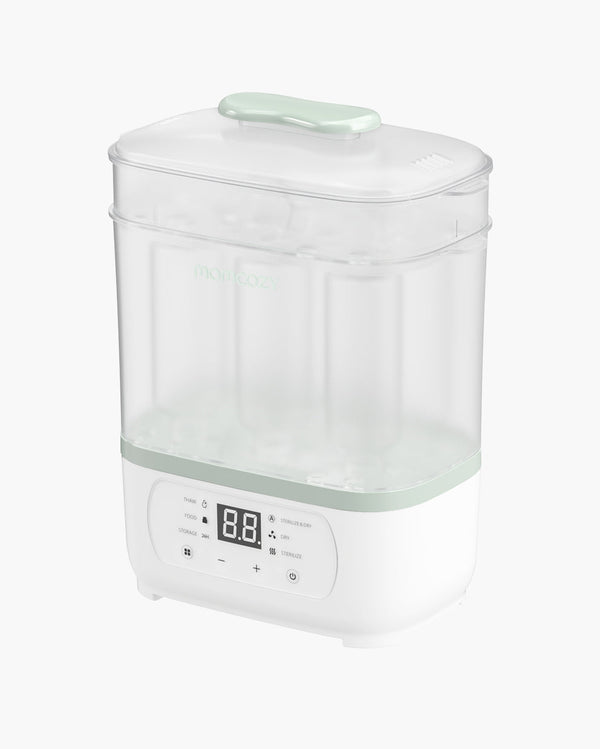
The vast majority of electric sterilisers will have separate compartments or racks in which to store your bottles, teats, lids and breast pump bits. Many of the models will also have a drying and storage function so your feeding equipment is all ready to go for the next use.
To use an electric steriliser:
1. Wash all feeding equipment in hot, soapy water.
2. Rinse the items thoroughly in clean water.
3. Add the recommended amount of water to the steriliser.
4. Fit the bottles and accessories as per the manufacturer's instructions.
5. Close the lid and select the correct cycle. Allow the cycle to complete before opening the appliance.ore7. Leave it in until you need it or carefully transfer it using clean hands or sterilised tongs. For parents who want to make bottle care as easy as possible, Momcozy has products that do the sterilising, drying and storage all in one. Sterilising and storage functions.
Momcozy KleanPal Pro Baby Bottle
The Momcozy KleanPal Pro is a one-unit baby bottle washer and steriliser which will do the washing, steam sterilising, drying and storage for you. It can clean up to 4 bottles per cycle and has 9 cleaning mode options (washing, sterilising and drying). Member price
From£299.99Code Save 20%

 Member price
£304.99Code Save 20%
Its 72-hour hygienic storage function is useful for parents who want to keep their feeding equipment hygienically stored after a cycle is complete. The bottle can therefore be left in the unit until the next feed, as long as you follow the manufacturer's storage instructions. The Momcozy KleanPal Pro Baby Bottle bottle washer is the one currently available to buy in the UK. You can have a look at the Momcozy Bottle Washer Collection for the product and associated accessories.
Momcozy 4-in-1 Compact Bottle Steriliser and Dryer
Momcozy 4-in-1 Compact Bottle Steriliser and Dryer (sterilises, dries, stores and operates automatically). The compact unit will hold up to 6 standard bottles plus smaller feeding accessories. It has an 8-minute steam sterilise cycle and a drying cycle to get the bottles ready for storage. This will help to reduce the number of potentially harmful microbes on properly cleaned feeding equipment. It also has a drying cycle to remove the moisture after the sterilising has been completed, which will help to keep the bottles ready for storage. Rather than having to use a separate appliance for each of these tasks, you can use one machine to do several of the bottle care tasks. Their bottle care routine.
Momcozy 8-in-1 Electric Steam Baby Bottle Steriliser
Another option is the Momcozy 8-in-1 Electric Steam Baby Bottle Steriliser. That's an 8-in-1, as it does steam sterilising, dries the bottles, and stores them. It has a number of different settings for the various things you'll be doing with your bottles on a day-to-day basis.

When looking at either of these individual steriliser models, UK parents should check the product page to confirm voltage and UK electrical requirements prior to buying.
For some more practical cleaning advice, have a look at Momcozy's guides on How to Clean a Momcozy Bottle Steriliser and Washer and Best Bottle Washer and Steriliser.
Can I use the bottle straight after sterilising?
Yes, you can use the bottle straight after sterilising (provided it's been properly handled and is ready to feed). The NHS recommends that you leave the sterilised bottles and teats in the steriliser or pan until you're ready to use them. This will protect them from any germs in the environment around them.
If your steriliser has a storage function, then you'll need to read the instructions to find out how long it will keep the equipment hygienic. The Momcozy KleanPal Pro will store the equipment for up to 72 hours after its correct cycle.
Always check the manufacturer's guidance before using any stored bottles. If the storage period has expired or the equipment has been contaminated in any way, it should be cleaned and sterilised again prior to feeding.
FAQs
Can I stop sterilising the bottles at 6 months?
No. NHS guidance is that you should continue to sterilise your baby's bottles, teats and any other feeding equipment until they are at least 12 months old.
By six months, many babies are starting to have solid food as well as milk (either breast milk or formula). It's a very important stage in their development, but it doesn't mean you can stop sterilising their bottles. You still need to wash and sterilise their feeding equipment after every use.
Do I need to sterilise the bottles at 7 months?
Yes, you should still sterilise the bottles at 7 months as your baby is still well before the 12-month mark where you're recommended to stop.
Wash each bottle thoroughly in hot, soapy water, rinse it, and then use your chosen method of sterilisation. Don't forget to clean the teats, lids and screw rings as well.
Do I still need to sterilise the bottles at 8 months?
Yes. Even at 8 months, your baby's immune system is still developing, so continue to sterilise your bottles and any other feeding equipment until your baby is at least 12 months old.
You can make this routine a whole lot easier by having a number of clean bottles ready beforehand and keeping them in a steriliser with a suitable storage facility.
Can I stop sterilising the bottles at 4 months?
No. Four months is way too early to stop sterilising your baby's feeding equipment. The NHS advises that bottles and teats should be sterilised until at least 12 months of age.
Even if your baby appears healthy and is feeding well, you should of course continue with the recommended cleaning and sterilising.
Do you have to sterilise the bottles after every use?
Yes. You should wash and sterilise baby bottles after every use throughout your baby's first year. Milk residue can remain inside bottles, teats and lids, creating an environment where bacteria can grow. Washing removes milk and visible dirt, while sterilising provides additional protection against harmful microorganisms.
How often should you sterilise baby bottles before stopping?
You should sterilise baby bottles after every use until your baby reaches at least 12 months old. This means cleaning and sterilising each bottle after every feed rather than waiting until the end of the day.
Do I need to sterilise new bottles before first use?
Yes. New baby bottles should be washed and sterilised before their use, even if they come directly from sealed packaging.
Manufacturing, packaging, and handling can expose feeding equipment to dust or other contaminants. Wash all the parts in hot, soapy water, rinse them thoroughly, and sterilise them according to the manufacturer's instructions.
Conclusion: Keeping Your Baby’s Feeding Routine Safe as They Grow
Knowing when to stop sterilising bottles helps you maintain a safe feeding routine as your baby grows. According to NHS guidance, you should continue sterilising bottles, teats and other feeding equipment until your baby is at least 12 months old. Washing alone is not enough during this period, so make sure every item is cleaned and sterilised after each use.
Choosing a cleaning method that fits your daily routine can make this responsibility easier to manage. Whether you prefer boiling, cold water sterilising or an electric appliance, always follow the instructions and keep feeding equipment properly stored.
For parents who want to spend less time washing bottles by hand, the Momcozy KleanPal Pro Baby Bottle Washer and Steriliser offers washing, steam sterilising, drying and storage in one machine. Explore the Momcozy Bottle Washer Collection to learn more about its features and make everyday bottle care more convenient.