Not every nappy bin needs a special refill cassette or cartridge. Some nappy bins are designed around model-specific refills or continuous film, while others use standard bin liners. The key is to check the bag system before you buy, as the type of consumable can impact compatibility, restocking and how easy the bin is to manage day to day.
The refill system is important to know when comparing nappy bins for your home so you don’t buy a bin that does not suit your routine. If you are preparing for life with a newborn, our guide on bringing your baby home from hospital also covers some of the practical routines to think about during those first days.

Key Takeaways
- Not all nappy bins require special refill cassettes. Some use proprietary refills, while others are designed for standard bin liners.
- A proprietary cassette is a model or system-specific consumable, so you need to buy refills that are compatible with the bin.
- A cassette-free nappy bin still needs a compatible bag or liner. “Cassette-free” does not mean “bag-free.”
- Standard-bag compatibility can reduce dependence on specialist refill products, but the correct bag size and fit still matter.
- Choosing a standard bag does not automatically mean a lower total cost or better odour containment. Those factors depend on the complete bin design and your household routine.
- Before buying, check the exact compatibility requirements, replacement process, refill availability and the type of consumable you will need to keep stocked.
Do All Nappy Bins Need Special Refills or Cartridges?
No. Nappy bins use different bag systems, and the refill format depends on how the individual bin has been designed.
Some nappy bins use proprietary refill cassettes or cartridges. These systems are built around a particular type of film or refill component, meaning you need a compatible product when the original refill runs out. Other systems use continuous liners, while some nappy bins are designed to work with standard household-style bin bags.
This difference matters when comparing products because the refilling system is part of the ownership experience. A bin may look like a bargain at first glance, but if it requires a certain format for refills, you’ll need to consider whether those refills are easy to find in your normal shopping routine.
For example, the Tommee Tippee Twist & Click system uses a specific refill and film format designed for compatible bins. This is an example of how a nappy bin can be closely connected to its consumable system. It should not, however, be taken to mean that every cassette-based nappy bin operates in exactly the same way.
If you prefer to avoid model-specific consumables, look for wording such as “standard bin bags,” “standard bin liners” or verified compatibility with a specific household bag size. Always check the exact product information rather than assuming that a bag will fit simply because it looks suitable.
Refill, Cassette, Cartridge, Liner or Nappy Sack? Know the Difference
These terms can sound interchangeable, but they usually describe different products or parts of a disposal system. Knowing the difference can help prevent you from buying the wrong consumable.
|
Term |
What it usually means |
What to check |
|
Refill cassette or cartridge |
A model or system-specific refill component, often containing or holding film |
The exact compatible bin, model or generation |
|
Continuous liner or film refill |
A long liner or film used in sections as nappies are disposed of |
Whether it requires a particular holder or refill format |
|
Standard bin liner or bin bag |
A larger household-style bag fitted inside the nappy bin |
The required size, fit and closure |
|
Nappy sack or disposal bag |
A small bag normally used around an individual used nappy |
Whether it is separate from the bin liner |
|
Cloth-nappy liner |
A liner used as part of a reusable nappy system |
This is a different workflow from disposable nappy disposal |
A nappy sack is therefore not the same thing as a nappy-bin liner. A nappy sack is generally used for an individual used nappy, whereas a bin liner is designed to collect multiple nappies inside the bin.
Cloth-nappy liners are also outside the scope of a disposable-nappy-bin system. If you search for “nappy bin bags” or “nappy disposal bags,” you may encounter all of these different products, so checking the product terminology and instructions is worthwhile before purchasing.
The Three Common Nappy-Bin Bag Systems
Although individual designs vary, nappy-bin systems can broadly be understood through three common formats: cassette or twist-and-seal systems, continuous-liner systems, and standard-bag or cassette-free systems.
Cassette or twist-and-seal systems are designed around compatible film or refill components. The consumable is part of the disposal mechanism, and the bin may use a particular method for feeding, twisting, sealing or containing the used nappies.
Continuous-liner systems use a longer section of liner or film that is cut or tied as needed. Although this may not look like a traditional cartridge, it can still be a proprietary consumable depending on the product.
Standard-bag or cassette-free systems are designed to accept a compatible household-style bin bag. In this setup, the bag provides the disposable container while the nappy bin itself provides the lid, sealing or containment structure.
None of these systems is automatically right for every household. A more specialised consumable can be closely integrated with a particular disposal mechanism, while a standard-bag system may offer greater flexibility when it comes to restocking. The first decision is therefore not which system is “best.” It is understanding which system a particular nappy bin uses and whether that arrangement works for your household.
Why Compatibility Matters More Than the Word “Refill”
The word “refill” does not tell you enough about whether a product will work with your nappy bin. A refill is only useful when it matches the bin's mechanism and, where relevant, its exact model or generation.
This matters particularly when shopping online. Two products can both be described as nappy-bin refills while using completely different systems. One may contain continuous film, while another may be designed for a specific cassette holder.
Some specialist systems also depend on the way the film feeds through the bin, twists, clamps or is cut. In those cases, a normal household bin bag cannot simply perform the same function.
Third-party compatible refills are available in the wider market, but compatibility should be checked against the exact model and the manufacturer's current instructions. A product description saying that a refill is “universal” does not necessarily mean it will work with every nappy bin.
Before buying a refill, check:
- The exact nappy-bin model.
- The model generation or compatible family, where relevant.
- Whether the system requires a cassette, cartridge or continuous film.
- The manufacturer's stated compatible refill format.
- How the replacement consumable is fitted.
- Whether the product listing or manual gives any size or compatibility requirements.
Checking these details before placing a large refill order can help avoid purchasing consumables that cannot be used with your particular bin.
What You Commit to When You Choose a Cassette System
Choosing a cassette-based nappy bin means choosing its compatible refill ecosystem too. The starter cassette included with a new bin is only part of the ownership process. Once it is used, you will need to replace it with another compatible refill.
That makes refill availability an important consideration before purchasing.
Start by checking whether the refills are easy to find through the shops or online retailers you normally use. It is also worth looking at the different refill formats associated with the bin, particularly if there are multiple model generations or similarly named products.
Then consider the replacement process. Depending on the system, replacing a consumable may involve removing a cassette, feeding film through the mechanism, tying or cutting the film, or reseating a component. You do not necessarily need to avoid these steps, but it helps to know what the routine involves before committing to the product.
There is also the simple question of stock. If a nappy bin depends on specialist film and you run out at an inconvenient time, you may need to obtain the correct refill before continuing to use the system as designed.
This does not make cassette systems inherently better or worse. A specialised refill may be part of the disposal mechanism that a household prefers. The trade-off is that the household remains dependent on that particular consumable format.
What Changes With a Nappy Bin That Uses Normal Bags?
A nappy bin that accepts standard bags can reduce dependence on a proprietary refill cassette. Instead of keeping a model-specific cassette in stock, the household uses a compatible standard-style bin bag.
This can make restocking more straightforward when the required bags are already widely available through your normal household shopping.
It can also mean fewer specialist consumables to remember and store. For parents who prefer a simpler household purchasing routine, that may be an important advantage.
However, “normal bags” does not mean that every ordinary bin bag will fit every cassette-free nappy bin. Bag size and fit still matter. The bag also needs to work with the nappy bin's own structure, including any clamps, lid, seals or other containment features.
The bag is therefore only one part of the system. A standard bag does not automatically provide the same odour containment as a specialist cassette system, and the use of standard bags should not be treated as a guarantee of lower cost or improved performance.
If a standard-bag system appeals to you, check the exact bag specification provided for the nappy bin and how the bag works with its sealing or closing mechanism.
Does Cassette-Free Automatically Mean Better Value?
Not automatically.
A cassette-free nappy bin can reduce dependence on proprietary refills, but that does not guarantee that it will cost less to own. The overall value depends on several factors, including the price of the bin, the cost of the bags or refills, how frequently you replace them and how your household manages waste.
Your usage can also change over time. A household with frequent nappy changes may go through bags or refills at a different rate from a household that empties its bin more frequently or uses a different disposal routine.
Bulk purchasing can affect the price per refill or bag, while standard liners may offer more flexibility because they can be purchased as part of ordinary household shopping. Neither arrangement guarantees a universal winner.
Convenience matters too. Some parents may be perfectly comfortable buying compatible cassettes because they prefer the integrated disposal workflow. Others may value the ability to use a standard household bag more highly.
If you want to compare the actual first-year cost, use the price of the exact bag or refill, the expected replacement frequency and the purchase price of the bin rather than relying on a general claim that one system is always cheaper.
Which Bag System Fits Your Household Routine?
The most suitable bag system depends on how you shop, store household supplies and manage used nappies.
If you are also adjusting to the practical demands of looking after a new baby, our guide on when you can start doing household work after delivery offers further guidance on managing everyday tasks during the postpartum period.
If avoiding model-specific consumables is more important, a nappy bin with verified standard-bag compatibility may be more appealing. You can potentially make restocking part of your usual household shopping rather than maintaining a separate supply of specialist refills.
Your home setup also matters. In a flat or a home where used nappies remain indoors for longer, the overall bin design and emptying routine matter alongside the bag format. For households dealing with frequent nappy changes, a quick and repeatable replacement process may be particularly useful.
If you are also organising your baby's sleeping space, you may find our guide on how to arrange a bassinet in your bedroom useful for planning a practical setup.
A simple way to think about the choice is:
|
Household priority |
What to look for |
Potential trade-off |
|
Avoid specialist restocking |
Verified standard-bag compatibility |
You still need the correct bag size and fit |
|
Prefer an integrated wrap or seal routine |
Compatible cassette or film system |
Ongoing dependence on compatible refills |
|
Have limited storage space |
Widely available or compact replacement format |
The preferred mechanism may differ |
|
Have frequent nappy changes |
A straightforward replacement process |
Higher consumable turnover |
|
Want good odour containment |
Strong bin-level sealing and correct bag fit |
The bag system alone does not determine odour performance |
There is no single bag system that automatically suits every family. The right choice is the one that fits your purchasing habits and the way you want to manage nappy disposal.
What to Check Before Buying Nappy-Bin Refills in Bulk
Before buying a large refill pack, make sure you know exactly which system your nappy bin uses.
Check these details first:
- Exact bin model: Confirm the model name and, where relevant, its generation or product family.
- Refill format: Establish whether the bin uses a cassette, cartridge, continuous film or standard bin liner.
- Compatibility: Check whether the refill is manufacturer-original or described as third-party compatible, and verify the claim against the bin instructions.
- Replacement process: Understand whether the refill needs to be fitted, fed, cut, tied or otherwise installed in a particular way.
- Storage: Consider how much space you have for replacement bags or refills and how quickly you are likely to use them.
- Returns and compatibility terms: If you are uncertain about the model match, check the seller's compatibility and return conditions before purchasing.
Buying in bulk can reduce how often you need to restock, but a multipack is only useful if every refill is compatible with your bin. Verify the system first, then compare pack prices.
If you are already buying other everyday supplies for a newborn, our guide on shopping for food with a newborn includes practical considerations for managing everyday errands with a young baby.
Where Momcozy DP002 Fits: Standard Bags Without a Special Refill Cassette
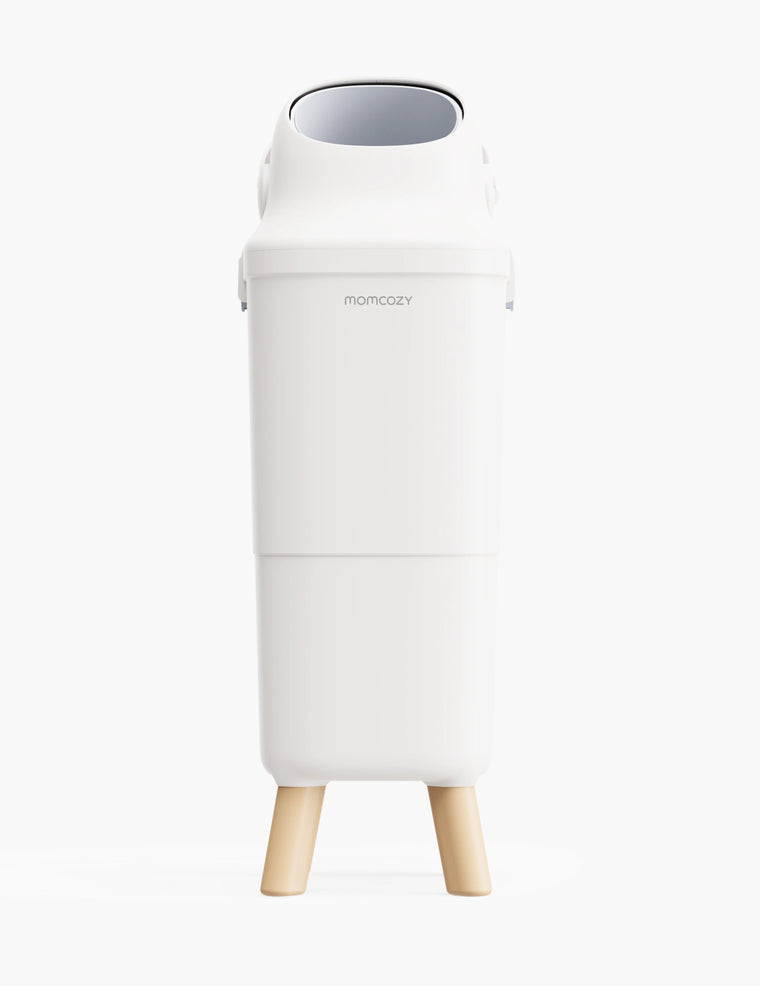
If avoiding proprietary refill cassettes is one of your priorities, the Momcozy DP002 is designed around standard-bag compatibility.
The current UK product information states that the DP002 does not require special refill bags and works with standard 13-gallon trash bags. This means the consumable is a standard-style bag rather than a model-specific refill cassette.
The bin itself provides the containment structure, including its Triple-Seal design. The bag and the bin therefore work together as a system rather than relying on a specialist cassette to provide the entire disposal mechanism.
The DP002 also has a 22L capacity, a wide opening and a child safety lock, although these features are secondary to the bag-system question for shoppers specifically comparing refill formats.
The important distinction is that “standard-bag compatible” does not mean that every household bin bag will necessarily be suitable. Momcozy's verified wording is standard 13-gallon trash bags, so buyers should check the current product information for compatibility before purchasing.
If you specifically want a proprietary cassette or twist-and-wrap system, the DP002 may not match that preference. Its appeal is instead for parents who want a dedicated nappy bin while reducing dependence on specialist refill cassettes.
View the Momcozy Triple-Seal Nappy Bin
When a Cassette System May Still Be the Better Fit
Avoiding cartridges is not a universal goal.
A cassette-based system can make sense if you already know that you prefer its particular disposal mechanism. If you are comfortable keeping compatible refills at home and can easily purchase them through your normal shopping routine, the refill commitment may not be a significant concern.
Some parents may also prefer a specific twist, wrap or continuous-film workflow and see the specialist consumable as part of the convenience of that system.
If your existing cassette-based nappy bin works well for your household, there may be little reason to change simply because another product accepts standard bags. Supply flexibility is only one part of the buying decision.
The important thing is to understand what you are committing to before you buy. If you are happy with the refill format, its availability and its replacement routine, a cassette system can still be a suitable choice.
Frequently Asked Questions
Can I put a normal bin bag in any nappy bin?
No. Use only a bag or refill format verified for the specific nappy bin. Some systems are designed around proprietary cassettes or film and cannot simply be replaced with a standard household bag.
Are nappy-bin cassettes universal?
No. Compatibility can vary between brands, models and generations. Always check the exact refill specification for your nappy bin before purchasing.
Is a nappy-bin liner the same as a nappy sack?
No. A bin liner is a larger bag fitted inside the nappy bin to collect multiple used nappies. A nappy sack is generally a small bag used around an individual used nappy.
Does a cassette-free nappy bin still need bags?
Yes. Cassette-free normally means that the bin does not depend on a proprietary refill cassette. It still needs a compatible liner or bag to collect the nappies.
Do I need to buy Momcozy-branded bags for DP002?
The current UK product information states that special refill bags are not required and that the DP002 works with standard 13-gallon trash bags. Check the current product page for the latest compatibility information before purchasing.
Do standard bags always make a nappy bin cheaper to run?
Not necessarily. Total cost depends on the price of the bags or refills and how frequently they need to be replaced. A proper comparison should use your own household usage rather than assuming one system will always cost less.

Conclusion
The key choice is not simply “refill or no refill.” It is whether you want a nappy-bin system based on proprietary consumables or one that is compatible with standard bags, and whether that arrangement fits your household routine. As your baby grows, your daily routines and the way you manage household supplies may change too. Our guide to caring for your 5-week-old newborn covers some of the everyday routines that can become part of this stage.
Before buying, check three things: exact compatibility, the replacement workflow and the ongoing restocking commitment. Remember that cassette-free does not mean bag-free, and standard-bag compatibility does not automatically guarantee lower costs or stronger odour containment.
If avoiding specialist refills is important to you, a standard-bag-compatible option such as the Momcozy DP002 may fit that particular requirement. If you prefer an integrated cassette or film system, a proprietary refill model may still suit your routine better.