A nappy bin is not an essential for every new parent. For some UK households, it can make nappy changes noticeably easier, especially when the changing area is upstairs, the outside bin is several floors away, or getting to a communal bin during a night time change is inconvenient. For others, a small lidded bin that is emptied regularly may do the job just as well.
The real question is not whether every baby needs a nappy bin. It is whether your household would benefit from keeping used nappies contained near the changing area.
Current UK parent discussions reflect that split. Some parents consider a dedicated nappy bin extremely useful, while others use a normal lidded bin or take nappies directly outside. The deciding factor is often the layout of the home rather than the baby itself.
If you are considering the category, you can browse nappy bins to see the types of options available.

Key Takeaways
- A nappy bin is not essential for every family. It is mainly a convenience and containment solution for households where used nappies would otherwise stay indoors between waste trips.
- Flats, multi storey homes and upstairs changing areas may benefit more because reaching an outside or communal bin can take additional time and effort.
- A small regular lidded bin can be enough when the outside bin is easy to reach and the indoor bin is emptied frequently.
- Odour containment can make indoor storage more comfortable, but no nappy bin removes the need for regular emptying and cleaning.
- Refill or liner costs can affect whether a particular bin represents good long term value.
- The usefulness of a nappy bin can change as your baby's nappy frequency, feeding stage and night time routine change.
Are Nappy Bins Necessary? The Short Answer
No. A dedicated nappy bin is a convenience rather than a universal baby essential.
The best way to decide is to think about what happens after every nappy change. If your changing table is beside the door and the outside wheelie bin is only a few steps away, taking a used nappy straight outside may be simple enough. Buying another bin could add unnecessary cost and take up valuable space.
The calculation changes when the changing area is upstairs or the communal bin is outside the building. Walking downstairs, using a lift, crossing a shared entrance or going outside after a night time change can turn a small task into a repeated interruption.
UK parent discussions show both experiences. Some families say a nappy bin was unnecessary, while others found one particularly useful in flats, upstairs bedrooms or during newborn night changes.
What a Nappy Bin Actually Changes in the Routine
A dedicated bin gives you somewhere close by to put used nappies temporarily. That can reduce unnecessary trips away from the baby and keep the changing area more organised. This can be especially helpful during the early weeks when you are still adjusting to life with a newborn and establishing a practical routine around feeding, sleeping and nappy changes.
What It Does Not Change
You still need to empty the bin, manage its liner or bag system and keep the container clean. It also does not mean used nappies can simply be stored indefinitely.
So rather than asking, “Do babies need nappy bins?”, ask:
“Would keeping used nappies here make my daily routine easier?”
Start With One Question: How Far Is Your Outside Bin?
Before buying anything, look at the route between your changing area and your final waste bin.
This is one of the simplest ways to judge whether a dedicated nappy bin is likely to earn its space in your home.
Easy Outside Bin Access
If you live in a ground floor home and keep the wheelie bin close to the back or front door, direct disposal may be straightforward.
You might bag a particularly unpleasant nappy and take it outside immediately. A small lidded bin can also provide temporary storage for other nappies, provided you empty it frequently.
In this setup, a dedicated nappy bin may not change very much.
Communal Bins, Stairs and Upper Floors
Now imagine changing your baby in a third floor flat at 2 a.m. The communal bin might be downstairs, outside the building or across a shared courtyard.
That makes every night time disposal trip more disruptive.
The same applies to an upstairs nursery in a house. Several UK parents report that their opinion of nappy bins depends heavily on whether they have to travel downstairs after every change. This is why home layout can matter more than the number of nappies you use.
For specific UK disposal guidance, see the dedicated guide on what bin do nappies go in.
When a Nappy Bin Tends to Be Most Useful
A nappy bin becomes more appealing when several small inconveniences happen at the same time.
Night Time Changes
Newborns can require frequent changes, including during the night. Having somewhere beside the changing area to contain a used nappy means you do not necessarily have to leave the room immediately.
This can be particularly useful when the baby's room is upstairs. It can also make overnight care feel less disruptive when you are already trying to establish a more manageable sleep routine, especially as your baby's sleep patterns gradually change. For more guidance on this stage, see how to night wean from breastfeeding.
UK parents frequently mention night time convenience when discussing nappy bins. Some describe using one upstairs specifically so they do not have to make repeated trips to the wheelie bin while caring for a newborn.
For more ideas on setting up this part of the routine, see night time nappy changes.
Recovery and Reduced Mobility
There can also be periods when moving around the house is more difficult.
After childbirth, repeatedly carrying rubbish downstairs or outside may simply be an unwanted task. A nearby bin can provide temporary convenience during this stage. This is one reason why practical changes to your home setup can be useful while you are recovering and adjusting to everyday life after birth. You may also want to consider what to wear postpartum for comfort and support during this period.
That does not mean everyone needs a dedicated nappy bin for recovery. It is simply one household circumstance that can make the purchase more useful.
Twins or Multiple Changing Stations
Families with twins or more than one child in nappies may also generate enough waste to make location and capacity more important.
If you have changing stations on different floors, however, consider whether you actually need multiple dedicated bins. Sometimes moving one bin between locations or using a smaller lidded bin in a secondary changing area may be enough. If you are managing several baby-care tasks at the same time, having a clear routine for everyday care can also make things easier. Parenting your 11-week-old infant is another example of how daily routines can evolve as your baby grows.
When a Regular Lidded Bin May Be Enough
A dedicated nappy bin is not automatically better than a normal household bin.
A small regular lidded bin can work well when you empty it frequently and have easy access to the outside bin. This can be a practical option if you are already trying to keep your baby's everyday essentials organised without adding unnecessary equipment to your home. For more ideas on planning and managing baby essentials, you can explore our related guide.
This is a common solution in UK parent discussions. Some parents use an inexpensive small bin near the changing area, then empty it daily or take particularly smelly nappies directly outside.
The Low Cost Setup That Many Parents Use
A simple setup may involve:
- A small lidded bin beside the changing area
- Regular bin liners
- Frequent emptying
- Direct disposal of particularly unpleasant nappies when practical
- Easy access to the outside or communal bin
This can be especially practical if you already take household rubbish outside every day.
Where the Trade Off Shows Up
The compromise is convenience and containment.
A regular bin may not contain odours as effectively as a dedicated design, particularly if it holds used nappies for several days. A very small bin also needs to be emptied more often.
If you are happy with that routine, there may be little reason to add another specialised baby product to your home.
The Cost Question: The Bin Is Only Part of the Price
The purchase price is only one part of deciding whether a nappy bin is worth it.
You should also consider what happens after the first bag is installed.
Some nappy bins use proprietary refill systems, while others accept more widely available liners or standard household bags. Parent discussions frequently identify ongoing refill costs as one reason to choose a simpler setup.
Upfront Price vs Ongoing Consumables
A cheaper bin can become less appealing if its ongoing consumables are costly for your household.
Conversely, a more expensive dedicated bin may make more sense if it provides the containment and convenience you actually need and does not lock you into a refill system you dislike.
The important distinction is:
Is the nappy bin worth having, and is this particular bag system worth using?
Those are two different decisions.
Why Standard Liner Compatibility Changes the Decision
If avoiding proprietary refills is important to you, check the liner requirements before buying.
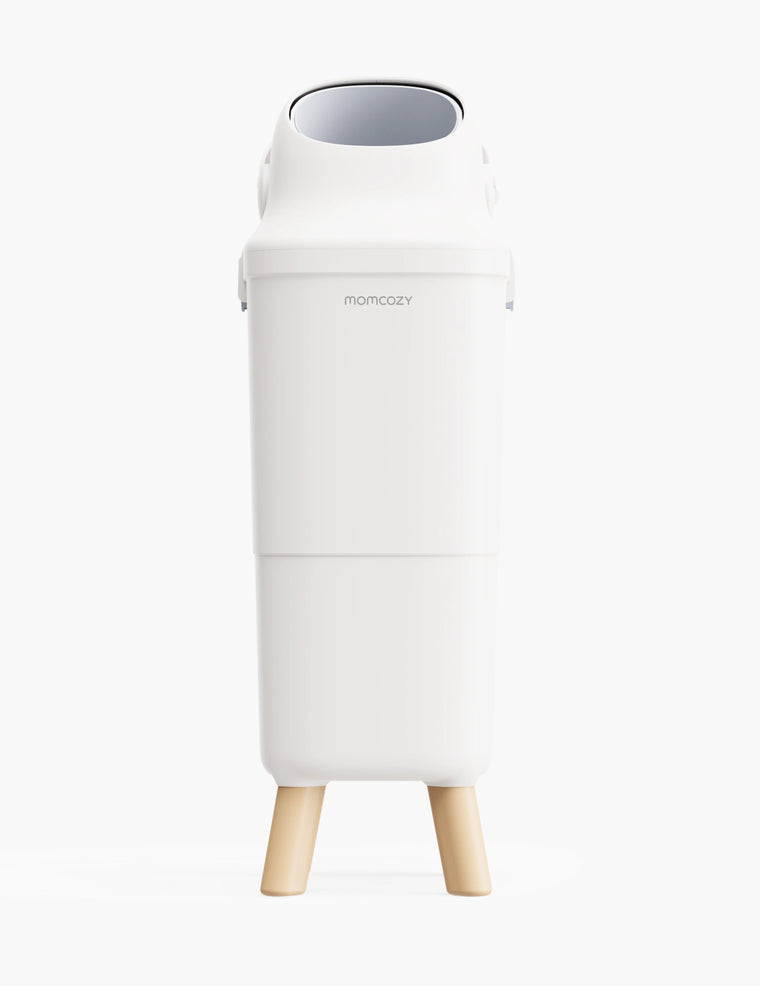
For example, the Momcozy Triple Seal Nappy Bin is designed to work with standard 13 gallon bags and has a stated 22L capacity. Its product page also lists a child safety lock, wide opening and ergonomic height.
Those features may be relevant once you have already decided that a dedicated nappy bin suits your routine. They should not be the reason you assume every household needs one.
For a deeper look at the financial side, see nappy bin running cost and cassette vs standard bin liners.
Capacity Is Really an Emptying Frequency Decision
It can be tempting to assume that the biggest nappy bin is automatically the most convenient.
Not necessarily.
A larger capacity means you may not need to change the bag as frequently. However, it can also mean used nappies remain indoors for longer.
Newborns can produce a surprisingly high number of nappies, so a very small container may need frequent emptying. On the other hand, some parents deliberately prefer a smaller bin because it encourages regular emptying.
Newborn Frequency
During the early weeks, the convenience of having somewhere nearby can be particularly noticeable because changes happen frequently.
The ideal capacity therefore depends partly on how often you want to empty the bin.
Why Bigger Is Not Automatically Better
Think about your preferred routine rather than simply choosing the largest capacity.
Ask yourself:
- How many nappies will normally go into the bin?
- How often do you want to empty it?
- Where will the full bag go?
- How much space does the bin have beside your changing area?
- Will you be comfortable keeping used nappies indoors until the container is full?
If you want more guidance once the bin reaches capacity, see what happens when a nappy bin gets full.
Does the Answer Change Once Your Baby Starts Solids?
It can.
There is no universal age at which every family stops using a nappy bin, but the balance between convenience and odour can change as your baby grows.
Milk Fed Newborn Stage
During the newborn period, frequency may be the biggest consideration.
You may appreciate having a container close to the changing area because you are dealing with frequent changes, including overnight.
Weaning and Stronger Smelling Nappies
Once your baby starts eating solid foods, some nappies may become noticeably stronger smelling.
This can make families rethink how long they want used nappies sitting indoors. Some parents continue using a dedicated bin because containment is still useful, while others prefer to bag and take poo nappies directly outside. UK parent discussions show both approaches.
When Families Naturally Phase the Bin Out
For some households, the bin becomes less important as night time changes decrease. Others continue using it because the changing area remains upstairs or because they prefer the convenience.
There is no need to follow a fixed timeline.
The better question is whether the bin still solves a problem for your current routine.
If odour becomes the main concern, use the dedicated guide on how to stop a nappy bin smelling rather than treating the issue as a reason to buy a particular model.

Quick Decision Table: Is a Nappy Bin Likely to Be Worth It for Your Home?
|
Household situation |
Likely value |
Why |
Alternative to consider |
Next thing to check |
|
Third floor or communal bin |
Likely useful |
Waste disposal requires extra travel |
Small lidded bin |
Capacity and odour containment |
|
Upstairs nursery |
Likely useful |
Avoids repeated downstairs trips |
Small upstairs bin |
How often you want to empty it |
|
Frequent newborn night changes |
Likely useful |
Keeps disposal close during overnight care |
Lidded bedside bin |
Bag system |
|
Ground floor with easy wheelie bin access |
May be unnecessary |
Direct disposal is simple |
Regular bin |
Whether indoor storage bothers you |
|
Small bin emptied daily |
May be enough |
Short storage time limits the need for a dedicated system |
Regular lidded bin |
Bin size and liner cost |
|
Twins or multiple children in nappies |
Depends |
More waste increases capacity needs |
Larger lidded bin |
Capacity and emptying frequency |
|
Reusable nappies |
Depends |
Storage requirements differ from disposable nappies |
Wet bag or dedicated reusable storage |
Your washing routine |
|
Reduced mobility during recovery |
Likely useful temporarily |
Nearby disposal reduces unnecessary movement |
Temporary small lidded bin |
Whether you need it beyond recovery |
The goal is not to find a universal yes or no. It is to identify whether your household has enough disposal friction for a dedicated bin to be worthwhile.
If You Decide You Want One, What Should You Verify Before Buying?
Once you have decided that a dedicated bin fits your routine, check the system rather than immediately looking for a “best” model.
A Seven Point Verification Checklist
1. Odour containment design
Look for a design intended to contain odours while nappies remain inside.
2. Liner or refill system
Check whether the bin requires proprietary refills or accepts standard bags.
3. Disposal mechanism
Consider whether you can operate the opening easily while holding your baby.
4. Capacity
Think about how frequently you want to empty the bin rather than choosing capacity based on size alone.
5. Footprint
Measure the space beside your changing area before buying.
6. Cleaning
Check whether the internal container can be accessed and cleaned easily.
7. Child access and ongoing cost
Consider safety features alongside the cost of the bags or liners you will use.
If you have already decided that a dedicated bin fits your household, the Momcozy Triple Seal Nappy Bin is one example. Its current UK product information lists a Triple Seal design, 22L capacity, wide opening, child safety lock and compatibility with standard 13 gallon bags.
Frequently Asked Questions
Can I use a nappy bin for reusable nappies?
Reusable nappies typically require a different storage consideration as they are worn until they are washed rather than being thrown away with the general household waste. Instead, a wet bag or other type of washable storage bag may be more appropriate. Your washing regime and the manufacturer's care instructions should be taken into account when making your choice.
Do I need one nappy bin upstairs and another downstairs?
Not necessarily. It depends on where you normally change your baby. If most of the changes happen upstairs then you may only need one bin there. Families who always have two places they are changing their baby may prefer two containers, but having a second dedicated nappy bin isn't necessarily a requirement.
Is a nappy bin still useful after the newborn stage?
It can be. Some people find it much easier to have one throughout the nappy wearing years, others find that they stop using one as the nights become less regular or they go straight to the toilet in the house for poo nappies. It's up to the individual family to decide when it is the right time to change things up.
Do nappy bins need special refills?
Some use proprietary refills, while the rest accept standard liner or household bags, so make sure to check the specs of your preferred model before shopping. If you want to limit your expenses related to the continuous use of the product, this factor becomes one of the most important.
Does a nappy bin replace taking poo nappies outside?
No. Nappy bins are mostly used as temporary storage inside the house for nappies, until they can be dumped outside the house. Some people have them as a convenience, then dump the contents in the outside bin, or take particularly pungent nappies out straight away.
Is a nappy bin worth it if I live in a small flat?
It can be, especially if the communal bin is a bit of a walk from the flat or the changing room is miles from the front door. However, space is often at a premium in a flat so bear in mind how much room the bin will take up and how often you'll need to empty it.

Conclusion
So, do you need a nappy bin? Not necessarily.
A dedicated nappy bin is the most efficient if you have a practical need for it. If your changing area is upstairs, and your outside or communal bin is a hike to get to, if you often have to change at night, or if you just like having a bin that contains the mess a little more neatly nearby, then you might want to invest in a second bin.
If your wheelie bin is right outside the door and you already remove used nappies regularly, a small lidded bin or direct disposal routine may work perfectly well.
The three things to consider are simple: how far you need to travel to dispose of nappies, how long used nappies will remain indoors, and what the ongoing liner or refill system will cost.
There is no right or wrong answer. There are many products that can be bought as a parent. However, a nappy bin is a good investment if it makes the job easier for your specific situation and not necessarily because you find it on a newborn's shopping list.
If you decide that something close by might genuinely assist you, you should take some time to look at Momcozy UK nappy bin collection and see which ones fit your requirements.