A bottle warmer that stops working halfway through a feed can be frustrating, especially when your baby is ready for their milk. Perhaps the unit is taking longer than usual to warm a bottle, showing an error message or making an unfamiliar noise. In some cases, a simple setting or water-level issue may be responsible. In others, the appliance may need professional attention.
If your bottle warmer is not working, start by separating the problem into four possible actions: stop, check, contact support or replace. Stop using it immediately if you notice signs of electrical damage, smoke, sparks, burning smells or overheating. If there are no safety warning signs, you can check the settings and other user-serviceable details in the product manual. If the problem continues, contact the retailer or manufacturer before considering a replacement.
This guide explains how to make that decision safely, without attempting repairs that could put you or your family at risk.
Key Takeaways
- Stop using a bottle warmer immediately if its plug, cable or casing is damaged, or if you notice smoke, sparks, burning smells, scorch marks or unusual overheating.
- Not every heating problem means the appliance is faulty. Incorrect settings, insufficient water or mineral build-up may affect performance.
- Only carry out external checks and maintenance described in the instructions for your specific model.
- Never open the appliance, repair wiring, bypass safety features or keep testing a unit that shows signs of electrical damage.
- Contact the original retailer or manufacturer if the problem persists. Check your warranty and consumer rights before paying for a repair or buying a replacement.
- There is no universal replacement schedule for bottle warmers. Replace one when it is confirmed unsafe or cannot be put right through an appropriate support route.

When Should You Stop Using a Bottle Warmer Immediately?
Some problems call for more than routine troubleshooting. If a bottle warmer shows signs of electrical damage or overheating, stop using it. Do not run another warming cycle to see whether the issue happens again.
Electrical and overheating warning signs
Switch off and stop using the appliance if you notice:
- A frayed cable, exposed wires or a damaged plug.
- Melted, cracked or discoloured plastic around the casing, plug or charging port.
- Smoke, sparks or a burning or unusual smell.
- Scorch marks on the plug, socket or appliance.
- A casing that feels unusually hot or appears to be overheating.
- Repeated tripping of the household circuit when the appliance is connected.
- Cracks in the housing or water leaking towards electrical components.
These signs should never be treated as ordinary performance issues. Greater Manchester Fire and Rescue Service advises people not to use electrical items with exposed wires, damaged plastic, burning smells, sparks, smoke, scorch marks or signs of overheating. It also recommends avoiding DIY modifications or repairs to electrical products.
If you can safely switch off the appliance and disconnect it from the plug socket without touching damaged or wet areas, do so. If it is unsafe to approach, leave it alone. Keep the warmer away from children and do not use it again until the manufacturer or a qualified professional has advised you on the next step.
If an electrical appliance catches fire, do not approach it to unplug it or try to put out the fire. Get everyone out, stay out and call 999.
What if the warmer simply stops heating?
A warmer that does not heat, or takes longer than expected, may have a less serious cause. However, first check for the warning signs above. If there is no damage, unusual smell, leakage or overheating, you can move on to the model-specific checks in the next sections.
If the unit has stopped heating after an electrical incident, or you are unsure whether it is safe, do not try another cycle. Contact support instead.
Common Bottle Warmer Problems That Do Not Always Mean It Is Broken
Once you have ruled out immediate safety concerns, look at what the warmer is actually doing. A bottle that takes longer to heat, an alert on the display or a portable unit that will not switch on may have a straightforward explanation. The correct checks depend on the model, so always use its own instructions rather than applying advice from another warmer.
The bottle is not warming or takes too long
Heating time can vary with the starting temperature of the milk, the amount in the bottle and the container itself. A bottle taken straight from the fridge, for example, may take longer to warm than one at room temperature.
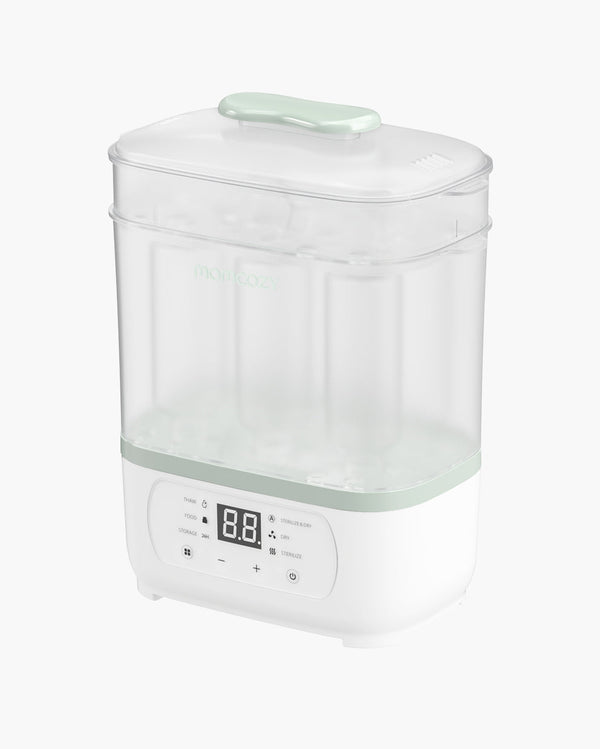
For the plug-in, water-bath Momcozy NightPro bottle warmer, check that:
- You have selected the correct mode for the bottle's material and the milk's starting temperature.
- You have chosen the appropriate milk-volume setting.
- You have added the amount of water specified for that volume.
- The bottle is positioned correctly in the warming chamber.

The NightPro instructions explain that the initial temperature, container size and water level can affect warming time. They also specify adding water to the marked level before placing the bottle inside. If you need a refresher, see how to use a bottle warmer at night or consult the Momcozy NightPro user manual.
Do not keep extending the heating time without checking the instructions. Once warmed, gently swirl the milk and check its temperature before feeding.
A water-level alert or mineral build-up appears
Some water-bath warmers use an alert when there is not enough water in the heating chamber. On the NightPro, E3 indicates that dry-burn protection has been triggered. This can happen when there is insufficient water in the heating compartment. It does not automatically mean the whole appliance needs replacing.
If E3 appears and there are no signs of damage or overheating, switch off and unplug the warmer. Let it cool completely before checking the water level. Add the appropriate amount of water according to the model's instructions, then select the required setting. If the alert returns or another error appears, stop troubleshooting and contact customer support.
Limescale can also build up over time, particularly in areas with hard water. Mineral deposits may affect the heating surface and appliance performance. Follow the cleaning and descaling instructions for your exact model, including any guidance on the cleaning solution to use. Do not scrape the heating plate with sharp tools or pour cleaning products into parts not intended for cleaning.
A portable bottle warmer will not switch on or charge
A rechargeable warmer has different power requirements from a plug-in model. The Momcozy Superfast Portable Baby Bottle Warmer (MW005), for example, is designed for cordless use and has a rechargeable battery. For the rechargeable Momcozy Superfast Portable Baby Bottle Warmer (MW005), check the battery level and inspect the charging cable and port for visible damage. Use only the charging equipment specified for this model.
Use only the charging equipment and method approved for your model. If the charger, cable or charging port looks damaged, do not connect it. Never force a connector into the port, dismantle the warmer or try an improvised adapter.
If the unit remains unresponsive after the checks described in its instructions, contact the retailer or manufacturer. A charging problem may need professional assessment rather than repeated attempts to power the device.

How to Troubleshoot a Bottle Warmer Safely
If there are no signs of electrical damage, you can work through a few basic checks. Keep the process simple and stop if anything seems unusual.
- Switch off and unplug the warmer. Allow it to cool before inspecting or cleaning it. For a rechargeable model, follow its instructions for switching it off and handling the charging connection.
- Check the outside of the appliance. Look for cracks, leaks, damaged cables, discoloured plastic or unusual marks. Do not open the casing.
- Read the instructions for your model. Check the recommended settings, water levels, container compatibility and any model-specific error-code guidance.
- Check user-serviceable details. If the manual permits it, correct the water level, clean accessible parts or descale the appliance using the approved method.
- Contact support if the problem continues. Share the model name and error message so the support team can advise on the appropriate next step.
Do not attempt to repair internal wiring, replace electrical components, tape over a damaged cable or bypass a safety feature. Do not follow reset instructions found online unless they are published for your exact model by the manufacturer. If the warmer has produced smoke, sparks or a burning smell, do not plug it in again to test whether it works.
What to prepare before contacting support
Having a few details ready can make it easier for the support team to understand the issue:
- The warmer's model name or number.
- Your order number and proof of purchase, if available.
- The approximate purchase or delivery date.
- The error code displayed, if there is one.
- A short description of what happened and when it started.
- Photos of the display or visible damage, but only if they can be taken safely without switching on or handling a potentially dangerous appliance.
You can reach the Momcozy UK contact page for assistance. If you purchased the warmer from another retailer, contact that seller as well, as the relevant after-sales process may depend on where you bought it.
Should You Repair or Replace a Faulty Bottle Warmer?
A bottle warmer does not always need to be replaced just because it develops a problem. The right option depends on the cause, the model, the product's condition and whether an authorised remedy is available.
Start with approved maintenance, not DIY repairs
Some issues can be addressed through normal user maintenance. Cleaning the warming chamber or removing limescale, for example, may be appropriate when the manual specifically describes how to do it.
That is different from repairing the appliance's electrical or internal components. If the warmer has a faulty sensor, damaged wiring, a charging fault or another internal problem, leave the assessment to the manufacturer or a qualified professional. Do not open the housing to investigate.
The distinction is important: cleaning and descaling are not the same as repairing an electrical appliance. Only use replacement parts or accessories approved for the model, and follow the manufacturer's guidance about who should fit them.
Check your warranty and contact the original retailer
Before paying for a repair or purchasing another warmer, check the warranty that applies to your product. The Momcozy UK warranty policy lists a two-year standard warranty for electrical product main units, including bottle warmers, in Europe excluding Spain. For covered faults, the policy describes providing replacement parts where those can resolve the issue, or a new product of the same model where parts cannot resolve it or the fault affects the main unit. Coverage is subject to the policy's terms and exclusions.
The warranty also explains that coverage may not apply to issues caused by unauthorised modification or repair, misuse, certain forms of liquid damage or non-genuine accessories. Check the current policy and ask support to assess your particular circumstances rather than assuming that every fault will qualify.
If you bought the warmer from a third-party retailer, start by contacting the original seller. The warranty policy notes that purchases made through other channels may have different terms, so the retailer can explain the applicable process.

Remember that your UK consumer rights are separate
A manufacturer's warranty is not the same as your statutory rights against the seller. Under the Consumer Rights Act 2015, where a consumer is entitled to a repair or replacement because goods do not meet the required standards, the trader must provide the remedy within a reasonable time and without significant inconvenience. The law also sets out circumstances where repair or replacement may not be required because a remedy is impossible or disproportionate. The outcome depends on the facts of the purchase and the problem.
You can read section 23 of the Consumer Rights Act 2015 for more detail. If you are unsure which route applies, speak to the retailer before arranging or paying for independent repair work.
When Is It Time to Replace a Bottle Warmer?
Replacement becomes the sensible option when the appliance cannot be made safe or brought back to working order through an appropriate support process. You may need a new warmer if:
- The manufacturer or a qualified professional confirms that the unit is unsafe to use.
- The fault cannot be resolved with approved maintenance or an authorised replacement part.
- A recurring fault remains after the manufacturer has advised on the correct checks.
- The manufacturer or retailer recommends replacement rather than further repair.
- The appliance has suffered damage that makes continued use unsuitable.
If you notice a burning smell, exposed wires, smoke or other electrical warning signs, do not wait until the next feed to decide. Stop using the warmer and seek advice.
Does an older bottle warmer automatically need replacing?
No. There is no universal rule that every bottle warmer must be replaced after a set number of months or years. Age alone does not tell you whether an appliance is safe or faulty. Its condition, maintenance history and performance matter more.
You may also decide to replace a working warmer because your family's needs have changed. For example, you might prefer a portable model for travel or a different style for your feeding routine. That is a personal convenience choice, not the same as replacing an unsafe appliance.
How to Keep Your Bottle Warmer Working Properly
Good everyday care can help you spot problems early and keep your warmer in suitable condition. Always follow the instructions for your particular model, as water-bath and rechargeable warmers do not have identical care requirements.
- Use the correct settings and water level. For a water-bath warmer, follow the markings and instructions for the amount of milk and bottle type.
- Keep the appliance clean. Remove water and clean accessible parts as directed after use. Avoid letting residue or mineral deposits build up.
- Descale only as instructed. If you live in a hard-water area, limescale may accumulate more quickly. Use the manufacturer's approved method rather than household remedies that are not recommended.
- Choose a suitable surface. Place the warmer on a stable, level and dry worktop, away from water splashes.
- Check the plug and cable regularly. Look for fraying, loose connections, damaged plastic or discolouration. Stop using the appliance if you find damage.
- Care for portable models correctly. Follow the charging, storage and transport instructions for the battery-powered unit. Keep the charging port and electrical connections away from water.
- Store it carefully. When not in use, keep the appliance somewhere dry and avoid placing heavy items on its cable or casing.
Routine maintenance can help prevent avoidable performance issues, but it cannot make a damaged electrical appliance safe. If you find a safety warning sign, stop using the warmer rather than trying to clean or maintain your way around the problem.
FAQs
Why is my bottle warmer not heating?
First, check for signs of electrical damage, overheating, smoke or a burning smell. If you notice any of these, stop using the warmer. If there are no warning signs, check the settings, water level and container guidance in the manual for your specific model. If it still does not heat correctly, contact the manufacturer or retailer.
What should I do if my bottle warmer smells like burning?
Switch it off and stop using it immediately. Disconnect it only if you can do so safely without touching a damaged, hot or wet area. Do not run another cycle or attempt to clean the smell away. Contact the manufacturer or retailer for advice. If there is a fire, get out, stay out and call 999.
Does E3 mean my Momcozy NightPro is broken?
Not necessarily. On the NightPro MW06, E3 indicates that the heating compartment does not contain enough water and the dry-burn protection has been triggered. Switch off and unplug the unit, let it cool completely, then check the water level and follow the manual's instructions. If the alert continues or another error appears, contact Momcozy support.
Can I use a bottle warmer with a damaged plug or cable?
No. Do not use an appliance with a frayed cable, exposed wires, damaged plug or signs of melting or scorching. Stop using it and contact the seller or manufacturer about the appropriate next step. Do not cover damage with tape or try to repair the cable yourself.
How often should I replace a bottle warmer?
There is no universal replacement timetable. A warmer does not need replacing simply because it has reached a particular age. Consider replacement if it is confirmed unsafe, cannot be returned to proper working order through authorised support or the manufacturer recommends replacing it.
Can I repair a bottle warmer myself?
You can carry out routine cleaning and other maintenance described in the user manual. However, you should not open the casing, repair internal wiring, replace electrical components or bypass safety features. Electrical repairs should be handled through the manufacturer or a qualified professional.
The Bottom Line: Stop, Check, Contact Support or Replace
When a bottle warmer develops a problem, the safest next step depends on what you notice. Use this guide to decide where to start:
|
Situation |
What to do |
What not to do |
|
Burning smell, smoke, sparks, damaged plug or cable, or an unsafe leak |
STOP using the appliance. Disconnect it only if safe and seek professional or manufacturer advice. |
Do not run another warming cycle or try to test it again. |
|
Incorrect setting, insufficient water or light limescale, with no safety warning signs |
CHECK the instructions for your exact model. Allow the unit to cool before carrying out approved checks or cleaning. |
Do not assume every problem can be fixed at home or use an unapproved cleaning method. |
|
Repeated error message, unresolved heating issue or charging problem |
CONTACT SUPPORT or the original retailer. Provide the model number and details of the fault. |
Do not open the appliance or attempt electrical repairs. |
|
The manufacturer confirms the unit is unsafe or cannot be restored to working order |
REPLACE it through the appropriate retailer or manufacturer process. |
Do not continue using it because a replacement is inconvenient or has not yet arrived. |
The key is not to rush into replacing every warmer that stops working, but never to take chances with an appliance that shows signs of electrical damage. Start with safety, follow model-specific guidance and contact support when the cause is unclear.
Conclusion
A bottle warmer that stops heating or displays an error does not always need to be replaced. Sometimes, checking the settings, water level or approved cleaning guidance is enough to identify the issue. But if your bottle warmer is not working and you notice smoke, sparks, a burning smell, damaged wiring or unusual overheating, stop using it immediately.
When the cause is not clear, let the manufacturer or original retailer guide you through the next steps. An authorised assessment can help establish whether the warmer needs a replacement part, a replacement unit or no further action. And if a new warmer is genuinely needed, you can explore the Momcozy UK bottle warmers to find an option that suits your family's routine.