The first few weeks with a newborn can make nappy changes feel like one of the main parts of the day. You may change a nappy after a feed, prepare another one a little later and then realise you need to restock the changing area sooner than expected.
If you are trying to understand newborn nappy frequency, there is no single timetable that every baby will follow. Newborns generally need frequent checks and changes, especially when a nappy is soiled. The pattern can vary from one baby to another and can change throughout the day.
This is why it can be more useful to prepare for frequent changes than to plan every change around the clock. Having clean nappies ready, keeping your main changing supplies within reach and deciding how you will deal with used nappies can make the first weeks easier to manage. For households that want temporary indoor containment, a Momcozy Triple-Seal Nappy Bin is one optional solution to consider.
Key Takeaways
- Newborns usually need frequent nappy checks and changes during the early weeks.
- There is no single clock-based routine that works for every newborn.
- A newborn can use several nappies during a 24-hour period, so it is sensible to prepare for regular daily use.
- A soiled nappy should generally be changed promptly rather than left on for an extended period.
- Wet nappies are also part of the normal changing routine.
- Your baby's individual pattern is more useful than trying to follow an exact schedule copied from another family.
- It can help to keep clean nappies and changing supplies close to the areas where changes actually happen.
- A smaller night-time setup can reduce unnecessary trips when everyone is tired.
- Used nappies need a clear household disposal routine.
- Some families take used nappies straight to their usual household waste bin, while others prefer temporary indoor containment.
- A dedicated nappy bin is optional, not a newborn essential.
- If the main household bin is inconveniently located, a dedicated container may make everyday changes easier.
- The best setup is one that fits your home's layout, storage space and normal rubbish routine.

How Often Should You Change a Newborn Nappy?
There is no universal number of hours that tells every parent exactly when a newborn nappy needs changing.
Instead, changes are usually based on whether the nappy needs attention and what your baby needs at that point. If the nappy is soiled, changing it promptly is important. Wet nappies also need regular attention as part of normal baby care.
This can make the first few weeks feel very different from later stages. Newborns can need changes frequently, and the timing may not always fit neatly around meals, naps or other household tasks.
You may have days when changes seem to happen one after another. On another day, the pattern may feel less busy. Both can make planning difficult if you are expecting the same timetable every day.
Why There Is No Perfect Nappy Schedule
It is understandable to want a simple answer.
You might imagine changing your baby at set times in the morning, afternoon and evening. Having a routine can certainly help you organise your day, but it should not become a strict timetable that ignores what is happening with your baby.
Newborn life is rarely predictable enough for that.
A feed may take longer than expected. Your baby may fall asleep earlier than usual. A change may be needed sooner than you thought. You may also have days when you spend more time away from your normal changing area.
A flexible approach is therefore more practical.
Rather than asking whether exactly two or three hours have passed, think about whether the nappy needs changing. This keeps the focus on the actual situation rather than an arbitrary time on the clock.
Frequent Changes Are Part of the Early Routine
Nappy changes are one of those newborn tasks that can seem surprisingly repetitive. You may have a clean nappy ready, complete the change and put everything away. Then, before long, you are reaching for another one.
This is one reason new parents often feel as though they are constantly dealing with nappies. It is not necessarily because anything is wrong with the routine. Frequent nappy use is simply part of caring for a newborn.
Once you know this is likely to be part of your day, it becomes easier to prepare the home around it. Instead of treating each change as a separate event, you can create a simple system that supports all of them.
Build Around Your Baby, Not the Clock
A useful way to think about nappy frequency is to treat it as responsive rather than scheduled. Your baby does not need to follow the same pattern every day for your household routine to work. You can keep your basic supplies ready, check the nappy regularly and change it when needed.
This approach also takes some pressure off parents who are still learning what their newborn's normal daily rhythm looks like. The first few weeks are often a period of adjustment. What seems unpredictable at first may become easier to recognise with time.
How Many Nappies Does a Newborn Use Per Day?
Another common question is how many nappies a newborn will use in one day.
There is no single figure that applies to every baby. Newborns can go through several nappies across a 24-hour period, and daily use can vary.
This means it is usually better to prepare for a reasonable level of daily use rather than buying or organising your home around one exact number.
Why Daily Nappy Use Can Vary
A newborn's day does not necessarily look the same from one day to the next. Changes may happen around feeds and sleep. A baby may need several changes close together at one point and then have a longer gap before another change.
Your own routine can also affect how the day feels. When you are at home, you may notice every change. When you are out, you may be working around a changing bag and a different setup. This is why "how many nappies per day" is useful as a planning question but not as a strict target.
Prepare for High Usage
It is generally easier to have a few extra nappies available than to discover that you have nearly run out in the middle of a busy day. You can keep your main supply stored somewhere convenient and put a smaller number beside the changing area.
This avoids filling the changing station with every pack you own. It also gives you a simple restocking routine. When the supply beside the changing area starts getting low, bring more from storage.
Do Not Let the Number Take Over the Routine
It is easy to become focused on counting.
You may find yourself asking:
- How many nappies have we used?
- How many are left?
- Are we using too many?
- Should we be using fewer?
- Do we need to buy another pack already?
Some counting can be useful for household planning, but it should not become a source of unnecessary worry.
Your baby's individual needs matter more than matching another family's daily number.
The practical household lesson is simply that newborns can use a lot of nappies, so it is worth preparing for frequent disposal as well as frequent changes.
Do Not Use "Dirty Nappy Count" as a Household-Disposal Question
It can be helpful to know roughly how many nappies your newborn uses, but the number of used nappies is mainly a household-planning issue in this context. It should not turn this article into a guide for assessing feeding, hydration or other health concerns.
Those questions are separate and should be discussed using appropriate NHS or other healthcare guidance when needed. For household planning, the more useful question is:
What will I do with the nappies after each change?
That is where your home's layout and waste routine become important.
Separate Baby Care From Waste Management
There are two different parts of the process.
Baby-care decision: Does my baby need a nappy change?
Household decision: Where will the used nappy go after the change?
The first depends on your baby. The second depends on your home and your waste setup. Keeping those questions separate prevents you from turning a simple household issue into something more complicated.
For example, you may decide that your baby needs frequent changes but still find that your normal household bin works perfectly well. Another family may have exactly the same number of changes but live in a flat where the communal bin area is several floors away. Their disposal setup may therefore be different.
Frequent Changes Can Create Household Friction
The issue is not necessarily the nappy itself. It can be the repeated movement around the home. Imagine a changing area upstairs and a household bin outside. If you take every used nappy straight outside, you may make several extra trips during the day.
That may be perfectly manageable for some households. For others, especially during the night, it may feel unnecessarily inconvenient. This is where temporary indoor containment can become worth considering.
A dedicated nappy disposal bin can provide a place to keep used nappies until you are ready to take household waste out.
Plan the First Weeks Around Where Changes Actually Happen
A good changing setup does not need to look like a nursery catalogue. It simply needs to work. The most useful question is often:
Where will I actually be changing my baby most of the time?
The answer may not be the room you originally expected.
You may have prepared a nursery but find that most changes happen in your bedroom during the first few weeks. You may have a beautiful changing table but prefer a simpler setup in the living room during the day. Your routine can change as you learn what is easiest.
Set Up Your Main Changing Area
Your main changing area can hold the essentials you reach for regularly.
These may include:
- Clean nappies
- A changing mat
- Your usual cleaning supplies
- Spare baby clothing
- Nappy cream if you use one
- Hand-cleaning supplies
- A suitable place for used nappies
The idea is not to have every baby product within arm's reach. Too many items can make a changing area harder to keep organised. Instead, keep the everyday essentials together and store less frequently used items elsewhere.
Think About Disposal at the Same Time
It is easy to plan the clean side of the changing station and forget the used-nappy side. But the moment the change is finished, you need somewhere for the used nappy to go. If the household bin is close by, this may not matter.
If it is outside or several rooms away, it becomes part of the routine. A Momcozy nappy bin can be placed near a changing area if you prefer to contain used nappies indoors before taking them out with the rest of your household waste.
Consider a Multi-Storey Home
In a multi-storey home, the location of your changing supplies can make a noticeable difference.
If you keep everything upstairs but spend most of the day downstairs, you may find yourself making repeated trips just to collect nappies or changing supplies. A smaller second setup can solve much of this.
For more ideas about organising supplies, see nappy changing stations. The important point is not to duplicate every item. You can keep the main stock in one location and only place the essentials in the secondary area.

Keep the Setup Flexible
Your baby's routine may change quickly. A setup that works during the first few days may need adjusting later. That is normal. You may move your changing mat. You may change where you store nappies.
You may decide that your usual waste bin is easier to access than you first thought. There is no need to get the entire system perfect before your baby arrives. Start with the basics and adjust once you see how your household actually works.
Stock the Essentials You Reach for Every Time
Frequent changes make convenience more important. You do not want to search through cupboards every time you need a clean nappy. At the same time, you do not need to turn the changing area into a storage room.
Keep a Practical Nappy Supply Nearby
Keep enough clean nappies within easy reach for several changes. Your main stock can stay elsewhere. This gives you two advantages.
First, the changing area stays manageable.
Second, you can quickly see when it needs restocking.
A simple basket, shelf or drawer can be enough.
Keep Spare Clothes Close
Newborn clothing can become part of the changing routine too. A baby may need a fresh outfit after a change, so keeping a few spare items nearby can save time.
You do not need the whole wardrobe beside the changing mat. A small selection of baby grows or sleepsuits can be enough for everyday use.
Make Used-Nappy Disposal Easy
The final part of the change should not require a complicated process. Once the clean nappy is on, you need to deal with the used one. If you prefer to keep used nappies inside temporarily, a sealed nappy bin may fit beside the changing area.
If you prefer to take waste outside immediately, you may not need one. The choice should follow your routine, rather than the other way around.
Night-Time Changes Can Follow a Different Routine
Night-time can make frequent nappy changes feel more demanding. During the day, you can turn on the lights, walk around the house and restock supplies without worrying too much about disturbing anyone.
At night, you may want to keep everything simple. The aim is not to create a complicated overnight system. It is simply to have the essentials nearby and avoid unnecessary movement.
Keep Only What You Need Overnight
A small night-time setup might include:
- A few clean nappies
- Your usual cleaning supplies
- A changing mat or suitable surface
- Spare baby clothing
- A suitable disposal option
- A small light
You do not need to move your entire changing station into the bedroom.
A smaller setup can be easier to maintain.
Think About the Route to the Bin
Before bedtime, consider where the used nappy will go. If the main bin is downstairs, carrying a used nappy through the house at night may be inconvenient.
If you already have an indoor nappy disposal bin near the changing area, the process may be simpler. You can then deal with the household waste during your normal rubbish routine.
For parents looking for more information on organising overnight changes, night-time nappy changing routine is a useful related topic.
Keep Night-Time Changes Simple
There is no need to turn every night-time change into a full household reset. Keep the supplies you need close by. Avoid searching for items in different rooms.
Have somewhere ready for the used nappy. Then return to your normal routine. This can reduce the amount of unnecessary movement during an already tiring part of the day.
What Happens to All Those Used Nappies?
Frequent newborn changes naturally mean frequently used nappies. Once you have considered how many nappies you may use, it is worth thinking about where they will go.
For some homes, this is simple. For others, it can be one of the less convenient parts of the routine.
Use Your Normal Household Waste Route
If your household waste setup is convenient, you may not need anything special. Some parents take used nappies directly to the appropriate household waste bin after each change.
This can work well when:
- The bin is nearby
- The route outside is easy
- Rubbish is taken out regularly
- There is enough space for the household waste
In this situation, a dedicated nappy bin may add little value.
Temporary Indoor Containment
Another option is to keep used nappies contained indoors until your normal rubbish run.
This can be useful when:
- The changing area is far from the outside bin
- You live in a flat
- Your bin is in a communal area
- You have a multi-storey home
- You prefer to take rubbish out less frequently
- You want to keep the changing area self-contained
A dedicated nappy bin is designed for this type of household convenience.
It does not replace your final household waste route. It simply gives you another place to contain used nappies temporarily.
Think About the Size of Your Home
A nappy bin can be more useful in one home than another. For example, a small flat with the main bin close to the front door may not need one. A larger house with the changing area upstairs and the outside bin at the bottom of the garden may make a dedicated container more appealing.
This is why there is no universal answer to whether every parent needs a nappy bin. The layout of your home matters. For more guidance on final disposal, you can read what bin do nappies go in.
Does Frequent Newborn Changing Make a Nappy Bin Worth It?
Frequent changes can make indoor containment more convenient, but the number of nappies alone does not mean that you need a dedicated nappy bin.
Instead, think about the whole journey from changing your baby to taking household waste out.
Ask yourself:
- Where is the main changing area?
- Where is the usual household bin?
- How far do I need to carry a used nappy?
- How often do I normally take rubbish out?
- Do I have a communal bin area?
- Do I need to move between floors?
- Would an indoor disposal point make the routine easier?
If the answers suggest that carrying used nappies outside after every change would be inconvenient, a nappy bin may be worth considering. If your existing system works well, there may be no reason to change it.
A Nappy Bin Is a Convenience, Not a Requirement
It is important not to treat a dedicated nappy bin as part of the essential newborn shopping list. A newborn needs appropriate care, clean nappies and a practical changing setup. A special disposal container is optional.
Some parents will prefer one because it makes their home routine easier. Others will decide that their normal bin works perfectly well. Both approaches can be practical.
If you are unsure whether you actually need one, see if you need a nappy bin before adding another item to your shopping list.
What to Look for if You Choose One
If you decide to use a dedicated nappy bin, focus on the features that matter to your household.
Capacity
A newborn can produce a high volume of used nappies. A larger capacity may mean you do not have to empty the container as often.
Odour containment
If used nappies will remain indoors temporarily, odour control can be an important consideration.
Opening
A wide opening can make everyday disposal easier.
Bag compatibility
Check what type of bags the bin uses. Some systems require special refills, while others can use standard household bags.
Safety
If you have older children in the home, a child safety feature may be worth considering.
Cleaning
A container that is straightforward to empty and clean can be easier to use over time.
Size and placement
The bin should fit comfortably in the area where you plan to use it without making the space difficult to move around.
For a closer look at these considerations, see how to choose the best nappy bin.
Where the Momcozy Triple-Seal Nappy Bin May Fit
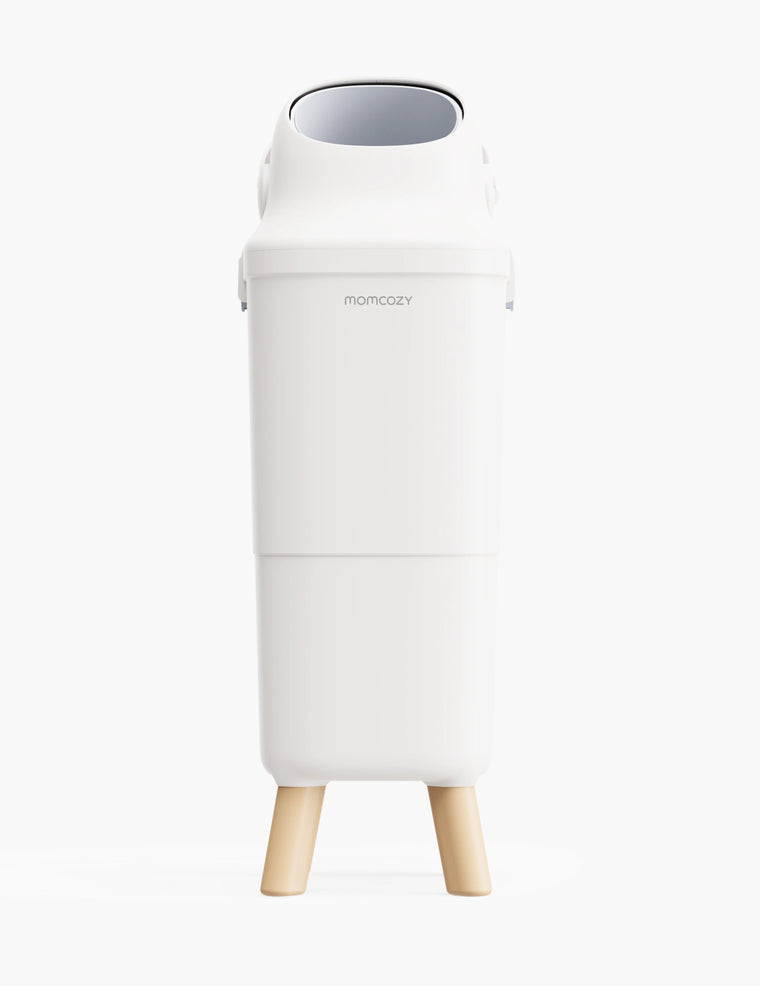
For households that decide a dedicated nappy bin would make sense, the Momcozy Triple-Seal Nappy Bin is one option.
The product has a 22L capacity and features triple-seal odour control. It also has a wide opening and clear lid, along with a child safety lock. The bin uses a patented clamp bag seal and is designed to work with standard 13-gallon bin bags, meaning special refill bags are not required.
These features may suit families who want a dedicated place for used nappies between the changing area and their normal household waste route.
However, it is still an optional household product. Newborn nappy frequency does not automatically mean that you need a dedicated bin. The decision should come from how your household manages used nappies.

A Simple First-Week Nappy Planning Table
Rather than trying to predict every single change, it can help to plan the basic parts of your first-week setup.
|
What to plan |
Practical approach |
|
Clean nappies |
Keep a reasonable supply available and restock as needed |
|
Main changing area |
Choose a convenient location for most daytime changes |
|
Secondary area |
Consider a smaller setup if you regularly use another room |
|
Spare clothes |
Keep a few easy-to-reach changes nearby |
|
Cleaning supplies |
Store the products you use regularly together |
|
Used nappies |
Decide whether they go directly into household waste or temporary indoor containment |
|
Night-time supplies |
Keep a small set of essentials near the bedroom |
|
Nappy disposal |
Choose the method that fits your home's layout |
|
Restocking |
Check supplies regularly instead of waiting until they run out |
|
Rubbish |
Work used nappies into your normal household waste routine |
Do Not Over-Plan Your First Week
It can be tempting to buy everything before the baby arrives. But some parts of your routine cannot really be predicted until you are at home with your newborn.
You may think you will use one room for every change and then discover that another room is more convenient. You may think you will take every used nappy straight outside and later decide that indoor containment is easier.
That is why flexible planning is useful. Start with the essentials. Then adjust.
Keep Your Main Supply Separate
You do not need every nappy in the changing area. Keeping your main stock in a cupboard or storage area allows you to refill the changing station when needed. This also gives you a better idea of how quickly you are going through your supply.
Plan for the Unexpected
A nappy change may sometimes involve more than just changing the nappy. You may need a clean outfit. You may need to replace something at the changing station.
You may realise that a product is stored too far away. These small inconveniences can add up when the same routine happens many times each day. A little planning can make the process smoother.
When the Routine Starts to Change
The newborn stage is temporary. As your baby grows, your daily routine will change.
The number and timing of nappy changes may change too. Your baby may spend more time awake, your household may leave the house more often and your changing setup may move to suit your new routine.
The same is true of your disposal habits. What works in the first week may not be the best option several months later.
Your First Setup Does Not Need to Be Permanent
You might start with a changing table and later realise that most changes happen on a mat somewhere else. You might initially keep the main nappy supply upstairs but discover that you use most of it downstairs.
You might take used nappies directly outside at first and later decide that an indoor nappy bin is more convenient. None of this means you planned badly. It simply means your household routine changed.
Notice What Creates Friction
After a few days, pay attention to the small things that make nappy changes harder.
- Maybe the nappies are stored too far away.
- Maybe the bin is in another room.
- Maybe you keep forgetting to restock the night-time supplies.
- Maybe you are making unnecessary trips between floors.
These are practical problems that can usually be solved by changing the setup.
Keep the System Simple
The purpose of your changing setup is to support you, not give you another job to manage. If a simple basket and normal household bin work, there is no need to add more equipment.
If a Momcozy Triple-Seal Nappy Bin genuinely makes indoor disposal easier, it can become part of the setup. The goal is convenience.
Frequently Asked Questions
How often should you change a newborn nappy?
Newborns generally need frequent nappy checks and changes, especially when a nappy is soiled. There is no single clock-based schedule that works for every baby, so it is better to respond to your baby's individual needs.
What is a normal newborn nappy frequency?
There is no single number that defines a normal routine for every newborn. Changes can happen frequently throughout the day and night, and the exact pattern can vary between babies.
How many nappies does a newborn use per day?
A newborn can use several nappies across a 24-hour period. Daily use can vary, so it is better to prepare for regular changes than to rely on one exact number.
Should I change a newborn's nappy at night?
If your baby needs a change, the nappy should be changed. Keeping the night-time setup simple can make overnight changes easier to manage.
Do I need a nappy bin for a newborn?
No. A dedicated nappy bin is optional. Some families find one useful for temporary indoor containment, while others use their normal household waste system.
Where should I put a nappy bin?
If you use one, placing it close to the main changing area can be practical. The exact location depends on your home's layout and where you normally change your baby.
Is a large nappy bin better?
Not necessarily. A larger bin can reduce how often it needs emptying, but the best size depends on the amount of space you have and how often you prefer to take household waste out.
Can I use a normal bin for nappies?
Some households use their normal household waste system for used nappies. Whether this is convenient depends on the location and size of the bin and how frequently your household takes rubbish out.
Can I keep used nappies indoors?
Some families choose to keep used nappies contained indoors temporarily. This can be particularly convenient when the main household bin is outside, downstairs or in a communal area.
A Momcozy Triple-Seal Nappy Bin is one option for households that prefer this type of setup.
Should I have more than one changing station?
It can be useful, especially in a multi-storey home. You do not necessarily need two complete stations. A smaller secondary area with the most-used essentials may be enough.
What should I keep beside a newborn's changing area?
Keep the essentials you use during a change, such as clean nappies, your chosen cleaning supplies and a changing mat. Spare clothes can also be useful.
How do I organise nappies for the first few weeks?
Keep a reasonable number close to the main changing area and store the rest somewhere accessible. Refill the station regularly instead of overcrowding it.
How can I make frequent nappy changes easier?
Keep the supplies you use most often within reach, choose a convenient changing location and have a clear plan for used nappies. Small changes to the household setup can make a repetitive routine feel much easier.
Is a nappy bin necessary if I change nappies frequently?
Not necessarily. Frequent newborn changes may make a dedicated bin more convenient, but whether you need one depends on your home's waste setup.
When should I buy a nappy bin?
There is no need to buy one simply because you are expecting a newborn. If your household already has an easy way to dispose of used nappies, you may not need one. If frequent trips to an outside or communal bin would be inconvenient, a dedicated nappy disposal bin may be worth considering.
Conclusion
The first few weeks with a newborn can make nappy changes feel almost constant. You may find yourself checking, changing, restocking and dealing with used nappies throughout the day and night.
If you are searching for newborn nappy frequency, the practical answer is to expect frequent checks and changes while allowing your baby's individual needs to guide the routine. There is no need to force every change into a strict timetable. It also helps to plan for the household side of the routine.
Keep clean nappies and change supplies where you actually use them. Consider a smaller night-time setup if that makes overnight changes easier. Think about how used nappies will be handled before the first busy days arrive.
A dedicated nappy bin is optional, not a requirement. If keeping used nappies contained indoors would make your routine more convenient, the Momcozy Triple-Seal Nappy Bin is one option to consider.
The most useful setup is not necessarily the one with the most equipment. It is the one that fits your home, keeps everyday essentials within reach and gives you a straightforward way to deal with used nappies.
Newborn life already comes with plenty of new routines to learn. A simple nappy-changing and disposal setup can remove one small source of daily friction and give you more time to focus on your baby.