Can you microwave breast milk? The NHS advises against microwaving breast milk or infant formula.
Many people assume that if a bottle of milk feels warm to the touch, then it is ready to feed to the baby. However, microwaves can heat unevenly. The outside of a milk bottle can feel warm to the touch while the milk on the inside can contain hot spots that could burn the baby’s mouth.
The concern is not how long to microwave the milk but whether the milk is evenly heated and has been checked before the feed. Instead, avoid the microwave, warm the milk gently, swirl the milk, and then check the temperature.

Key Takeaways
- The NHS advises against microwaving breast milk or infant formula.
- Microwaves can create hot spots that may burn a baby's mouth.
- Always check the milk temperature, not just the bottle.
- Expressed breast milk does not need to be warmed if your baby accepts cold milk.
- Powdered formula should be prepared using water of at least 70°C.
- Use warm water or a suitable bottle warmer instead of a microwave.
Why Shouldn't You Microwave Breast Milk or Formula?
1. Microwaves Can Create Hot Spots
Think of a bottle that has been in the microwave. The outside of the bottle doesn’t feel that warm, and the milk looks ready to drink.
Is it? Not necessarily. The temperature of the milk may not be the same throughout. There could be places in the milk that are much hotter, possibly scalding enough to burn your baby.
The NHS advises not to microwave expressed breast milk because there may be hot spots that can burn your baby’s mouth.
2. A Warm Bottle Doesn't Guarantee Safe Milk Temperature
The temperature of milk inside a feeding bottle can’t always be told by the temperature of the outside of the bottle.
There are differences in how various bottle materials relate to heat. Therefore, plastic, glass, or silicone feeding bottles may feel different to the touch, even if the milk inside is at the same temperature.
In other words, the caregiver who checks only the outside of the bottle has not yet checked the feed.
It doesn’t matter how you are warming the milk; you must always check the temperature of the milk before each feed. Check the milk and not the bottle.
3. Short Heating Times Don't Eliminate the Risk
It’s easy to think that reducing the time or setting the power lower is safer, but the milk doesn’t always warm evenly that way.
In fact, NHS recommendations do not rely on how long the milk is heated in the microwave.
The goal is not to find a better setting for the microwave. The goal is to avoid using the microwave and instead use warm water or a bottle warmer.
What Happens When Breast Milk Gets Too Hot?
Breast milk has many nutrients and components that help infants’ growth and development, and some of these components can be affected by excessive heat.
Heat Can Affect Some Breast Milk Components
Breast milk consists of numerous proteins, enzymes, antibodies and other elements that are present in a natural state.
Some of these are heat-sensitive. Exposure to high temperatures may cause changes in structure and/or activity.
The amount of change resulting from the exposure to heat depends on various factors such as milk handling and the length of time milk is exposed to heat.
However, it is not correct to state that the loss of nutrients always occurs with exposure to heat.
Does Breast Milk Need to Be Warmed to 37°C?
No.
Body temperature is approximately 37°C. This doesn’t mean that expressed breast milk has to be 37°C at every feed.
According to the NHS, babies can drink milk that is expressed and stored in the fridge, as long as the baby is OK with drinking cold milk.
Equally, warm milk can be given if this is what the baby prefers.
The aim is not to get the temperature of the milk to a specific number. The aim is to get the milk to a temperature that is comfortable for the baby.
Is Microwaving Formula Milk Safe?
No. The NHS also advises against warming infant formula in a microwave.
The reason for this recommendation is the same for breast milk. Microwave heating can’t be relied on to be even, and areas of the milk may still be hot enough to burn the infant’s mouth.
Formula adds one more point. Making powdered formula and warming a bottle that is already made up are two different jobs. They should remain separate.
Preparing Powdered Formula Is Different from Warming It
Powdered formula is not sterile.
For this reason, water that’s at least 70°C reduces the risk of harmful bacteria when combined with the formula powder, as recommended by the NHS.
The NHS’s guide to making up formula states that the caregiver must use freshly boiled water and let it cool for no longer than 30 minutes before mixing.
Before preparing a feed, make sure the bottle and teat have been properly cleaned and sterilised. Pour the required amount of freshly boiled water into the bottle while it is still at least 70°C, then add the correct number of formula scoops according to the manufacturer's instructions. Our range of bottle washers and sterilisers can help with this.
Once the formula is ready, allow it to cool to an appropriate feeding temperature.
The temperature of the water used to make up the formula should not be confused with the temperature of the milk when feeding the baby.
Should You Microwave Freshly Prepared Formula?
No.
Freshly made formula is hot, because the water is heated to make it. Heating it further is the wrong thing to do. The next step is to cool it.
The NHS recommends holding the feeding bottle, with its lid on, under cold running water, until the feed is at a comfortable temperature for the baby.
The formula should be tested on your wrist. Place a few drops there, and the formula should feel warm or cool, never hot.
Can You Microwave Formula That Has Already Been Prepared?
No.
If a made-up formula needs warming, use a more appropriate method than a microwave, because the risk of hot spots is the same even if the formula was made up correctly.
A bottle warmer can help with this.
What About Ready-to-Feed Formula?
Liquid ready-to-feed formula is different from powdered formula. The liquid form is given ready to use, and does not need hot water and powder.
Use it as directed on the packaging.
If you would like to warm it and the product instructions allow you to do so, use an appropriate method. Do not use a microwave.
Safe Alternatives to Microwaving Baby Milk

1. Use a Jug of Warm Water
For expressed breast milk, the NHS recommends warming the bottle in a jug of warm water if your baby prefers warm milk.
Follow these steps:
- Make sure the milk has been stored safely and is OK to feed.
- Place the closed bottle in a jug of warm water. The water should not be boiling.
- Make sure the water does not touch the teat or the bottle opening.
- Let the milk warm gradually.
- Remove the bottle and gently swirl the milk.
- Check the temperature to see if it is OK to feed your baby.
2. Hold the Bottle Under Warm Running Water
A different NHS-supported method for warming expressed breast milk is to run warm water over the bottle.
Make sure the bottle is securely closed and water does not get in. Keep water away from the teat and the openings.
Take your time and let the milk warm up gradually. Using very hot water to speed things up can be tempting, but don’t do it.
Swirl the milk and check that it is not too hot before feeding.
3. Use a Suitable Baby Bottle Warmer
A bottle warmer can be a useful tool when regularly warming bottles.
Different models use different methods of heating, so make sure the settings match your milk and bottle.

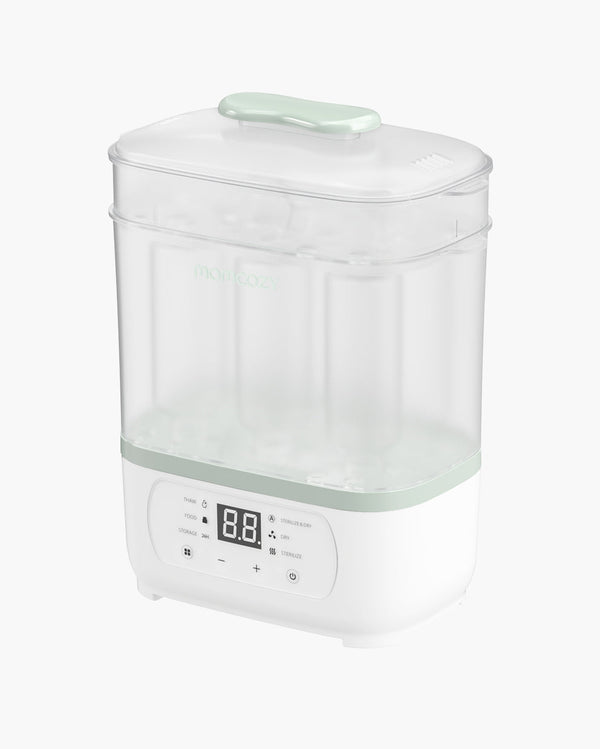
For home feeding, one option is the Momcozy Night Pro Baby Bottle Warmer. It uses a water bath to heat milk and can also be used to heat breast milk storage bags. It has settings for bottle materials and starting temperatures, including milk that has been refrigerated. It has a keep-warm setting and a night light. Another option is the Nutri Smart Analog Baby Bottle Warmer that also uses a water bath and has dial controls.

No bottle warmer should be described as guaranteeing a perfectly even milk temperature in every situation.
Read the instructions and check the milk temperature before feeding your baby.
For step-by-step instructions on how to use a bottle warmer, see How to Use a Baby Bottle Warmer at Night. For help determining if you need a bottle warmer, see Do You Need a Bottle Warmer?.
4. Consider a Portable Warmer for Days Out
If you need to feed your baby away from home often, you may want to try a portable option.
An example is the Momcozy Superfast Portable Baby Bottle Warmer. This option is rechargeable and designed to travel with you and warm milk on the go. It can hold about 500 ml, and the manufacturer states that it takes about five minutes to warm refrigerated breast milk in it.
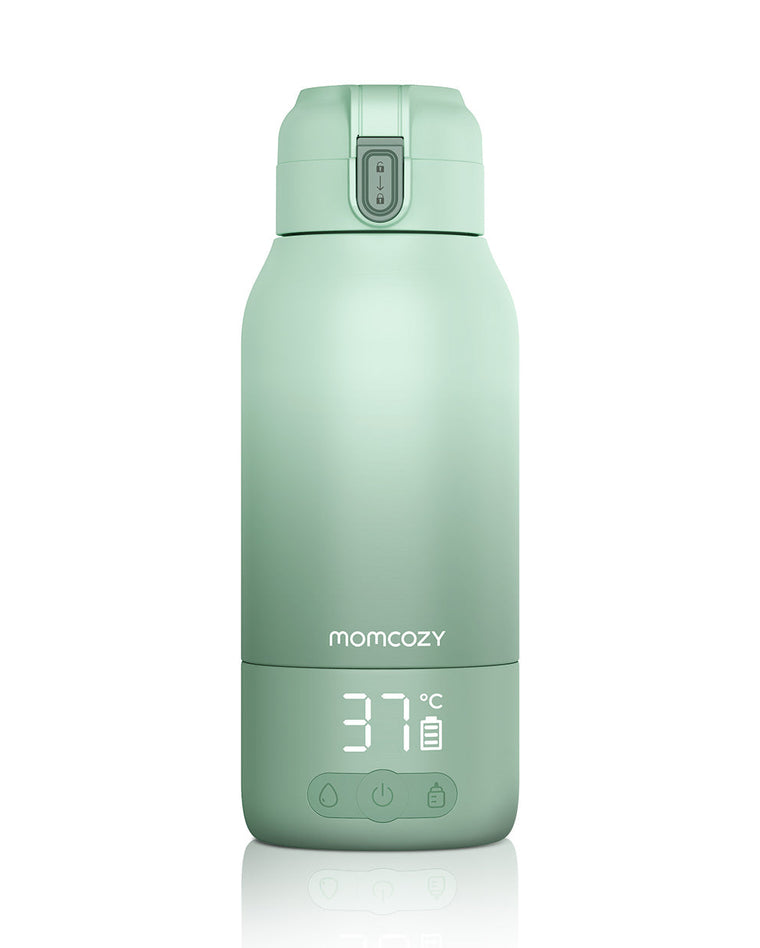
It heats liquids directly in the container, so unlike the water-bath warmers, the surfaces that come in contact with the milk need to be cleaned.
It is also available with a bottle cooler in the On-the-Go Bundle. You can also see more options in the portable bottle warmer collection.
Using a portable bottle warmer does not replace proper storage, transportation and preparation of milk.
Comparing Safe Warming Methods
|
Method |
Suitable use |
Key consideration |
|
Jug of warm water |
Warming expressed breast milk at home |
Use warm rather than excessively hot water |
|
Warm running water |
Occasional breast milk feeds |
Keep the bottle securely closed |
|
Compatible bottle warmer |
Regular bottle warming |
Use the correct settings and check milk temperature |
|
Portable warmer |
Feeding away from home |
Follow milk-handling and device instructions |
|
Microwave |
Not recommended |
Uneven heating and hot-spot risk |
To compare every model, see the Momcozy UK bottle warmer collection.
How to Check Milk Temperature Before Feeding
Use any of the warming methods above, but always test your feeds before offering them to your baby. This is the final step in the process and helps to catch any mistakes in the previous steps.
Test a Few Drops on Your Wrist

According to the NHS, testing a few drops of prepared formula on your wrist is a way to test the temperature of the formula before feeding.
This also applies to expressed breast milk. Breast milk should never be served hot. It should feel warm or cool. If it's too hot, let it cool down before feeding.
Does Every Baby Prefer Warm Milk?
Not really. If your baby accepts cold expressed breast milk that has been stored safely, there is no need to bring it to body temperature. For formula, follow preparation, cooling, and feeding instructions.
Common Baby Milk Warming Mistakes to Avoid
Avoiding the microwave is the first step. Here are a few more habits worth watching.
Ask yourself at each one: Is the milk being warmed gradually? Has it been checked?
Leaving Milk in a Warmer for Too Long
Some of our bottle warmers offer an automatic keep-warm function.
This explains how the appliance works. It is not a recommendation on how long breast milk or formula can stay warm.
Always remove the milk as soon as it has finished warming and refer to the relevant NHS feeding guidance.
Reheating Leftover Milk
Don’t plan to repeatedly warm and cool the same bottle.
According to the NHS, expressed breast milk left in the bottle after a feed should be used within an hour or thrown away.
For made-up formulas, the NHS advises throwing away any leftover formula after a feed.
Making up several smaller bottles may lead to less waste.
FAQs About Microwaving Breast Milk and Formula
Can You Microwave Breast Milk for Just a Few Seconds?
Not recommended. Milk can heat unevenly even in the shortest cycle. The NHS advises against using a microwave to warm or defrost breast milk. Instead, warm the milk in a jug of warm water, or in a bottle warmer, and swirl it before you check the temperature.
Can You Microwave Water Before Adding Formula Powder?
The NHS recommends boiling fresh tap water in a kettle rather than using a microwave to prepare the water for powdered formula. Allow the boiled water to cool for no more than 30 minutes so it remains at least 70°C when mixed with the powder. Follow the NHS method to prepare feeds safely.
Can You Microwave Breast Milk in a Glass Bottle?
No. Using a different bottle material won’t change the risk of uneven heating. Just because a glass bottle is labelled microwave-safe for other uses does not mean it is a good way to warm breast milk in the microwave.
Can You Give Baby Cold Breast Milk?
Yes. According to the NHS, expressed breast milk can be offered directly from the fridge if the baby is happy to drink it cold.
What If You've Already Microwaved a Bottle?
If you've accidentally microwaved a bottle, the safest precaution is not to offer that feed to your baby. Microwave heating can produce uneven temperatures and hot spots that may not be obvious from the outside of the bottle. Prepare another feed using an NHS-recommended method, and check its temperature before feeding.
If you think your baby has been burned, seek medical advice promptly through NHS 111. Call 999 for a life-threatening emergency, such as severe breathing difficulties.
Do You Need a Bottle Warmer to Warm Baby Milk Safely?
No. A bottle warmer is convenient for frequent feeds, but not essential. According to the NHS, to warm expressed breast milk, the warm-water methods are recommended. If you are still unsure, read Do You Need a Bottle Warmer?
The Bottom Line: Warm Baby Milk Without a Microwave
Microwaving breast milk or formula is not recommended because uneven heating can create hot spots that may burn your baby. The NHS advises using warm water or a suitable bottle warmer instead.
Breast milk can be served cold if your baby accepts it. For formula, follow preparation instructions, allow it to cool to a safe feeding temperature, and always check before feeding.
A bottle warmer is convenient to use for routine feeds. For home feeds, the Momcozy Night Pro Baby Bottle Warmer is one option. For feeds away from home, the Momcozy Superfast Portable Baby Bottle Warmer is another option. For more information, see the bottle warmer collection.
Use any of the methods above, but avoid the microwave and warm the milk gently. Swirl and check the milk to make sure it’s not too hot before feeding your baby.