An umbilical hernia during pregnancy can catch you off guard, despite doctors believing it to be rare—around 0.08% of pregnant women. When looking at all abdominal wall hernias, about 15% to 20% of women report the appearance of a new or worsened bulge as the pregnancy progresses. Womb expansion and softened abdominal muscles push tissue out toward your belly button. With UK antenatal care, most mums and babies do well.
What Is a Navel Hernia in Pregnancy?
Expectant mothers can experience navel hernias (also referred to as umbilical hernias) in which an organ or liquid, such as a portion of the intestine, protrudes through a weak spot in the muscles of the abdominal wall at or very near to their navel. Pregnancy tends to stretch a hole that is already there, rather than making a new one.Most lumps are small and can be felt as a soft lump when you cough, sneeze or strain. Hard, painful or incarcerated lumps require review to exclude that tissue is compromised.
Common Types of Hernias During Pregnancy
So although the discussion was on umbilical hernias, we’re seeing other types emerge due to hormone shifts and pressure:
- Umbilical hernia: tissue bulges through the belly button—the most common type related to a navel hernia during pregnancy.
- Inguinal hernia: the bulge extends down the groin and into the lower abdomen.
- Hiatal hernia: a part of your stomach pushes upward through your diaphragm into your chest—and it may exacerbate heartburn.
- Incisional hernia: when the hernia occurs at the site of a previous surgical incision in the abdomen, such as some C-section incisions.
A good diagnosis will help your midwife or GP to plan for observing and supporting you in labour.
Causes of a Navel Hernia in Pregnancy
Pregnancy umbilical hernia occurs as a result of escalating intra-abdominal pressure. Your uterus, the amniotic fluid and the weight you gain all push out on muscles that progesterone has already softened. Tissue around the navel, naturally thinner from fetal life, may give way under that load. Hormonal softening of ligaments further reduces wall strength, so a previously silent defect can appear or grow—often from the second trimester, a timing frequently noted in UK antenatal practice.
Risk Factors for Developing a Hernia During Pregnancy
Certain pregnant women have a higher risk of a navel hernia during pregnancy due to their personal or pregnancy-related characteristics—not due to a difference in the underlying process, but because the strain on the wall increases with each day. The main risk factors are:
- Carrying twins, triplets, or more.
- Weight gain or overweight in early pregnancy.
- Abdominal surgery in the past, including C-section.
- Persistent cough or constipation causing strain repeatedly.
- A family history of hernias.
- Older maternal age or weaker core muscles before pregnancy.
Having risk factors doesn’t mean a woman will definitely get a hernia—many women are unaffected even with multiple risk factors. Share your history when you book, so your care team can provide advice early on.
Symptoms of a Navel Hernia in Pregnancy
Presentation varies. A domed navel can protrude when coughing, sneezing, or bending over. It is quite common to experience some discomfort, tightness, or heaviness in the line of the midline and a number of soft lumps will soften up when you lie on your back. Acute pain, severe reddening of skin, or a hard lump that you cannot gently push back is an emergency and you must see your GP or go for assessment at your maternity unit immediately. This page offers general information only—your clinician should interpret your signs.
Effects of a Hernia on You and Your Baby
For the majority of mums, a navel hernia in pregnancy is more of a discomfort than a danger to the infant—the uterus generally shields them. As the weeks go by, you may feel pressure, tenderness, or even notice a bulge. Rare strangulation (sequestered tissue with reduced perfusion) is a danger to the mother's life and should be managed as an emergency. Antenatal appointments provide you with constant opportunities to report changes in yourself.
Complications of a Navel Hernia in Pregnancy
Most umbilical hernias are minimally symptomatic but are prone to complications. Incarceration entrapped tissue in the defect, strangulation occludes blood flow to it, leading to intense pain, edema, nausea, and vomiting. Contact your maternity unit or NHS 111 for advice; call 999 if you are told to or if symptoms are severe.
Red Flags: When to Seek Immediate Medical Care
Most lumps are not dangerous, but get emergency care if you have:
- Severe pain in or around your navel that is getting worse.
- A solid, painful lump that you are unable to gently push back.
- Discolouration of the skin over the hernia.
- Nauseous, vomiting, or difficulty in having a bowel movement or passing gas.
- Fever or features suggestive of infection.
These signs may indicate incarceration or strangulation and they must be evaluated promptly to ensure that you and your baby are safe.
Treatments for a Navel Hernia in Pregnancy
The plan depends on the size, symptoms, and whether or not it has any complications. Most hernias are watched until after delivery unless an emergency arises.
Watchful waiting and monitoring
Small, asymptomatic hernias are generally followed at regular antenatal visits to ensure they are not progressing.
Lifestyle and comfort measures
- Don't strain yourself or lift heavy things.
- Perform pregnancy-safe core exercises only after receiving clearance from your GP, midwife, or physiotherapist.
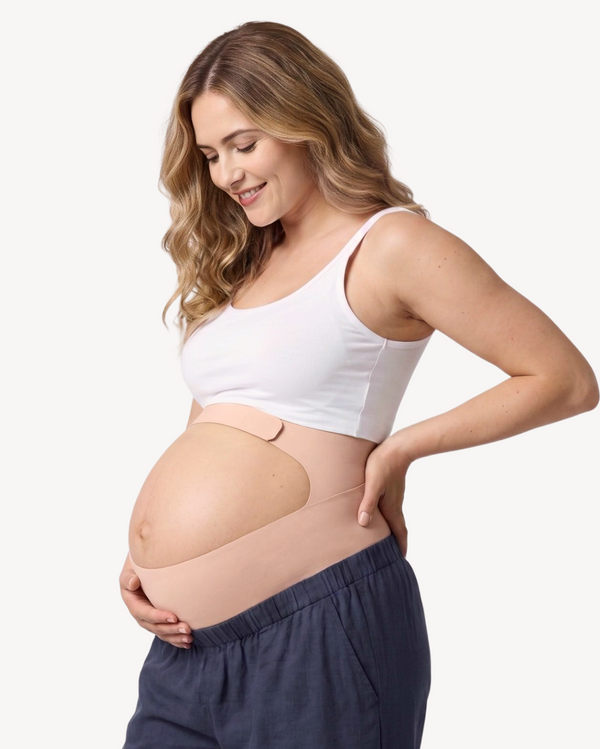
- For daywear, wear a supportive maternity band or belly band to take the pressure off.
Medical management
If your symptoms persist, your provider may suggest closer observation or pain relief that is safe to take while pregnant. Intense pain, vomiting several times, or a hard bulge which cannot be pushed back needs evaluation on the same day.
Surgery during pregnancy (rare)
Surgeries are normally confined to those with incarcerated or strangulated hernias. Non-urgent surgical procedures performed during pregnancy usually are delayed until after delivery, although in certain circumstances they may be performed at the time of a cesarean delivery if indicated.
Which size of umbilical hernia needs surgery?
The width is sometimes classified as narrow (about 1 cm), medium (1 to 4 cm), or wide (more than 4 cm), according to the NHS guidelines. In pregnancy, size by itself very rarely impacts on the decision to operate as an emergency; symptoms and complications are more significant factors. You can talk about measurements at your appointment.
Recovery After Hernia Treatment
If your hernia was managed without surgery, the symptoms tend to improve with delivery as the pressure inside your abdomen lessens. For a graded recovery-rest, you should expect a minimum of a few weeks, heavy lifting is out of the question, then as your surgical team tells you, you can gradually start doing light exercise. Wound care, compression garments, and follow-ups help you heal while you’re busy catching up on postpartum and learning how to care for your new baby.
Preventing an Umbilical Hernia in Pregnancy
There is no way to ensure that you will not get a hernia, but you can make it less likely by minimizing strain on your body: treat coughs and constipation promptly, avoid heavy lifting, and do gentle core strengthening exercises as recommended by your physician.
The Momcozy Ergonest Maternity Belly Band spreads even pressure across bump and lower back, offering ergonomic support that may ease pulling near the navel on active days.
Back Support
Comfort
Effectiveness
Managing a Hernia During Labour and Delivery
Many women with an umbilical hernia have vaginal births without complications. The lump can be watched by midwives as you push and they can change position if necessary. Significant or symptomatic hernias can be associated with an assisted delivery or, in very rare circumstances, caesarean delivery to protect the abdominal wall. Report any hernia pain or changes to your team before you go into labour.
FAQs
Do pregnancy hernias go away?
Pressure gradually relieves after delivery, and so a pregnant woman with a navel hernia may notice it become less pronounced. Complete resolution without surgery is unusual; small lumps are frequently observed or repaired electively following recovery.
What food to avoid in umbilical hernia?
There is no special diet to heal a hernia. Some mums avoid reflux triggers and have smaller meals to lessen the bloating and straining. Prioritise your fibre and fluid intake to keep your bowels moving, and see your GP or a dietitian for personalised advice.
What is the best sleeping position for someone with an umbilical hernia?
Pregnant women in the final stages of pregnancy report that lying on their side with a pillow between their knees and under the abdomen is comfortable. Don't take up any pose that brings obvious pressure on your navel with your semi-reclined rest if it makes you feel discomfort on your side.
Is a hernia painful during pregnancy?
There are women who get almost no pain, yet there are some who feel like they are being pulled or have a sensation of pressure or pulling around their navel when they cough or stand for a long time. If the pain is sharp and sudden, that is an emergency.
Is it possible to treat an umbilical hernia in a baby without surgery?
Infant umbilical hernias follow different NHS pathways—many close by age five, with surgery for selected cases. Follow your health visitor or GP about your baby; adult pregnancy advice does not apply.
Can I live a normal life with an umbilical hernia?
The majority of women with uncomplicated hernias go on with work, routine activities, and sanctioned antenatal exercise with reasonable restriction on lifting and straining.
What is the 3 finger test for hernia?
Clinicians sometimes estimate defect width by palpation—it is not a reliable home test. Any new umbilical lump in pregnancy needs specialist review.
Does drinking water help with a hernia?
After you pass stool, be sure to drink plenty of fluids to keep stools soft and prevent straining. Water doesn’t make a hernia smaller by itself.
Is umbilical hernia very serious?
Strangulation is severe, albeit a lot of cases are mild. That’s why red-flag symptoms matter. Most pregnancies are just fine with surveillance and a plan that you and your maternity team are on the same page about.
Conclusion
An umbilical hernia in pregnancy can be worrying, but keeping an eye on it and having regular contact with your GP or midwife is enough to see most mums through. Early information about causes and risk factors, signs and symptoms, and treatment options may enable early action. Most hernias can be controlled with treatment for comfort, such as an ergonomic belly band, when you need to focus on a healthy pregnancy, with right support.