If your kitchen sink is often full of baby bottles, teats, and breast pump parts, you may be wondering whether your dishwasher is enough or whether a dedicated bottle washer is worth the extra worktop space. This bottle washer vs dishwasher comparison explores the differences between the two options to help you decide which best suits your daily routine.
For UK parents, it is important to understand that the NHS advises that a dishwasher can clean baby feeding equipment, but it cannot sterilize the baby feeding equipment. NHS recommends sterilising bottles, teats, and other feeding equipment until the baby reaches the age of 12 months. Considering this, let us compare the bottle washer and dishwasher in terms of cleaning, sterilisation, drying, capacity, and running costs.
What Is a Bottle Washer?
A baby bottle washer is a dedicated appliance that is used to clean the bottles, teats, and other parts of a breast pump. Unlike a household dishwasher that is used to wash a range of kitchenware, a baby bottle washer is specifically intended for feeding equipment. There are models that only offer washing functions, while there are those that have functions of washing, sterilising, drying, and storing. It is important to check the functions of each model before choosing one.

The Momcozy KleanPal Pro Bottle Washer
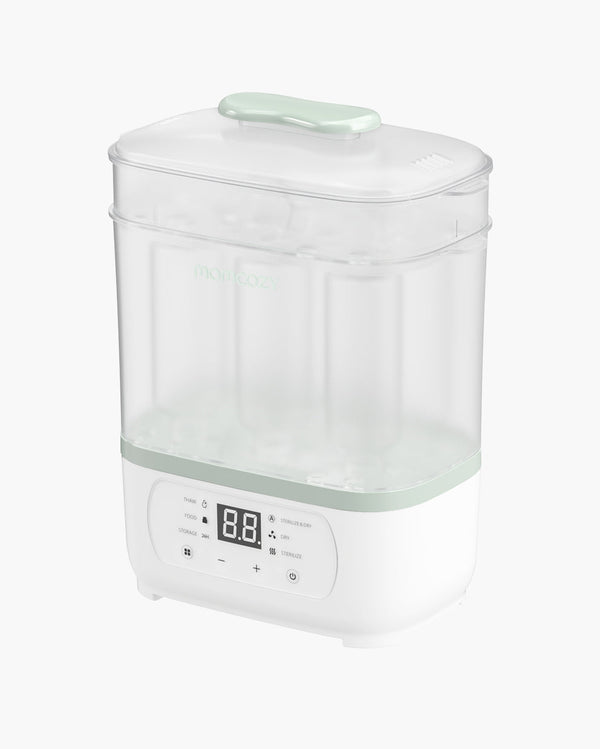
For UK parents looking for an all-in-one solution, the Momcozy KleanPal Pro combines bottle washing, steam sterilisation, drying, and storage in one appliance. It can hold a total of four baby bottles in one load, or about two or three bottles if it is used together with other components of the breast pump. The functions of this product can be useful for families who regularly wash bottles or express breast milk.
Explore the Momcozy KleanPal Pro bottle washer and steriliser for UK product details, programmes, and compatible accessories.
The Routine It Replaces
One of the main advantages is that it combines several steps of your feeding equipment cleaning routine in one appliance. Instead of washing bottles in one appliance, transferring them to a separate steriliser and then managing the drying process, an all-in-one washer can take care of all those steps within the single device. Any time saved will depend on your feeding routine.
What Is a Dishwasher?
A home dishwasher utilises water, detergents, and its spray arms to clean dishes, utensils, and pans. The dishwasher can clean baby bottles and other accessories, as long as the manufacturer confirms they are dishwasher-safe. If you wash the parts in a dishwasher, make sure to dismantle them before putting them in the dishwasher.

Based on the NHS advice on sterilising baby bottles, lids and teats should face downwards in the dishwasher. It also mentions that you might wish to wash the teats separately to ensure that they are fully clean. A dishwasher can be a convenient option, particularly if you already run regular household loads, but it cannot replace the sterilisation step.
For information on loading and washing instructions, please refer to Can You Put Baby Bottles in the Dishwasher?. The question here is not whether the dishwasher can wash bottles, but whether the entire process is suitable for you.
Bottle Washer vs Dishwasher: Head-to-Head Comparison
The main difference lies in their purpose. A dedicated bottle washer is designed specifically for cleaning baby bottles and compatible feeding accessories, while a household dishwasher is built to clean a wider range of kitchenware. The table below compares their key features to help you decide which option best suits your needs.
|
Factor |
Dedicated bottle washer |
Household dishwasher |
|
Cleaning |
Bottle-focused racks and spray layout |
General-purpose wash with compatible bottle parts |
|
Sterilising |
This feature is available on models that have a verified sterilising programme. |
NHS says dishwasher cleaning does not sterilise feeding equipment |
|
Drying |
Some models have a dedicated drying function. |
Depends on the dishwasher cycle and how items drain |
|
Load |
Smaller, feeding-focused batches |
Larger mixed household loads |
|
Pump parts |
Check each part and washer compatibility. |
Check each part's dishwasher-safe instructions. |
|
Space and cost |
Extra purchase, worktop space, and consumables |
Uses an appliance you may already own |
Design and Cleaning Precision
A bottle washer may use holders and jets arranged around bottle interiors and small components. This can make loading feeding equipment more straightforward. A dishwasher uses general-purpose racks and spray arms, so smaller parts may need a suitable basket or careful positioning.
Narrow teats, valves, and other small openings require particular attention. Look at the different parts of the appliance after you clean them, and consult the manual to know which specific parts must be cleaned separately. Without testing both types of appliance under comparable conditions, it would be inaccurate to claim that every dedicated bottle washer cleans better than a household dishwasher.
Cycle Time and Consistency
It is possible to run a bottle washer with a smaller number of bottles rather than wait until your family’s dishwasher is full. This would be helpful if you are cleaning multiple bottles or pumping milk on an hourly basis. However, if you have a dishwasher that is already running at night, then an additional device may not make things easier.
Think about the whole process rather than just the shortest run promised. Unloading, separate sterilisation, drying, washing of the appliance, and filling or draining of water must be taken into account. Different models will have different times depending on the settings used.
Sterilisation
Cleaning eliminates any traces of milk products as well as visible dirt. Sterilisation is another procedure aimed at minimising harmful bacteria. However, it is wrong to confuse drying with sterilisation, as removing moisture is not equivalent to sterilisation.
The NHS recommends sterilising baby feeding equipment until your baby is at least 12 months old. Recommended methods include steam sterilisation, boiling and cold-water sterilising solutions. The NHS also explains that putting baby feeding equipment in the dishwasher will clean it but will not sterilise it.
A dedicated washer will help in the sterilisation process only when it has an appropriate sterilisation feature. If the machine does not include a suitable sterilising function, use a separate sterilisation method recommended by the NHS.
Cost and Worktop Space
If you have a dishwasher at home, using it to wash the right type of bottles will not involve purchasing an additional piece of large equipment. Buying a dedicated bottle washer involves an additional cost and takes up worktop space. Depending on the model, you may also need cleaning tablets, water, filters or regular descaling.
Rather than assuming one option is always cheaper, consider how often you would use each appliance, whether you need a separate steriliser, and whether an all-in-one machine could replace equipment you already own.
Is Your Dishwasher Enough for Baby Bottles?

For many families, yes—as a cleaning method. If the bottles, caps, and teats that you have are dishwasher safe, you can clean them as per the instructions given by the manufacturer. However, under NHS recommendations, the sterilisation process is required until your baby becomes 12 months old.
If you use a small number of bottles and have an efficient system in place for cleaning, sterilising, and storing the feeding apparatus, then a dishwasher may be a good choice even if you are bottle-feeding.
For families who regularly express breast milk or bottle-feed their babies, cleaning several bottles and pump parts throughout the day can become part of their daily routine. Keeping these items separate from general household dishes may make cleaning more convenient. However, not all breast pump components are dishwasher-safe or suitable for steam sterilisation, so always check the manufacturer's instructions before cleaning them.
For UK families, it helps to look at a typical day: how many bottles do you clean? Where do you store dirty equipment? At what point in time do you sterilise everything, and where do you store your equipment after cleaning, but before using it again? You might want to think about investing in a dedicated machine.
Which Should You Choose?
It will be wise for you to use the method that will allow you to have an easy time cleaning and sterilising the feeding equipment. Think about the number of feeds, the equipment to be used, the amount of space available, and other considerations.
Is a Bottle Washer Really Necessary?
No. The dishwasher or proper hand washing will serve as the cleansing process, followed by proper sterilisation. If you do not require a large number of bottles or you have sufficient numbers to use, then the additional machine is not needed. However, as the need for the number of bottles grows, the machine gains value.
Why Do People Buy Bottle Washers Instead of Using the Dishwasher?
Convenience is one of the key factors behind parents opting for a specialised bottle washer. Instead of waiting for a full dishwasher load, parents can wash a few bottles whenever needed. Having washing, sterilisation, and drying functions in one appliance may also save time compared with completing each step manually.
However, there are always compromises: one more device to maintain, more countertop area, buying cost, and verifying parts' compatibility. This is just as important as anything else that could be advertised.
Which Is Better: a Countertop Dishwasher or a Baby Bottle Washer?
The countertop dishwasher remains a dishwasher nonetheless; it may prove useful in washing various household dishes that are compatible. The baby bottle washer, on the other hand, is specifically meant for feeding products and is usually designed to have built-in sterilising and drying capacity. In case of washing plates and other household products in addition to bottles, then it might prove more beneficial to use the countertop dishwasher.
How to Choose a Professional Bottle Washing Product
If you've decided that a dedicated washer would help, compare real product features rather than assuming that more jets, higher pressure, or a shorter wash automatically delivers a better outcome for your bottles.
Capacity
Think about the quantity and shape of bottles in your home, along with the teats, lids, and pump parts. The manufacturer’s capacity claims may refer to a specific bottle size or configuration. An accurate picture of a mixed load is more valuable than just the maximum number of bottles.
Cycle Functions
Be on the lookout for a clear definition of what processes the programmes carry out in terms of washing, sterilising, drying, or if there are options for storing. A fast wash does not mean a full process of washing, sterilising, and drying. Ensure that you know the requirements for detergent, water filling and draining, descaling, and others.
The Momcozy KleanPal Pro offers nine programme combinations, including a 19-minute Rapid Wash and options for steam sterilising, drying, and storage for up to 72 hours. The Rapid Wash covers washing only; programmes that include additional functions take longer. Check the current UK product page and operating instructions for details of each programme, water requirements, and detergent use.

Member price
From£299.99Code Save 30%

Cleaning Breast Pump Parts
Breast pump equipment can include small valves, membranes, shields and collection pieces with different care requirements. Check your pump manual before putting any component in a dishwasher or bottle washer; some parts must be washed differently or should not be exposed to particular temperatures. Disassemble items as directed, place them in approved positions, and inspect them after cleaning.
If you're pumping regularly, a diagram of a real mixed load—bottles alongside compatible pump components—can help you decide whether a dedicated washer genuinely simplifies your routine.
FAQs
Can Baby Bottles Go in the Dishwasher?
Yes, provided that the bottle and its parts are dishwasher-safe. Carefully follow the manufacturer’s instructions and arrange the parts correctly inside the dishwasher. According to the NHS website, the dishwasher will clean the feeding equipment but will not sterilise it.
Does a Dishwasher Sterilise Baby Bottles?
No, not under the NHS guidance for baby feeding equipment. NHS guidelines indicate that a dishwasher cannot sterilise baby feeding equipment. According to the guidelines, it is advisable to sterilise bottles and teats until a child is at least 12 months of age. If your cleaning setup does not incorporate a sterilisation technique, use an appropriate one.
Is a Bottle Washer Worth It If I Already Own a Dishwasher?
It could be if you have regular bottle feeding, multiple sessions of expressing, or an increasing number of feeding accessories that match. But if you only do occasional bottle feeding and have an efficient process for cleaning and sterilisation, you will not need one.
Can Teats and Breast Pump Parts Go in the Dishwasher?
Only when the manufacturer has stated that it is safe for those particular parts to be washed in a dishwasher. The NHS advises that parents who want to ensure the complete cleanliness of teats choose to wash them by hand.
How Should Bottles Be Dried and Stored?
The NHS recommends leaving bottles and teats in the steriliser until they are needed. If you remove them, fit the teats and lids immediately. Wash and dry your hands before handling sterilised equipment, and assemble bottles on a clean, disinfected surface, following the manufacturer's instructions.
Do I Need a Bottle Washer and Steriliser?
You need a suitable cleaning method and, under NHS guidance until at least 12 months, a sterilising method. These may exist as independent appliances or complementary functions within the same unit. A washer and steriliser in a single unit is an optional combination, not a necessity.
Conclusion
The bottle washer vs dishwasher decision is less about declaring a winner and more about understanding your daily feeding routine. A dishwasher can clean compatible baby bottles and may be the most practical option if you already own one and use relatively few bottles. Just remember that the NHS advises a separate sterilising step for feeding equipment until your baby is at least 12 months old.
A dedicated washer may be worth considering if you're cleaning numerous bottles and compatible pump parts or want to combine washing, sterilising, and drying in a more focused workflow. Compare actual capacity, care requirements, cost, and available kitchen space before buying. To explore an available UK option, see the Momcozy KleanPal Pro bottle washer and steriliser.