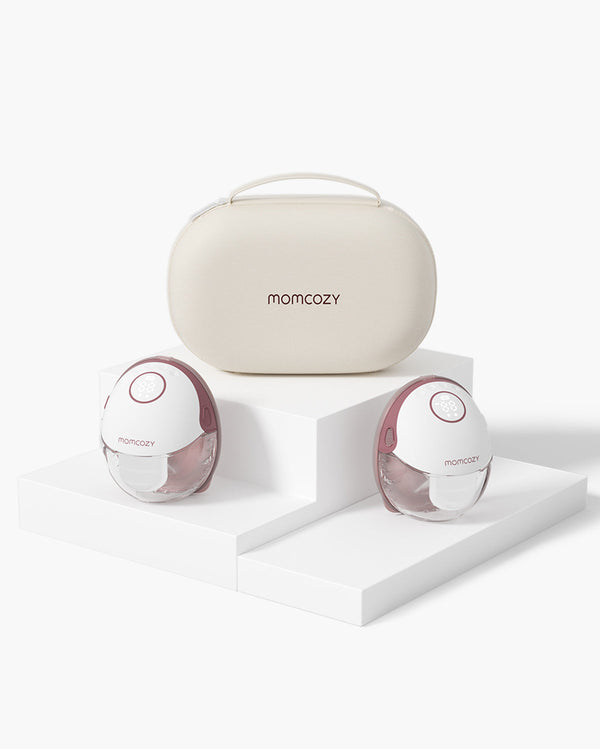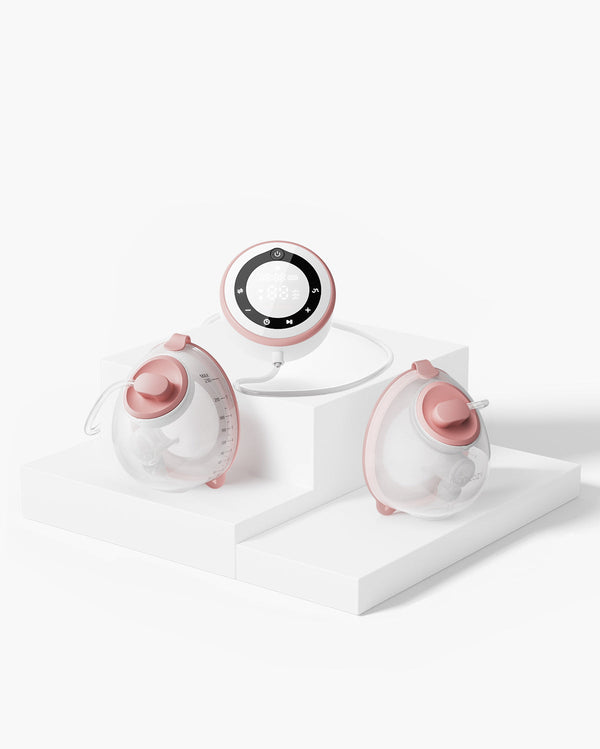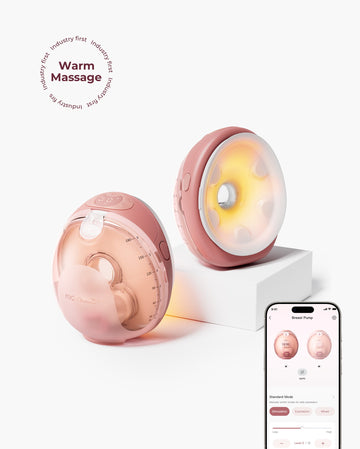
Between the school run, returning to work, and navigating the quietly chaotic pace of new parenthood, British mums have very little time to spare. Choosing the right breast pump can make an enormous difference to how smoothly your expressing journey unfolds. This complete guide on how to choose a breast pump in the UK covers every key decision, from pump types and flange sizing to popular brands, NHS considerations, and the pumps UK mums actually compare. On the UK shop the 2026 order is Wellness 1 first, then Air 1, then M5 Smart. Slim is one job. A cold start is another.

Different Types of Breast Pumps
Before you can settle on the right pump, it helps to understand the four main categories available. Each has its own strengths, and the best choice depends on how frequently you plan to express, where you will be doing it, and what your day-to-day routine looks like.
The table below gives a quick overview of how each type compares across the factors that matter most to UK mums.
| Feature | Electric (Plug-in) | Wearable/Hands-Free | Manual | Hospital-Grade |
|---|---|---|---|---|
|
Speed |
Fast |
Moderate to fast |
Slow |
Very fast |
|
Portability |
Low |
High |
High |
Very low |
|
Discretion |
Low |
High |
Moderate |
Very low |
|
Price (approx.) |
£50–£150 |
£70–£300+ |
£10–£40 |
Rental only |
Each category suits a different kind of expressing life, as outlined below.
Electric pumps are the traditional choice for mums who plan to express at home on a regular basis. They offer reliable, consistent suction and are widely available from UK retailers such as Boots and John Lewis. The main limitation is the power cable: unless you opt for a rechargeable model, you will be tethered to a UK 3-pin socket, which is fine for home use but impractical on a commute.
Wearable pumps (the new standard) are now widely regarded as the most practical choice for mums on the move. These pumps fit entirely inside a nursing bra, with no tubes or trailing wires, allowing you to express whilst answering emails, loading the dishwasher, or sitting on the Tube. A slim commute cup such as Air 1 disappears in a bra. Wellness 1 is the warmth-and-massage option when icy flanges stall the first minutes. M5 Smart is the everyday app wearable if you want hands-free without the slim-case premium. None of them is automatically a hospital hire.
Manual pumps require no battery or power source and are exceptionally quiet. They are not suited to exclusive pumping, but they make an excellent backup to keep in your handbag for occasions when you are caught out without a charger or need to relieve engorgement quickly. A manual pump from brands such as Medela or Lansinoh can be purchased for as little as £15 to £25.
Hospital-grade pumps use a more powerful, durable motor designed for frequent, long-term use. They are not the same as a pump marketed as having "hospital-strength suction": genuine hospital-grade pumps are built for clinical durability and are typically rented rather than purchased outright, through organisations such as the Association of Breastfeeding Mothers or specialist lactation services. They are most commonly recommended for premature babies or mums working to establish supply from birth.
How to Choose a Breast Pump Brand in the UK
With so many brands available in the UK, it helps to know what each one is known for. The table below covers the main options you are likely to encounter.
| Brand | Known For | Approx. Price Range |
|---|---|---|
|
Momcozy |
Wearable range: Wellness 1 warmth-and-massage, Air 1 slim commute, M5 Smart everyday app |
£50–£420 |
|
Medela |
Clinical reliability, wide spare-parts availability |
£30–£300 |
|
Elvie |
Ultra-discreet design, premium wearables |
£130–£450 |
|
Spectra |
High suction in a home pump — not the same as a multi-user hospital hire |
£100–£160 |
|
Philips Avent |
Comfort-focused, widely stocked in UK |
£20–£250 |
|
MAM |
Value-friendly, accessible for first-time buyers |
£70–£100 |
|
Lansinoh |
Budget-friendly electric and wearable options |
£25–£140 |
|
Nuby |
Entry-level manual options for occasional use |
£15–£30 |
Several of these brands deserve a closer look, particularly the ones most frequently recommended on UK parenting forums and by health visitors.
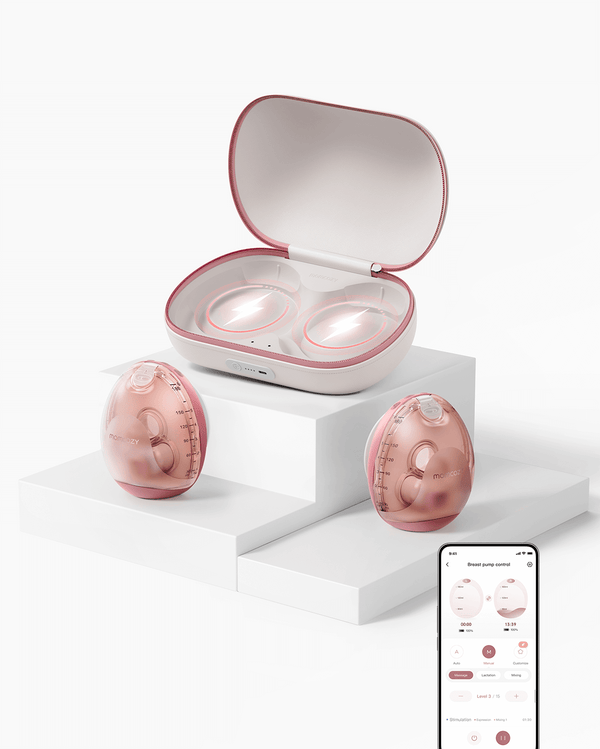
Momcozy has become a leading name in wearable breast pump technology. The brand states it is used by more than 6 million families worldwide, with 520+ patents on file — treat those as company figures, not a clinical ranking. In the UK, Momcozy sits in an interesting sweet spot: the brand offers genuinely premium features, including app connectivity, professional pumping modes, and smart milk-volume tracking, at price points that sit well below comparable models from Elvie or Medela. Entry wearables still sit under Elvie’s flagship spend; Air 1 at £420 is the slim-case premium. Match the job: Wellness 1 warmth, Air 1 discretion, M5 Smart everyday app.
Medela has a long-established reputation in the UK, with widespread availability in Boots, Mothercare, and major supermarkets. Its parts and accessories are easy to find in person, which is a genuine advantage for mums who need a replacement flange or valve quickly.
Elvie is a British brand that pioneered the in-bra wearable pump category and remains popular for its exceptionally sleek design. Its flagship models are among the quietest and most discreet available, though the price point is considerably higher than comparable Momcozy options.
Spectra is a firm favourite on UK breastfeeding forums for its high suction in a closed-system home pump (the motor stays dry), which prevents milk from ever reaching the motor. The Spectra S1 Plus typically retails for around £110–£140 and is frequently cited as a reliable workhorse for mums who express multiple times per day.
Key Considerations When Choosing a Breast Pump in the UK
General Factors to Consider
There are several practical questions worth asking before you make a decision.
How often will you express? Exclusive pumpers need a pump with a powerful, reliable motor and a long battery life. Mums who only express occasionally may find a mid-range wearable or a manual pump perfectly adequate.
Where will you be expressing? If the majority of your sessions will take place at home, a plug-in electric pump is a cost-effective option. If you will be expressing at work, on the train, or in public spaces, wearability and discretion should be your top priorities.
How much are you comfortable spending? A quality wearable pump typically ranges from £70 to £200 in the UK, with Wellness 1 at £299.99 and Air 1 at £420 if you want warmth-and-massage or a slim charging case, whilst hospital-grade alternatives are available on a rental basis. Set a realistic budget before you start browsing, and factor in the cost of replacement parts such as flanges and valves.
Does flange size matter? Yes, significantly. Choosing the wrong flange size is one of the most common reasons mums experience discomfort or poor output. More on this in Section 5.

Warmth and Massage for UK Mornings
Radiators click off. Silicone on the nightstand feels icy. Warmth and rhythmic massage can make the first minutes kinder. They are not a stronger vacuum, and they are not a promise that supply will climb. If you only need to disappear in a meeting, skip this factor and look at a slim cup. Skip heat on a hot, red, flu-like breast — that is a GP / midwife / NHS check, not a shopping one.
UK-Specific Considerations
Beyond the general factors, there are several aspects of the British context that are worth being aware of.
Returning to Work in the UK. The UK Equality Act 2010 places a responsibility on employers to provide a suitable, private space for breastfeeding mums to express, though there is currently no specific legal right to paid breaks for this purpose. In practice, this means that discretion and portability matter enormously. A wearable pump that sits silently inside your nursing bra during a meeting is a very different experience from retreating to a separate room with a plug-in double electric pump. For mums commuting on public transport or working in open-plan offices, hands-free wearables such as M5 Smart suit mixed work days; keep Air 1 when the only brief is a slim office cup.
The NHS vs. Private Purchase. The NHS strongly supports breastfeeding and mums can access breastfeeding support through their midwife, health visitor, or local Children's Centre. However, the NHS does not routinely provide personal breast pumps to all new mothers; provision varies significantly by NHS trust and is most commonly offered to mums of premature or sick babies in a neonatal unit. Most mums choose to purchase their own pump in order to access the features and portability they need. If you are on a low income and struggling with the cost, it is worth asking your midwife about local pump hire schemes and whether you qualify for the Healthy Start Scheme, a government programme which provides vouchers for eligible pregnant women and parents of young children and which may help offset costs related to infant feeding.
Renting a Hospital-Grade Pump. If you need to establish or rebuild your milk supply, a rented hospital-grade pump may be recommended by your midwife or IBCLC. Rental schemes are available through organisations such as the Association of Breastfeeding Mothers (ABM) and some NCT branches, at a cost of roughly £35 to £55 per month. This is generally the route recommended for premature babies or supply challenges rather than for healthy, term babies with typical feeding patterns.
Health Visitor Support. Your health visitor can be an excellent resource when it comes to choosing and using a breast pump effectively. They can refer you to local breastfeeding support groups, help identify whether a flange adjustment might improve your output, and connect you with an IBCLC if needed. Do not hesitate to ask.
Seven Popular Breast Pumps in the UK
The UK 2026 lead-in is Wellness 1, then Air 1, then M5 Smart. The familiar UK favourites — Elvie, Spectra, Medela and Lansinoh — stay in the shortlist so you can match the job, not a sticker.
Momcozy Wellness 1 (Momcozy) — Best for a Cold Start
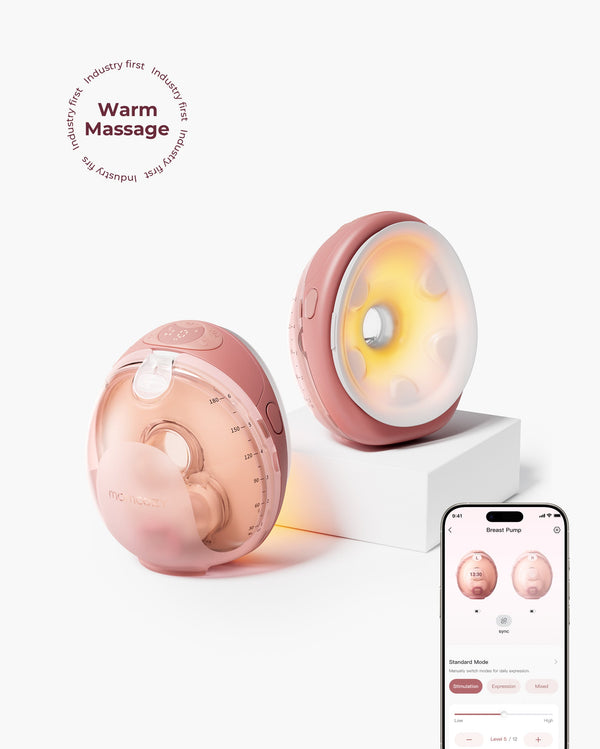
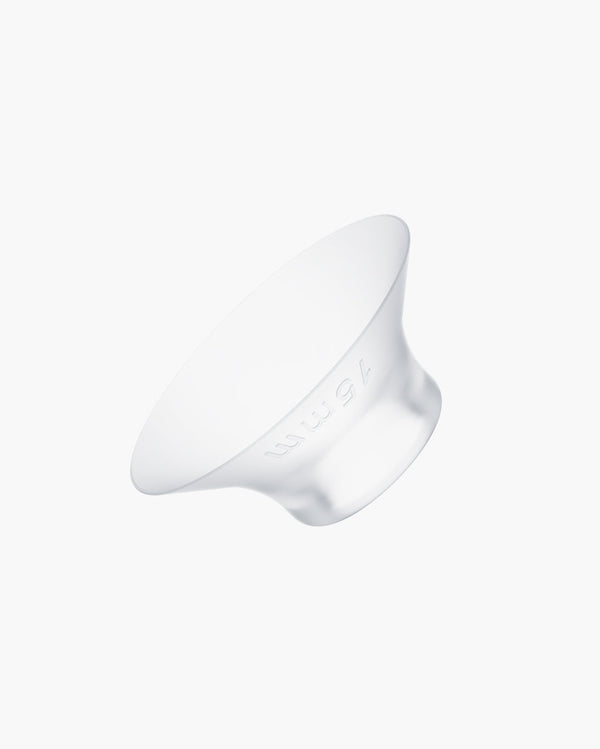
If icy flanges or a kettle run at 6 a.m. is the bottleneck, Momcozy Wellness 1 puts wraparound warmth at 37°C, 39°C or 41°C in the cup, plus five-zone massage timed with suction. SoftPulse is a gentler pulse so you are less tempted to crank the vacuum. Milk Boost, if you use it, is a set stimulation-to-expression rhythm — not a promise the freezer will fill. UK list price is £299.99. Fair limits: heavier than Air 1; warm-massage uses the battery faster (roughly six sessions versus about ten in standard pumping); skip heat on a hot, red, flu-like breast. It will not replace a multi-user hire while you are still building.
Momcozy Air 1 Ultra-Slim Breast Pump (Momcozy) — Best for Discretion
The Momcozy Air 1 redefines freedom for the modern UK mum, offering a nearly invisible in-bra fit at just 2.4 inches thick—perfect for discreetly expressing during the office commute or on the High Street. Its 4th-generation motor quotes suction up to 285 mmHg — a consumer spec, not a multi-user hire — and stays whisper-quiet at 45dB, ensuring your pumping remains private even in shared workspaces. Its transparent top ensures perfect nipple alignment at a glance, and the Momcozy app offers seamless milk tracking and customisation. With a wireless charging case providing up to five days of power, it eliminates "battery anxiety" for those long weekends away or hectic work weeks. At £420, the Air 1 is the ultimate premium investment for mums seeking high-performance pumping without compromising their professional or social lifestyle.

Momcozy M5 Smart (Momcozy) — Best Everyday App Wearable
Member price
From£99.99Code Save 15%

Member price
£488.99Code Save 15%
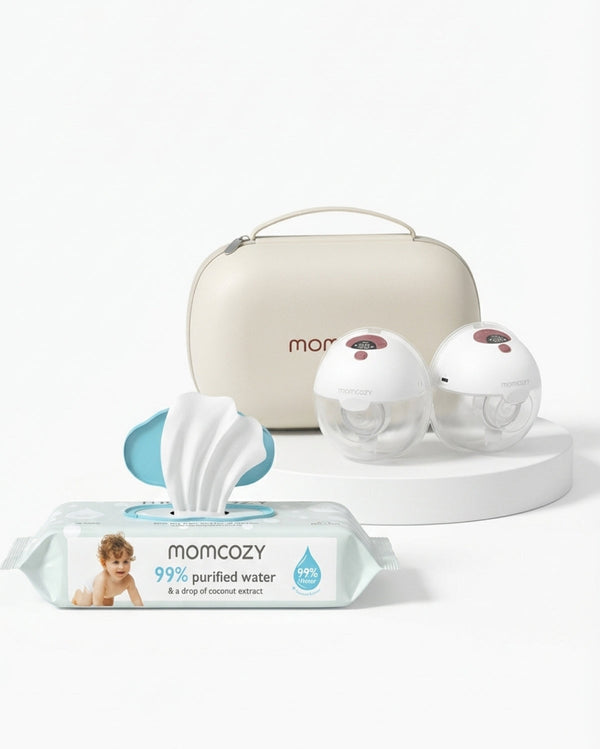
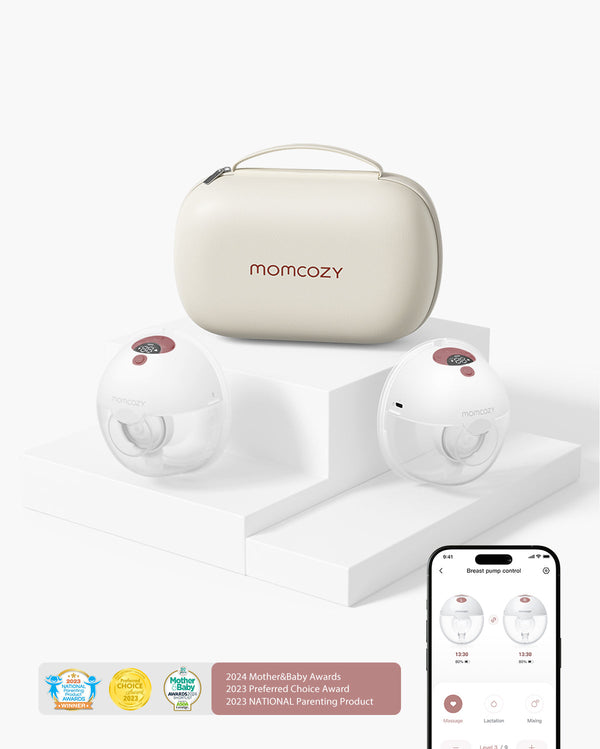
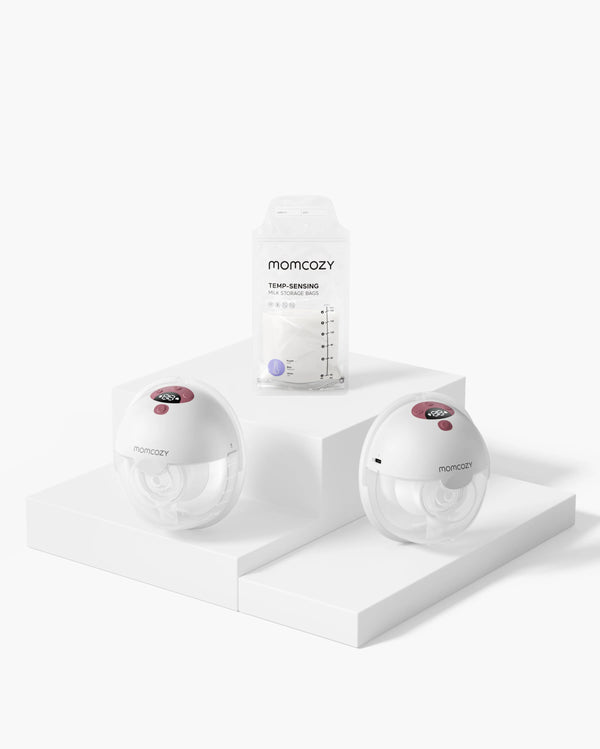
The M5 Smart is the daily in-bra cup with app control: start, stop and log from your phone, four parts to wash, suction quoted up to 285 mmHg, noise under 48 dB, 160 ml bowl, about six sessions a charge. UK list price is £189.99. It has no in-cup heat and it is not as slim as Air 1. Treat the mmHg figure as a consumer spec, not a hospital hire. Skip it if the only job is disappearing in a meeting or a cold British start.
Elvie Stride (Elvie)
The Elvie Stride sits at around £167 for a double set and is arguably the most recognisable wearable pump among UK parents. Developed by British brand Elvie, the Stride quotes up to 300 mmHg — a box spec, not a hospital hire — in an entirely wireless, in-bra design. It is operated via the Elvie app, which provides real-time milk tracking, and its drop-shaped cups are among the slimmest wearable designs available from a UK brand. The Stride is a strong option for mums who prioritise a slim profile and want the reassurance of a British brand with UK-based customer support.
Spectra S1 Plus (Spectra)
The Spectra S1 Plus, available at around £111, is a firm favourite on UK breastfeeding forums for a reason. It is a closed-system double electric pump often used at home (high mmHg is not automatically the same machine hospitals hire out) with a built-in rechargeable battery, adjustable suction up to 320mmHg, and a quiet motor that will not disturb a sleeping baby. Whilst it is not a wearable, its compact size and rechargeable battery make it more portable than a traditional plug-in pump. For mums who plan to express primarily at home but want a strong personal double electric rather than an in-bra cup, the Spectra S1 Plus delivers exceptional value.
Medela Swing Maxi Double Electric Breast Pump (Medela)
Available from around £99.99, the Medela Swing Maxi is a double electric pump that reflects the Swiss brand's long-standing reputation for reliable, clinically informed design. It uses Medela's 2-Phase Expression technology, which mimics a baby's natural sucking rhythm by starting with a faster stimulation phase before switching to a slower expression phase. It is lightweight for a traditional electric pump and widely available from UK stockists, including Boots and John Lewis, meaning spare parts and accessories are easy to source in person if needed.
Lansinoh Discreet Double Electric Wearable Breast Pump (Lansinoh)
Lansinoh, widely known in the UK for its lanolin nipple cream, has earned solid reviews for its wearable double pump, available at around £99.99. It features four stimulation modes and nine levels of suction, an LED display for easy use in low light, and comes with a practical set of accessories including storage bags and a baby bottle. For mums who want a wearable pump at an accessible price point, the Lansinoh option offers a good entry into hands-free expressing without a significant financial outlay.
How to Choose a Breast Pump Flange Size
Flange size is one of the most overlooked aspects of choosing a breast pump, yet it has a direct impact on both comfort and milk output. The flange is the funnel-shaped cup that fits over your nipple; if it is the wrong size, you may experience discomfort, reduced output, or even nipple damage over time.
Why Flange Size Matters
Flange sizing is based on nipple diameter, not breast size. A correctly fitting flange should allow your nipple to move freely within the tunnel without rubbing against the sides, whilst the areola should not be drawn into the tunnel. Even a few millimetres in either direction can affect how efficiently your breast empties during a session.
How to Measure Your Nipple
To find your size, use a soft tape measure or ruler to measure the diameter of your nipple (not the areola) in millimetres at its widest point. Take the measurement just before a pumping session, when your nipple is at its natural size. Most pump brands provide a printable sizing guide, and Momcozy includes a nipple measurement card in the box with several of its pumps.
What Size Should You Start With?
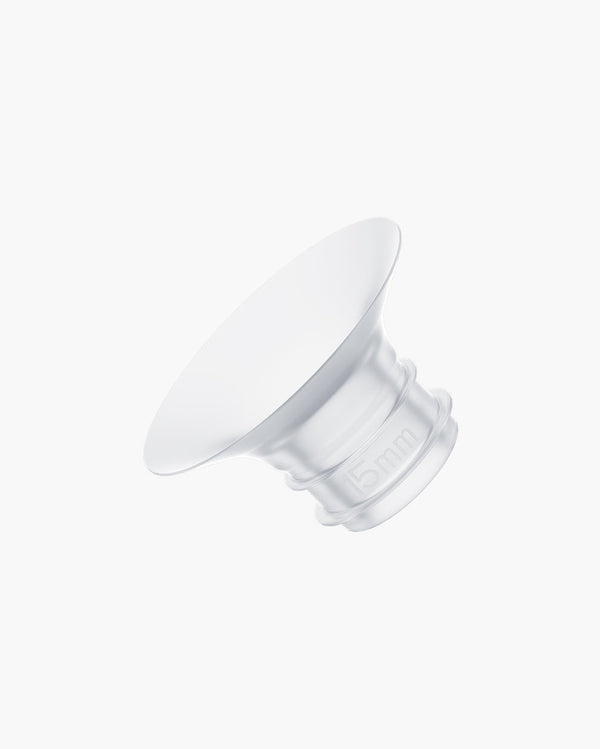
Most pumps ship with a standard 24mm flange, which suits the average nipple diameter. However, many mums require a smaller or larger size, and the 24mm default is not a one-size-fits-all solution. Reputable brands including Momcozy offer flange inserts across a wide range of sizes to accommodate this variation. The Momcozy S12 Pro Quick Wearable Breast Pump, for example, comes with a 24mm default flange and is compatible with inserts in 15mm, 17mm, 19mm, and 21mm, as well as a 27mm option for larger nipple diameters. The S12 Pro Quick also features a Hybrid DoubleFit™ flange, which combines a soft silicone inner layer for comfort with a rigid PP outer layer for stability, helping to create a consistent, leak-free seal session after session.
Member price
From£99.99Code Save 15%
Member price
£488.99Code Save 15%
When to Seek Help With Fit
If you are unsure about sizing, or if pumping continues to feel uncomfortable after adjusting your settings and position, your health visitor, midwife, or a local IBCLC can help you assess your fit in person. Getting the flange right from the outset will make a noticeable difference to your expressing experience.
UK Mums' Frequently Asked Questions
Q1. Can I Get a Breast Pump on the NHS?
In most cases, no. NHS provision of personal breast pumps is generally limited to specific clinical situations, such as premature or unwell babies receiving care in a neonatal unit. Mums in these circumstances can often access hospital-grade pumps on a loan or rental basis through the maternity unit or NICU. For healthy, term babies, the NHS focuses its support on breastfeeding guidance and peer support rather than equipment provision, and most mums choose to purchase their own pump privately. If cost is a concern, speak to your health visitor about any local hire schemes or support programmes available in your area.
Q2. Is a Wearable Pump Right From Birth?
Wearable pumps can be used from birth, but they are not universally recommended as a first choice in the very early weeks, particularly if you are trying to establish your milk supply. In the newborn period, many lactation consultants favour traditional double electric pumps or hospital-grade pumps for their more consistent and powerful suction, which can be especially important in the first few days. Once supply is established, typically after around four to six weeks, many mums find a wearable pump perfectly effective for maintaining output. If you plan to use a wearable pump from the outset, it is worth consulting your midwife or an IBCLC to ensure it is supporting your supply adequately.
Q3. How Do I Know Which Breast Pump Is Best for Me?
The best breast pump for you depends on your individual circumstances. Consider how frequently you plan to express, whether you will be expressing away from home, your budget, and whether features such as app connectivity or specialist pumping modes matter to you. A mum who expresses twice a day at home has different needs from one who expresses throughout a busy office shift. If the bottleneck is a cold start, Wellness 1 is the warmth-and-massage option. Keep Air 1 when invisibility is the brief. M5 Smart is the everyday app wearable. A hired multi-user pump is still the usual first step if you are building supply. Your health visitor or a local breastfeeding counsellor can offer personalised guidance if you are still unsure.
Start Your Expressing Journey With Confidence
Choosing a breast pump is one of the more consequential purchases you will make as a new mum, and it pays to take your time. Prioritise the features that matter most to your daily life, whether that is wearability for a busy commute, quiet operation for an open-plan office, or strong suction for supply building. Match the cup to the job: Wellness 1 for a warmer start, Air 1 for a slim commute, M5 Smart for everyday app wear, or a hired multi-user pump if you are still building. The Spectra S1 Plus remains a strong sit-down double electric. Explore the Momcozy UK range when you have finished the checks above.