If you don't happen to own a baby bottle steriliser at home, there are various ways on how to sterilise feeding bottles without steriliser. The other things you can do are, for instance, you can boil the bottles in water, or use your microwave. In addition to these, you can also use the cold water sterilising method. This article will guide you through different simple sterilising methods, helpful tips and what to do and not to do when it comes to keeping your baby's feeding bottles clean and safe.

Why is it necessary to sterilise and clean baby bottles?
The National Health Service (NHS) advises you to sterilise every baby feeding item, like bottles, teats, and various breast pump components, until your baby is at least one year old. This precaution is based on the fact that infants have underdeveloped immunity systems and are hence more susceptible to get diseases by the presence of microorganisms on dirty feeding equipment.
Here are the reasons they advised not to neglect cleaning and sterilising baby bottles:
- Protects your baby's developing immune system: The bodies of babies are underdeveloped and the capability to fight the harmful bacteria are very limited. If the feeding bottle remains contaminated, it's possible that germs would get into the baby's mouth and cause health issues. Thus, it's very essential that the used feeding bottles are correctly cleaned and sterilised in order to avoid bacterial and germ growth.
- Stops the growth of bacteria and prevents infections: Bacteria can easily grow in the milk residues inside a bottle and a teat. If feeding equipment is not properly cleaned, these germs will get multiplied and this may result in gastrointestinal infections like diarrhoea and vomiting.
- Prevents baby formula health issues: Baby formula powder is not germ-free, so there may be presence of some harmful bacteria in it occasionally. Using clean and sterilised feeding equipment can reduce the risk of contamination.
- Maintains proper feeding hygiene: Washing and sterilising the feeding equipment regularly will help remove any residue in the bottle. Besides, sterilising will destroy harmful microorganisms that might find their way into the feeding tools.
- Complies with recommended health guidelines: The NHS advises the continued use of sterilisation for all bottle-feeding equipment while your baby is at least 12 months. If you follow this recommendation, it should help you achieve good feeding hygiene during your baby's first year.
If you don’t have a steriliser at home, there are simple ways on how to sterilise feeding bottles without steriliser. Usually, just boiling the bottles in water does the trick. And honestly, if you’re getting ready for your baby, it’s a good idea to check out our newborn essentials checklist too. It helps you make sure you’ve got everything set up before your little one arrives.
How to Sterilise Feeding Bottles Without Steriliser
Knowing how to sterilise feeding bottles without steriliser can be helpful for parents who don't have an electric or dedicated bottle steriliser at home. Fortunately, there are several simple alternatives you can use to keep your baby's feeding equipment clean. Methods such as boiling water, microwave steam sterilising, cold water sterilising solutions and dishwashers offer practical ways to sterilise bottles without specialised equipment.
How to Sterilise Baby Bottles With Boiling Water
Boiling is one of the easiest methods to sterilise baby bottles at home when you don't own a steriliser. Before boiling baby bottles, it is essential to ensure the teats and bottles are safe to boil.
Boiling method steps:
- Step 1: Thorough cleaning of baby's bottles. First, you must scrub the baby bottles, teats, etc., in hot soapy water to free them of any milk residue, which can be the root of the infection. A special bottle brush can do this job easily. Once you've done it with the soap, you can just rinse everything well.
- Step 2: Place the bottles in the saucepan. Make sure that all of the parts are completely separated for the cleaning process and can be boiled.
- Step 3: Fully submerge the items in water. Pour the water in the large saucepan until it is sufficient to cover all the baby feeding items completely. That way, every surface is subjected to the high heat of the boil.
- Step 4: Bring the water to a rolling boil. Allow the bottles and feeding accessories to boil for at least 10 minutes. Then, use sterilising tongs to lift out the items. Don’t touch the inside of the bottle or teat with your fingers.
- Step 5: Dry everything safely. Place the sterilised equipment on a clean and dry rack. Then, immediately use it. Don't wipe inside the bottle with a towel because it could introduce new germs.
This method is a simple, budget-friendly way for parents to sterilise bottles with just regular kitchen tools.
How to Sterilise Baby Bottles With Microwave
A baby bottle sterilisation in a microwave is possible too as long as the bottles are microwave safe and you have an appropriate microwave sterilising container or bag.
Here's how to do it:
- Step 1: Clean all feeding equipment. Wash the bottles, teats, caps, and other components that you can remove with warm soapy water. Rinse them well to get rid of any remaining milk.
- Step 2: Ready a sterilising microwave-safe container. Put the washed feeding equipment into a microwave sterilising container or a steam sterilising bag.
- Step 3: Add the required amount of water for this process. Fill the container or bag with the specified amount of water according to the manufacturer. Without the presence of water, steam will not be formed, and the sterilisation process of the equipment will not be conducted.
- Step 4: Set the microwave for the required heating. Refer to the manufacturer’s manual for instructions on how to position the container or bag with the equipment in the microwave and what power setting and heating time to use.
- Step 5: Let them cool. Leave the container or bag as is until it has cooled. Be careful when handling it since the steam may cause you to have burns.
- Step 6: You have to pull out the bottles gently. Use clean hands or use your sterilising tongs to take the items out, so that you don't soil the insides of the bottles or the teats.
Microwave steam sterilising can be a very convenient way of sterilisation, especially when you're very short on time but please always use the equipment that comes specifically designed for this purpose.
How to Sterilise Baby Bottles With Cold Water Sterilising
This method uses a specially formulated sterilising solution, usually available in tablet or liquid form, to eliminate harmful bacteria from your baby's feeding equipment.
Here's how to sterilise baby bottles using cold water:
- Step 1: Prepare the sterilising solution. Fill the container with cold water and the sterilising solution which is usually in a tablet form or a liquid. Always check the instructions on the package to know the correct proportions to add so that your baby items are not damaged by the over-concentration of the solution.
- Step 2: Thoroughly clean the baby bottles and other baby feeding items. Be sure to clean each bottle and each teat, as well as cap thoroughly using soap and hot water with a clean bottle brush. Rinse everything well before sterilising to make sure there’s no soap on baby feeding tools.
- Step 3: Make the baby bottles and other items submerged in the sterilising solution. The feeding equipment has to be fully immersed in the sterilising solution. Make sure you get rid of all air pockets inside the bottles and teats, because the sterilisation works properly only if the entire item is covered in the solution.
- Step 4: Let the items soaked in the solution. Some items may need only 20 minutes to soak, while others may need an hour, but, as a minimum, half an hour is sufficient. Refer to the instructions that are included with the sterilising tablets or liquid for precise details.
- Step 5: Take the feeding bottles out when needed. After thoroughly cleaning your hands with soap and water, you may safely retrieve the equipment from the container with the aid of a clean pair of sterilising tongs. It is best to follow the recommendations of the manufacturers of tablets/liquid regarding whether you need to rinse or not.
Change the sterilising solution every 24 hours. One of the benefits of this method is that it allows an option that doesn't require electricity or boiling water.
How to Sterilise Baby Bottles With Dishwasher
Using a dishwasher to clean baby bottles can be very helpful, particularly if you are feeding your baby multiple times each day. Nevertheless, it should be clearly noted that a dishwasher is not capable of sterilising baby bottles by itself. According to the NHS, dishwashers can eliminate milk residue and dirt but don't come up with high enough temperatures to reach sterilising levels.
Here are the steps to clean your baby's feeding bottles using a dishwasher:
- Step 1: Check if the bottles can be cleaned in the dishwasher. Read the manufacturer's guidelines to see if your baby's bottles, teat and other related feeding items can handle dishwasher cleaning.
- Step 2: Take apart all parts of the feeding equipment. Disassemble the bottles, teats, lids, rings and any other removable parts in the feeding equipment. This will help you get all parts of the equipment properly clean.
- Step 3: Remove the leftover milky residue. Rinse the milk remains in the bottles and the related feeding items before putting them in the dishwasher.
- Step 4: Arrange the bottles properly. Position the bottles, lids, and other dishwasher-compatible parts so they will be secured throughout the cleaning process. Their openings should be down so the water can get to the inside and also drain properly.
- Step 5: Run the dishwasher cycle. Use the proper dishwasher cycle together with a detergent suitable for your feeding items, following the manufacturer's instructions.
- Step 6: Pick up and inspect. Once the cycle is finished, look through all the parts of the baby feeding item to be sure every last one of them is absolutely clean and without a trace of detergent, then, just let the baby's feeding items dry on a clean surface.
If you're still not sure whether to use a dishwasher or the baby bottle washer for washing feeding items, check out our blog Bottle Washer vs Dishwasher: Which One Is Better for Parents? where we present an in-depth comparison.

What is the Fastest Way to Sanitise Baby Bottles?
Boiling and cold water sterilising are practical alternatives. However, having an electric bottle washer or a steriliser-dryer can be more convenient for busy parents. If you want a fast and convenient method of keeping your baby's bottles free from contaminants, here are the steps to follow:
- Disassemble the parts: You need to disassemble all the components such as teats, lids, and rings or any other parts that are detachable. This will allow you to clean each part completely.
- Rinse off any milk residue: Clean the bottles and accessories by rinsing them to get rid of any milk residue. Residue from milk can promote the growth of bacteria if not removed.
-
Scrub the bottles completely: You may want to use warm, soapy water along with a suitable bottle brush or an automatic bottle washer to make cleaning easier. For instance, the Momcozy KleanPal Pro Baby Bottle Washer is a product that comes with an automated cleaning option, which makes the lives of busy parents a bit easier when it comes to washing feeding equipment.
 Member price£336.99Code Save 22%
 Member priceFrom£299.99Code Save 20%
 Member price£304.99Code Save 20%
-
Go for a good sterilisation method: Sterilise the bottles using an appropriate method, like using an electric steam steriliser-dryer. They include sterilising and drying functions in a single appliance. You can consider the Momcozy 4-in-1 Compact Bottle Steriliser and Dryer, or even the Momcozy 8-in-1 Electric Steam Baby Bottle Steriliser to ease out your baby bottle care routine.
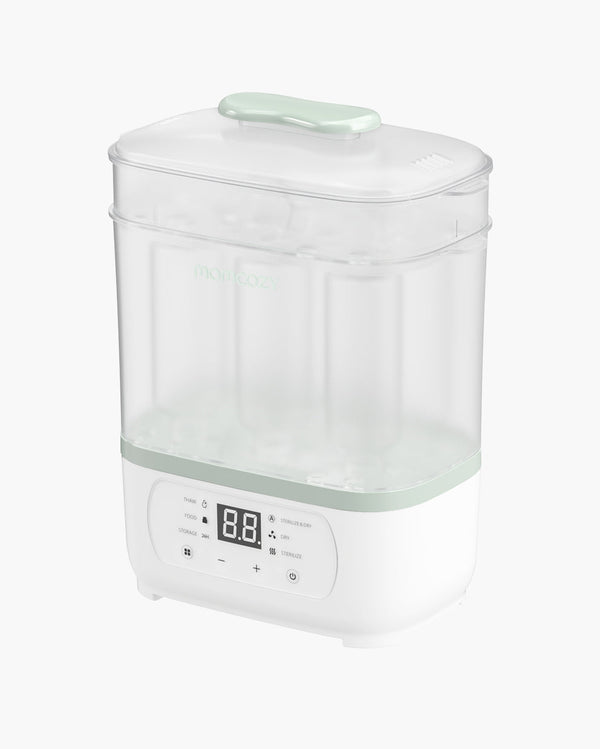
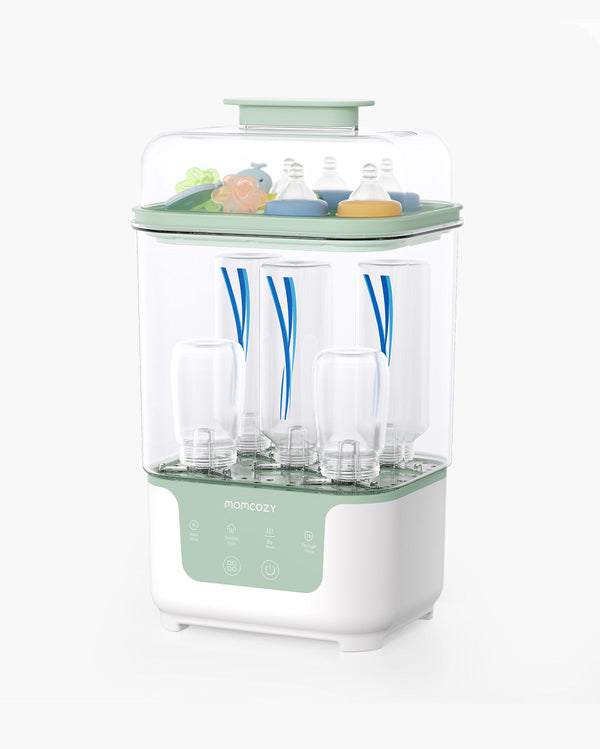 Member priceFrom£299.99Code Save 20%
- Carry out the recommended sterilising cycle: Pour the required volume of water in the appliance and place the feeding equipment as per the instructions on the user manual of the brand. You should also select the proper sterilising cycle of that appliance and let it finish the process.
- Let the bottles cool down and store them correctly: Once the sterilising process is done, allow the baby feeding equipment to cool down if you intend to use them. Keep them in the steriliser with the lid closed or in another clean, covered container according to the manufacturer's instructions.
To keep your equipment working effectively, regular maintenance is also important. Check out our guide on How to Clean a Bottle Steriliser for practical cleaning tips and advice on maintaining your sterilising appliance.
How Often Should Baby Bottles be Cleaned?
UK health advice from the NHS and NCT suggests that baby bottles and other feeding accessories should be cleaned after every feed. Immediate cleaning makes sure that milk residue does not dry inside the bottles, preventing bacteria from multiplying.
Detailed instructions from the Unicef UK Guide to Bottle Feeding include washing baby bottles and feeding accessories with hot, soapy water using designated cleaning brushes to remove milk residues. Make sure all parts are cleaned, especially those that are hard to reach. Then, rinse everything thoroughly with a good amount of clean, cold water before sterilising.
When Should I Sterilise Baby Bottles?
Sterilising baby bottles and other feeding equipment is recommended after washing your baby's feeding equipment. You should sterilise your new bottles and teats before you use them too. If you don't happen to have a steriliser at home, learning how to sterilise feeding bottles without steriliser can be useful to you.
You can use boiling water, a microwave, or cold sterilising solutions as alternatives. Keep doing this routine until your baby is at least 12 months old, according to the advice of the NHS. It is very important that each time you do the sterilisation, you make sure that you adhere strictly to the method and instructions given to you by the manufacturer.
How Should I Store Infant Feeding After Sterilising
After sterilising your baby's feeding bottles, it's important to store them properly to prevent contamination. Ideally, leave the bottles inside the steriliser with the lid closed until they are needed. If you need to remove them, use clean hands or sterilising tongs and place them in a clean, covered container. Avoid touching the inside of the bottles, teats or other feeding parts to maintain hygiene.
For added convenience, you can consider the Momcozy KleanPal Pro Baby Bottle Washer, which helps simplify your baby's bottle-cleaning routine. It offers an automatic way to wash and care for feeding equipment. After cleaning and sterilising, always ensure bottles are stored in a clean, protected place until the next feed. Member price
£336.99Code Save 22%
 Member price
From£299.99Code Save 20%
 Member price
£304.99Code Save 20%
Frequently Asked Questions
What do I really need to sterilise?
You should sterilise all feeding equipment that comes into contact with your baby's milk, including bottles, teats, lids, rings and breast pump parts.
Is it okay to just wash bottles with soap and water?
No. Washing with hot, soapy water removes milk residue and dirt, but it does not eliminate all harmful microorganisms. You should sterilise bottles after cleaning them.
Can I reuse a baby bottle without sterilising?
It is best to sterilise baby bottles after every use until your baby is at least 12 months old, following NHS guidance.
Can I wash baby bottles with normal dish soap?
Yes. You can use ordinary washing-up liquid and hot water to clean baby bottles. Make sure you rinse them thoroughly to remove any soap residue before sterilising.
Do I have to sterilise bottles every time?
Yes. You should clean and sterilise bottles, teats and other feeding equipment after every feed until your baby reaches 12 months old.
Is it safe to reuse baby bottles without washing them?
No. Never reuse an unwashed baby bottle, as leftover milk can encourage bacterial growth and increase the risk of infections.
Can I wash bottles directly in the sink and dry them with a kitchen towel?
You can wash bottles in a clean sink or dedicated washing basin, but avoid drying them with a kitchen towel because it may transfer germs. Instead, allow them to air-dry on a clean drying rack.
Conclusion
You can use a bottle washer or a dishwasher to wash your baby bottles. After washing, you need to sterilise them. If you don’t have a steriliser, there are several ways on how to sterilise feeding bottles without steriliser. Simple methods such as boiling water, microwave steam sterilising and cold water sterilising solutions can help keep feeding bottles hygienic. Remember to follow the manufacturer’s recommended safety instructions for each method. Most importantly, make bottle cleaning and sterilisation part of your daily routine until your baby is at least 12 months old, as recommended by the NHS.