Carrying a growing bump can leave your lower back and hips feeling tired by midday. Learning how to wear a pregnancy support belt the right way gives many mums a steadier lift under the bump, clearer posture cues and more comfortable standing or walking. This guide also covers how to use a belly band by style, how snug it should feel, when to start, and when to take it off — with UK midwife and physiotherapy context in mind.
What is a pregnancy support belt (belly band)?
A pregnancy support belt — often called a belly band — is a soft, adjustable wrap worn around the lower abdomen and lower back. It is designed to share some of the bump’s forward pull so everyday movement feels less strained. Most styles are stretchy and breathable so they can sit against changing body shape through the second and third trimesters.
You will see wraparound, pull-up and two-piece designs depending on how much lift and adjustability you want. A belt does not treat or cure a medical condition. Used carefully, it can ease common pregnancy aches and make daily tasks feel more manageable. If you have pelvic girdle pain, a high-risk pregnancy or circulation concerns, check with your midwife, GP or women’s health physiotherapist before use.
Benefits of wearing a belly band in pregnancy
As your bump grows, extra support under the abdomen can take pressure off an aching lower back. Many women notice relief when round ligaments stretch and posture tips forward; a well-fitted band can encourage a more upright stance and reduce the urge to slouch.
If you stay active, light stability around the tummy can make walking or pregnancy-safe exercise feel less tiring. Mums dealing with hip or pelvic discomfort — or mild sciatica-type pain that travels from the lower back into a leg — sometimes find the extra hold eases that load. Gentle wrapping may also help you feel more “held” through the abdominal wall if you are worried about muscle separation (diastasis recti), though a band alone does not prevent or treat that condition.
Beyond the physical side, feeling supported can simply make errands, workdays and school runs more comfortable. Some styles are also used after birth for recovery support once your clinician agrees that is appropriate.
Looking for a structured two-piece option with a seamless under-clothes feel? Explore the Momcozy BellyEmbrace Maternity Belly Band (also listed as BumpEase / Ergonest on Momcozy UK), which uses a 3D-shaped support layout and is described as FDA-approved in Momcozy product materials.
Back Support
Comfort
Effectiveness
What to look for when choosing a pregnancy belly band
A good fit matters more than branding. Use these checkpoints before you buy or wear a band for longer sessions:
-
Size — Match your current measurements. How tight should it be? Snug enough to lift slightly, never so tight that breathing or circulation feels restricted.
-
Material — Prefer soft, breathable, stretch fabrics (often cotton blends or similar) that are kind to pregnancy-sensitive skin.
-
Certification and advice — Some products carry safety certifications or clinician recommendations. Treat these as quality signals, then confirm suitability with your own maternity team.
-
Price vs features — Higher price can reflect durability and comfort, but balance cost with the support level you actually need.
-
Support level — Everyday light lift differs from stronger hold if you have marked back or pelvic pressure.
-
Adjustability — Hook-and-loop or strap systems help as the bump expands week by week.
-
Ease of use — Choose a design you can put on and take off without straining.
-
Style — Under-bump cradles and fuller coverage options suit different preferences and clothing.
Browse Momcozy UK’s pregnancy support belts collection if you want to compare everyday bands with more structured designs.
How to wear a pregnancy support belt
Correct placement is what turns a band into useful support rather than an awkward squeeze. Below is how to wear a pregnancy support belt across common styles: two-piece, classic one-closure wraparound, structured plus-size / multiples designs, and pull-up tubes.
Two-piece pregnancy belly band
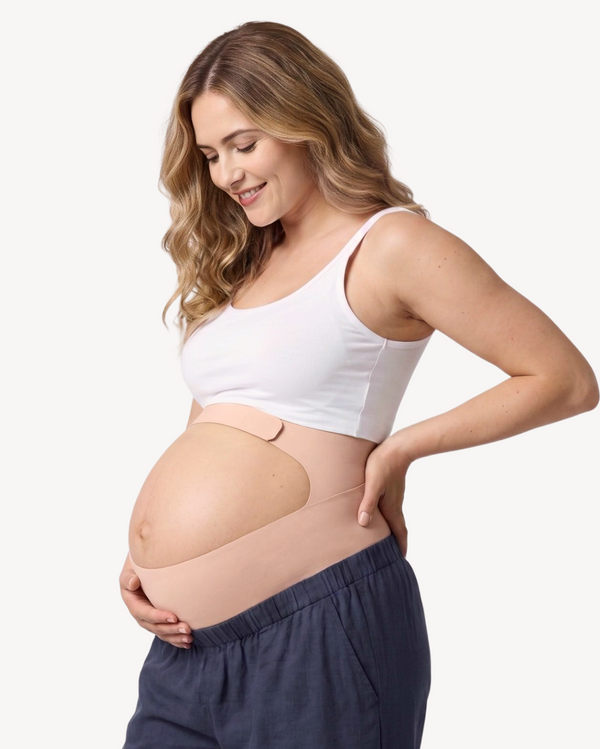
Two-piece systems usually combine a lower abdominal cradle with an upper band or strap for extra lift. The Momcozy BellyEmbrace Maternity Belly Band, for example, uses a 3D shape for tailored support and a seamless profile that can sit discreetly under clothes. Product materials describe it as soft against the skin and FDA-approved. Here is how to wear it:
- Wrap the underbust section around your back, bring it to the front and secure the hook-and-loop fastener.
- Place the lower abdominal section with the groove pointing upward.
- Fasten one side with the hook-and-loop closure, then pull the other strap to tighten and secure.
- Fine-tune until the hold feels supportive and comfortable — then you are ready to move.

Classic one-closure wraparound belly band
A one-closure wrap sits around the bump and fastens with a single Velcro or clasp point, so you can micro-adjust as your shape changes.
- Start with the wider panel against your lower back.
- Bring both ends forward under the bump and fasten so the fit is comfortably firm — not biting.
- Adjust until support feels even across the lower back and abdomen.

Image source: AZMED Maternity Belly Band
Plus-size / multiples-style support (Go As You Grow™)
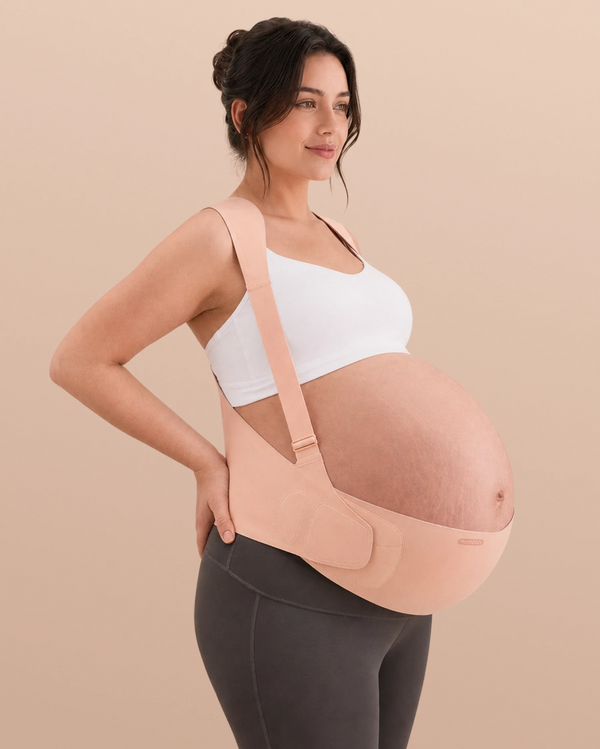
The Momcozy Go As You Grow™ Maternity Belly Band is aimed at twin or multiple pregnancies and faster-growing or lower-sitting bumps that need more structured help. Putting it on is still a short sequence:
- Slip on the shoulder straps and set the upper support first.
- Position the belly panel under your bump with the centre notch facing upward.
- Fasten both sides and adjust the straps until the fit feels secure and comfortable.

Pull-up pregnancy belly band
A pull-up band is a simple stretch tube — no straps or Velcro — useful for lighter everyday support.
- Step into the band and pull it up over your hips as you would a skirt.
- Ease it up over the bump so it sits comfortably below your bust.
- Check that lower-back and abdominal support feel even without feeling too tight.

Image source: Maternity Belly Band
How to use a belly band: practical tips
Knowing the style is only half the job. These habits keep how to use a belly band safer and more effective day to day:
- Begin in the second or third trimester once aches or heaviness from the bump become noticeable — earlier only if your clinician agrees.
- Limit continuous wear to about 2 to 3 hours, then remove the band so your core and pelvic muscles keep working. NHS physiotherapy education for maternity supports often emphasises short blocks — for example, South Tees Hospitals NHS guidance mentions around two hours at a time for maternity support and advises removing some pelvic belts when you sit. Treat that as general education, not personal medical advice.
- Aim for gentle compression: snug, not restrictive. You should breathe, talk and walk normally.
- Choose a soft, thin, seamless band if you want it hidden under clothing (Momcozy BellyEmbrace is designed with that discreet profile in mind).
- Re-check tension when you move from standing to sitting — a fit that feels right upright can dig in when you sit.
- If you have compromised circulation, unusual blood pressure or other medical flags, ask a doctor or midwife before use.

Under clothes or over clothes?
Most modern belly bands are made to sit under clothes against a thin top or directly on skin, so the lift stays close to the bump and the outline stays smooth. That said, comfort wins: some mums prefer the belt over leggings or a soft layer if Velcro irritates skin or if they need to adjust often at work. Brand guides such as BABYGO’s wearing guide also note that under or over clothing can both be acceptable when the fit feels right. Avoid thick seams or bunched fabric under the strap, and loosen or remove the band if you notice marks, tingling or breathlessness.
When should you start wearing a pregnancy support belt?
Many women start in the second trimester — often around 20 to 24 weeks — when the bump begins to load the lower back, hips and pelvis more clearly. The “right” week is personal: some need help earlier with multiples or physically demanding jobs; others wait until the third trimester.
A pregnancy belly band may be worth trying if you:
- Have back, hip or pelvic pain
- Feel bump heaviness during daily tasks
- Stand or sit for long stretches
- Exercise and want steadier abdominal and lower-back support
- Are carrying twins or multiples and need extra hold
Keep the sensation gentle. If your pregnancy is high-risk or you have an underlying condition, speak to your maternity team before starting.
FAQs about wearing a pregnancy support belt
Is it safe to wear a pregnancy belly band?
Yes — for most uncomplicated pregnancies, a correctly fitted belly band is generally considered safe, and clinicians often suggest support garments to ease back strain, pelvic pressure and muscle fatigue. It is still support, not treatment. Stop and seek advice if pain worsens, or if you notice numbness, dizziness or circulation changes.
Should I wear a pregnancy support belt?
Consider one if bump weight, posture strain or pelvic/back discomfort is limiting walking, work or sleep comfort by day. It is optional, not compulsory. If symptoms are sharp, one-sided or linked to pelvic girdle pain, ask for physiotherapy input first — your team may prefer a specific belt style or short wear windows.
How long should I wear a belly band in pregnancy?
Use it in blocks of a few hours — typically up to 2 to 3 hours — then rest without it. Wearing it for very long stretches can feel uncomfortable and may encourage over-reliance on the garment.
Can I wear my pregnancy support belt all day?
No. All-day wear is not recommended. Stick to 2–3 hour sessions with breaks so your muscles keep sharing the work, and remove the belt for sleep and longer rest.
How tight should a pregnancy belly band be?
Snug, with a slight lift under the bump — not a squeeze. You should take a full breath easily and slide a finger or two under the fabric. Loosen at once if you feel pins and needles, reflux flaring, or deep red marks that linger.
When is it too late to wear a belly band?
You can start from the second trimester and continue into late pregnancy, and some bands are also used postpartum for recovery support. Starting only after birth is a different use-case (postnatal wrapping) rather than “too late” for pregnancy support — follow clinician guidance for after-birth use.
Should I wear my pregnancy belly band to bed?
No. Bands are meant for daytime activity support. Overnight wear can feel restrictive and may affect comfort or circulation. For night-time ease, a pregnancy pillow is usually a better first step.
Does a pregnancy belt help with sciatica?
It can help some women by reducing load through the lower back and pelvis when the bump is well supported, which may ease mild sciatica-type symptoms. Severe or persistent nerve pain needs clinical assessment — do not rely on a belt alone.
When should you stop wearing a belly band?
Stop when you no longer need the extra hold, or sooner if it causes discomfort. After birth, only continue if your midwife, GP or physiotherapist is happy for you to use postnatal support.
Can a belly belt help with diastasis recti?
A band may support the abdominal wall and reduce strain during pregnancy, but it cannot prevent or treat diastasis recti by itself. Rehabilitation advice from a qualified professional still matters.
Conclusion
A pregnancy support belt is a practical extra layer of comfort when bump weight pulls on your back and pelvis. Choose a style that matches your needs, learn how to wear a pregnancy support belt so the panel sits under the bump rather than across the ribs, and use short daytime sessions rather than round-the-clock wear. Listen to your body, and loop in your UK maternity or physiotherapy team if pain is strong, uneven or slowing you down — the right support should feel like a calm lift, not a clamp.