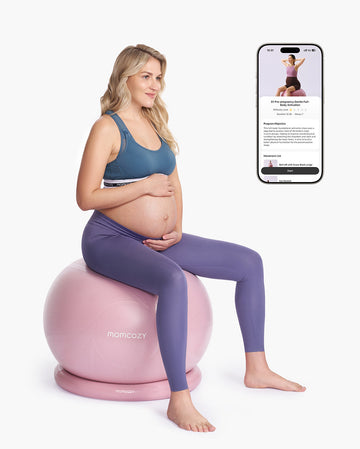
Often searched as balance ball pregnancy exercises, a balance ball for pregnancy, exercise ball and pregnancy, exercise ball exercises for pregnancy or an exercise ball for pregnant woman, a pregnancy ball can support gentle sitting and movement. This guide gives UK mums course-based ideas and safety prompts; seek advice from your midwife, GP or maternity team before a new routine.
What Is a Birthing Ball?
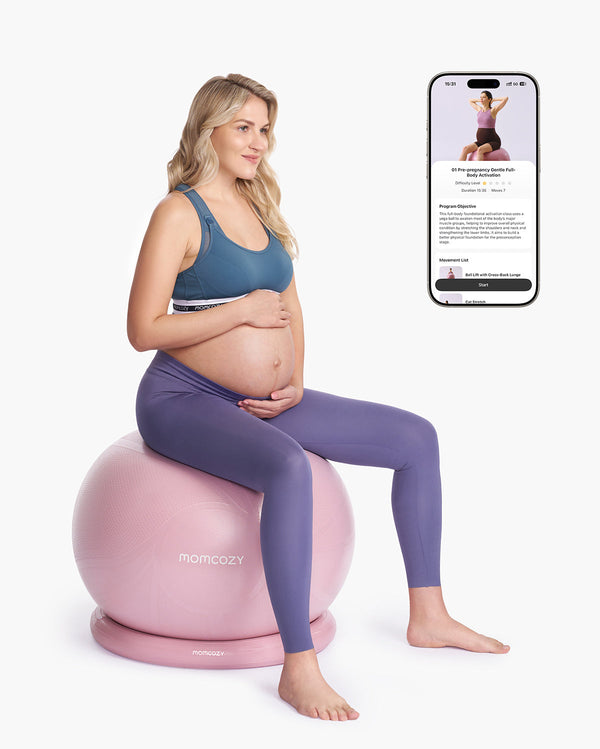
A birthing ball is a large, inflatable exercise ball used for comfortable upright sitting, small pelvic movements, stretching and, for some people, different positions in labour. The term usually refers to a ball used during pregnancy or birth rather than a distinct medical device. Choose a ball that lets you keep both feet flat on the floor with your knees level with or a little lower than your hips.
Can’t I Just Use a Gym Ball?
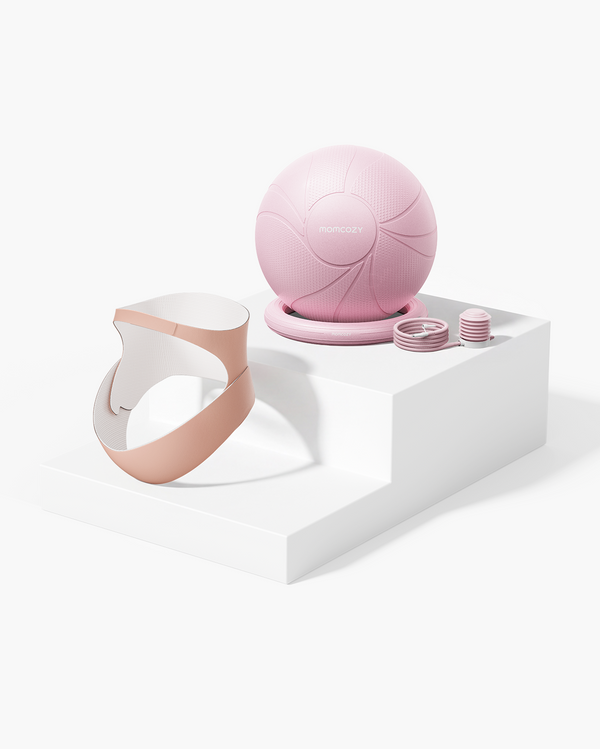
A standard gym ball may be suitable, but check its size, weight rating, surface grip and inflation guidance. A pregnancy-focused option can add stability features and guided routines. The Momcozy BirthEase Pregnancy Ball Set has an anti-slip textured surface, reinforced base, anti-burst construction and app-based stage routines; it is a supportive tool, not medical advice.
Member price
£113.99Code Save 22%
Why Is Exercise for Pregnant Women Important?
For an uncomplicated pregnancy, regular comfortable movement can help you adapt to your changing shape and weight. The NHS notes that you can continue normal daily activity for as long as it feels comfortable and that activity need not be strenuous. Warm up, drink fluids and slow down if you cannot comfortably talk.
How Do Pregnancy Exercises Help Me?
Gentle movement can support everyday strength, mobility and confidence in changing positions. The NHS also recommends pelvic-floor exercises in pregnancy. A ball does not promise a particular birth outcome, open the cervix or start labour; it simply gives you a stable, adaptable surface for light movement when it is appropriate for you.
Easy Pregnancy Ball Exercises for a Better Birth
Use a clear, dry, non-slip floor, wear grippy socks or go barefoot, and keep a wall or sturdy chair nearby. The movement below match the Momcozy course outline exactly. Move slowly, breathe normally and stop if you feel pain, dizziness, breathlessness, bleeding, contractions that concern you, leaking fluid or reduced fetal movements; contact your maternity team for urgent advice.
After 16 weeks of pregnancy, avoid lying flat on your back for long periods. If a supine exercise makes you feel faint, dizzy or unwell, stop and change position.
Ball-Supported Forward Fold
Kneel with the knees comfortably apart and the ball in front of you. Rest your upper body lightly over the ball, then use your hips to guide small clockwise and anticlockwise circles. Keep the range easy and let the ball support your chest rather than forcing a stretch.

Side-to-Side
Sit in the centre of the ball with both feet planted. As you exhale, let one sitting bone become a little heavier so the pelvis glides to that side; inhale back to centre, then alternate. Keep the movement small and shoulders relaxed.

Seated-on-Ball Thoracic Flexion & Extension
Sit securely on the ball with feet slightly wider than shoulder-width. With hands behind the head or arms reaching forward, inhale to open the chest; exhale to gently tuck the pelvis, round through the upper back and lower the chin. Think of smooth spinal movement, not a deep backbend.

Seated Spinal Rotation
Sit tall with the feet grounded and arms lifted from the sides. On an exhale, turn through the chest to one side, with one hand on the outside of the thigh and the other steadying the ball. Inhale back to centre, then repeat on the other side without pulling or forcing the twist.

Pelvic Tilt
Centre yourself on the ball. Inhale as the pelvis tips slightly forwards and the chest opens; exhale as the pelvis rolls gently back and the tailbone curls under, lengthening the lower back. The ball should roll only a little beneath you.

Cat Stretch
Come to all fours, with shoulders above wrists and knees beneath hips. Inhale to lengthen the front of the body; exhale to slowly round the spine. Use a folded towel under the knees if needed, and work only in a comfortable range.

Cat Tail Wag
From all fours, exhale as the right hip moves gently towards the right shoulder while your gaze follows; inhale back to centre. Alternate sides, seeking a side-body stretch rather than a big spinal twist.

Seated-on-Ball Rocking
Sit in the middle of the ball with hands behind the head. On an exhale, lightly draw in the lower abdomen and pelvic floor, nod the head and allow the ball to roll a little forward; inhale to return along the same path and open the elbows. Keep both feet firmly down.

Dynamic Squat
Stand in front of the ball with feet a little wider than shoulder-width. Inhale to open the chest; exhale as you send the hips back to touch the ball lightly, then press through the feet to stand. Keep the knees tracking with the toes and skip depth that does not feel steady.

Thoracic Rotation
Kneel on the mat with knees slightly wider than the pelvis and hands on the inner sides of the ball. Exhale to roll the ball forward as one shoulder turns down and out, letting the upper back lead; inhale back to centre, then change sides. Keep the pelvis quiet.

Ball Hug Rest
Sit with the legs comfortably apart and the ball in front of you. Wrap the arms around it and lean forwards only as far as feels comfortable, letting the head and chest soften while you take slow breaths. This is a rest position, not a stretch to push into.

Seated-on-Ball Bouncing (after full term)
This course movement is for after full term only, from 37 weeks onwards. Sit centred with hands lightly on the knees and use a gentle, controlled up-and-down motion with your breath. It may be a comfortable way to move, but it does not induce labour or guarantee labour progression; check with your midwife first.

Exercise Ball Workouts for Pregnancy-Related Pelvic Girdle Pain
Pelvic girdle pain (PGP) deserves individual assessment: it can make walking, turning in bed or getting in and out of a chair painful. These five course movements are not a treatment plan. If you suspect PGP or symptoms persist, speak with your midwife, GP or maternity physiotherapist before trying them. For some mums, a small, pain-free range is more appropriate than a full exercise session.
Side-to-Side Pelvic Tilts
With feet planted, make a tiny, controlled shift from one sitting bone to the other, returning to centre between sides. Keep it pain-free and avoid letting the knees collapse inward.

Pelvic Tilt
Use the ball for gentle forward-and-back pelvic movement. Keep the ribcage stacked over the pelvis and make the movement smaller if symptoms increase.

Seated-on-Ball Rocking
Rock the ball only a short distance, keeping both feet on the floor and the pelvis level. The aim is calm, controlled movement rather than core intensity.
Ball-Supported Forward Fold
Let the ball take the upper-body weight while you kneel only if that position is comfortable. Use very small hip circles or simply rest and breathe; come out slowly.
Supported Squat with the Ball
Place the ball between your lower back and a wall, with feet forward and slightly wider than shoulder-width. Inhale as you lower only to a comfortable depth while the ball rolls with your spine; exhale to rise. Stop if the pelvis, pubic bone or back becomes painful.

Top Tips for Using a Birth Ball
Keep Your Feet Flat and Far Apart
Start with a stable base: feet flat, roughly hip-width or wider, and weight shared evenly. Do not use the ball on a slippery floor, near sharp objects or where a child or pet may bump into you.
Make Sure Your Knees Are Lower Than Your Hips
This helps you sit upright with room to move. If your knees are high or your feet cannot reach the floor securely, the ball may be the wrong size or over-inflated.
Practise During Pregnancy Before Using the Ball in Labour
Familiarity matters. Try short, gentle sessions in a calm space before labour so you know which positions feel secure. Start with 10 to 20 minutes and adjust to your comfort and clinical advice.
Keep It Gentle and Supported
Avoid vigorous bouncing and any activity with a meaningful fall risk. A wall, chair or partner nearby can provide confidence while you learn; stop when you feel tired or unsteady.
What Positions You Can Try During Labour
If your midwife says it is suitable, you might sit upright and make small circles, rock side to side, lean forwards over the ball while kneeling, or hug it while resting. Choose what helps you feel supported, and follow the guidance of the midwife caring for you. A ball can support comfortable upright movement, but it does not replace clinical assessment or pain-relief options.
Are Exercise Balls Safe for Pregnancy?
They can be used carefully in an uncomplicated pregnancy, but a ball can still slip, roll or lead to a fall. Check the manufacturer’s instructions, use the right size, inflate it properly and keep movements controlled. The BirthEase ball is lab-tested at 200 kg and designed to deflate slowly if punctured, but it is not unbreakable and should be kept away from sharp objects.
When Should You Not Use an Exercise Ball During Pregnancy?
Do not begin or continue a session if you have been told to avoid exercise, feel unwell, are dizzy or cannot balance safely. Stop and contact your maternity team if you have bleeding, leaking fluid, regular painful contractions before term, chest pain, severe shortness of breath, a severe headache, calf pain or swelling, or a noticeable change in your baby’s movements. For all other concerns, ask your midwife or GP for personalised clearance.
Member price
£59.99Code Save 20%
When Can I Use a Birth Ball?
Many mums use one in the second or third trimester, but timing is personal. Once your maternity team is happy for you to be active, start with easy, supported sitting or small pelvic movements and see how your body responds.
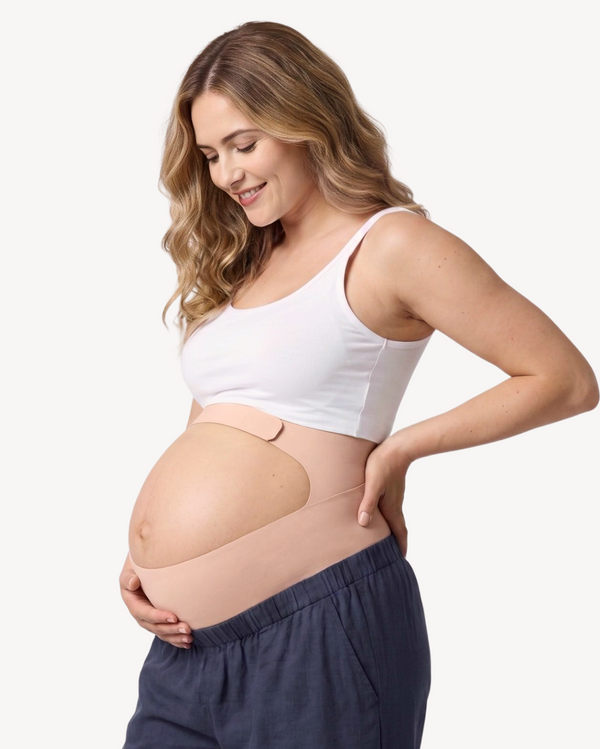
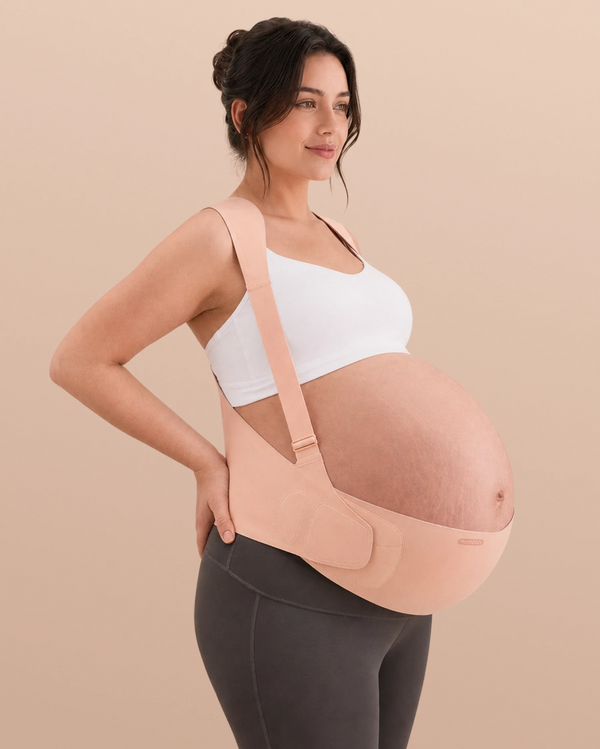
For extra everyday support, explore Momcozy pregnancy belly bands. The BumpEase – Momcozy Ergonest Maternity Belly Band offers lightweight support for most expecting mums, while the Momcozy Go As You Grow™ Maternity Belly Band is designed especially for twin or triplet pregnancies and larger, heavier bumps.
FAQs
When Should You Start Using an Exercise Ball When Pregnant?
There is no universal week. After you have discussed activity with your midwife or GP, begin when you can sit with both feet flat and feel stable; many people start in the second or third trimester.
Is It Worth Getting an Exercise Ball for Pregnancy?
It can be worthwhile if you want another supportive seat and a simple way to practise gentle movement. Consider stability, correct sizing and clear pregnancy-specific instructions, rather than the label alone.
How Long Should I Sit on an Exercise Ball While Pregnant?
Try a short session of about 10 to 20 minutes, then adjust according to comfort. Change position regularly rather than staying seated for a long stretch.
Can I Bounce on an Exercise Ball Every Day During Pregnancy?
Only use gentle, controlled movement that feels comfortable and has been cleared for you. The course’s bouncing movement is specifically marked for after full term; do not treat bouncing as a way to bring on labour.
Can Exercise Ball Workouts Help with Back and Pelvic Pain?
Some people find supported movement comfortable, but pain has different causes. Persistent or worsening back or pelvic pain needs advice from your maternity team or a maternity physiotherapist.
What Size Birthing Ball?
A common guide is 55 cm under 162 cm (5 ft 4 in), 65 cm for 162–178 cm (5 ft 4 in to 5 ft 10 in), and 75 cm above 178 cm (5 ft 10 in). Treat that as a starting point: your feet should be flat and knees level with or lower than your hips.
Supporting Your Pregnancy Journey with Confidence
An exercise ball for pregnancy workouts can make gentle movement more approachable, whether you are practising pelvic mobility, resting forwards over the ball or finding an upright position late in pregnancy. Pick a stable setup, follow the course instructions and keep your midwife or GP in the loop.