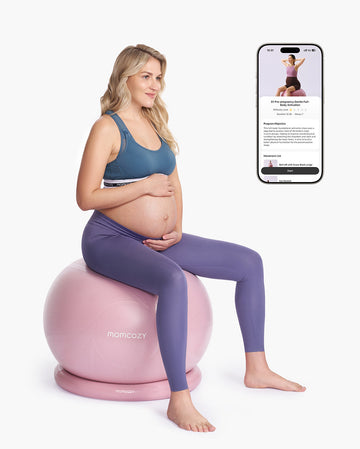
A pregnancy ball gives you a comfortable, supportive place to sit, stretch and move as your body changes. Learning how to use a pregnancy ball can help UK mums add pelvic movement and short relaxation breaks to everyday routines.
Before a new activity plan, check with your midwife, GP or maternity team, especially after any change in health or pregnancy care. Keep water nearby, wear supportive footwear and choose a clear patch of floor. Aim for a pace that still allows comfortable conversation, with a warm‑up and cool‑down around exercise.
What Is a Birthing Ball?
A birthing ball is a large inflatable exercise ball used for sitting, gentle mobility and labour positions. You may also hear pregnancy ball, maternity ball and birth ball. The names usually refer to the same type of equipment, although a maternity‑focused set can offer added grip, a stable base and pregnancy‑stage routines.
For a comfortable seat, place both feet flat on the floor and sit in the middle of the ball. Knees should sit level with, or a little lower than, the hips. Your weight should feel even through both feet. A base can add steadiness for seated exercise, particularly during early sessions.
If you are asking, “How do I use a birthing ball?” begin with a stable seated position and small hip movements. “How do you use a birthing ball?” often comes down to comfort, steady footing and a pace that suits your stage of pregnancy. The same principles apply to how to use a birth ball for gentle sitting, stretching and labour positions.
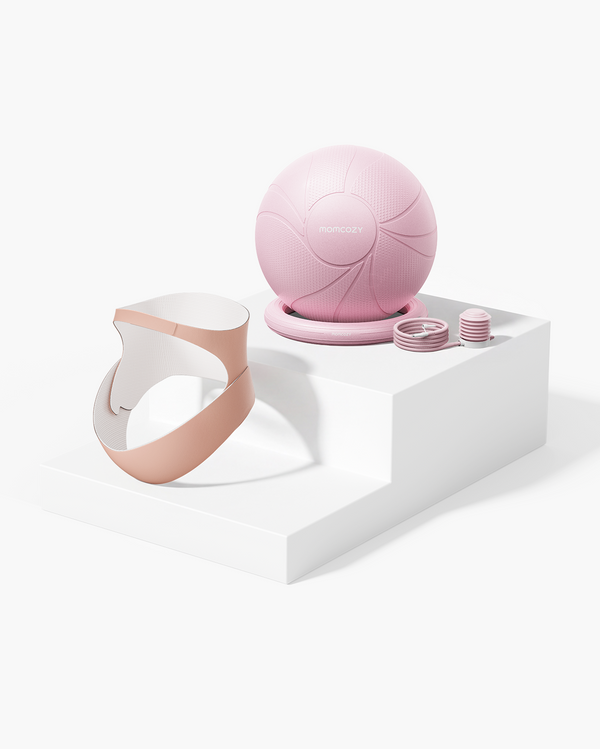
Momcozy BirthEase Pregnancy Ball Set includes an anti‑slip, anti‑burst ball, reinforced base and foot pump. Its course content follows the changing needs of pregnancy, labour and postpartum recovery. Inflate the ball on a clean floor away from sharp objects, then check the plug sits flush before use.
Member price
£113.99Code Save 22%
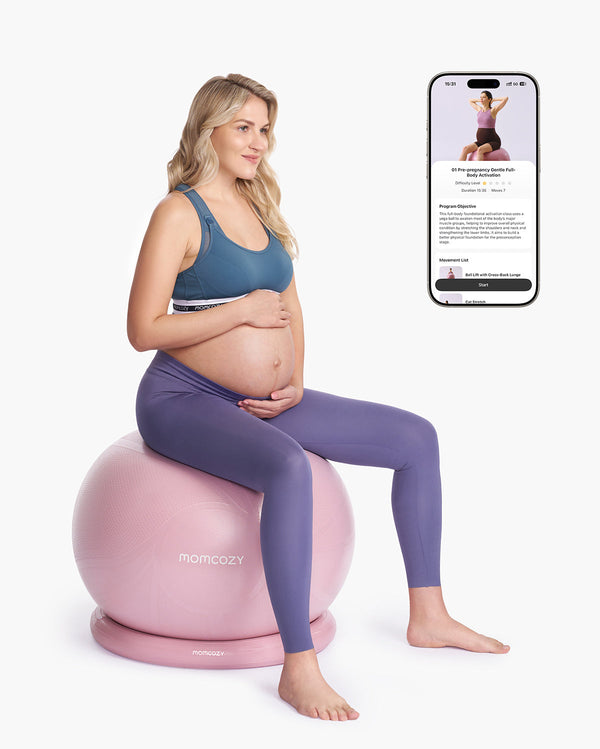
What Are the Benefits of Using a Pregnancy Ball?
A pregnancy ball can bring gentle movement and comfortable support to daily routines.
- Eases long periods of sitting: Hip circles, pelvic tilts and side‑to‑side shifts bring movement through the pelvis and lower back.
- Supports upright posture: Sitting tall on the ball may feel more open and relaxed as your bump grows.
- Adds light strength and balance work: Slow, controlled movements can support posture, stability and body awareness.
- Offers flexible labour positions: Leaning forwards over the ball can provide an upright, supported position between contractions.
- Supports early postnatal movement: After clearance from your maternity team, a stable ball can support a gradual return to gentle movement.
Keep movements small and controlled, breathe smoothly and rest whenever needed.
When Can I Use a Pregnancy Ball?
First trimester
Use short sessions for gentle mobility, posture and familiarisation. A supported squat, upper‑back rotation or simple ball hug can fit well on days when energy feels lower. Keep both feet grounded and use a wall or base for extra stability.
Second trimester
Many mums enjoy seated pelvic movements during the second trimester. Hip circles, pelvic tilts and seated marching allow light movement without long periods on the floor. The NHS advice on exercise during pregnancy recommends avoiding long periods lying flat on your back after 16 weeks. Upright, side‑lying, kneeling and forward‑leaning positions can feel more comfortable as pregnancy progresses.
Third trimester
Comfort, pelvic mobility and rest take centre stage. Use the ball for supported forward folds, slow circles and gentle rocking. Near full term, small seated bounces may feel pleasant for some mums. Use them from 37 weeks onward only after approval from your midwife or maternity team.
During labour
Take the ball to hospital or use one already available on the ward, subject to local maternity‑unit policy. Sit upright and sway, circle your hips, or kneel on a mat and lean your chest and arms over the ball. A birth partner can stay close for reassurance and support.
After birth
Wait for individual postnatal clearance. Gentle breathing, seated pelvic tilts and ball‑hug rest positions offer a soft starting point. Recovery timing varies after vaginal birth, caesarean birth, tears or complications, so follow the plan from your maternity team.
How to Use a Pregnancy Ball
Before each session, place the ball on a non‑slip surface. Sit tall with feet wide enough for a steady base. Keep movements slow and comfortable. A ten‑minute session gives you time for a few moves and a relaxed finish. For anyone searching “pregnancy ball how to use”, a stable setup and simple seated movement offer a comfortable place to begin.
Pregnancy Ball Exercises in the First Trimester
Supported Squat with the Ball
Stand with the ball between your lower back and a wall. Keep feet slightly wider than hip‑width and step them forward a little. Breathe in as you lower into a shallow squat, allowing the ball to roll along your back. Breathe out as you press through the feet to stand. Keep knees in line with toes and choose a depth that feels easy.

Thoracic Rotation
Kneel on a mat with the ball in front of you. Rest both hands on the inner sides of the ball. As you breathe out, roll the ball forward gently and lower one shoulder slightly, allowing your upper back to turn. Return to centre with an inhale, then repeat on the other side. Aim the turn through the upper back and keep the lower back calm.

Pregnancy Ball Exercises for the Second Trimester
Pelvic Tilt
Sit in the centre of the ball with feet flat and apart. Tip the pelvis slightly forward as you breathe in, opening the chest without forcing the lower back. Breathe out and gently draw the tailbone under, lengthening the lower back. Keep the movement small, smooth and unhurried.

Side‑to‑Side Pelvic Tilts
Stay seated tall. Let one sitting bone settle a little lower as the pelvis glides to one side. Return to the middle, then repeat to the other side. Shoulders remain relaxed and feet stay planted. A slow rhythm works well during a home‑working break.

Pregnancy Ball Positions in the Third Trimester
Ball‑Supported Forward Fold
Kneel on a mat with knees comfortably apart. Hug the ball and rest your upper body over it, keeping your breathing easy. Draw small clockwise circles with the upper body, then change direction. Keep the range gentle and leave room for your bump.

Seated‑on‑Ball Thoracic Flexion & Extension
Sit on the ball with hands behind the head or arms reaching forward. Breathe in and broaden across the chest. Breathe out, allow the pelvis to tip back and round the spine one section at a time. Return upright gradually. The motion can feel soothing after a long day on your feet.

How to Use a Pregnancy Ball During Labour
Labour calls for comfort and flexibility. Choose one position for a few contractions, then change when your body wants a different angle.
Seated‑on‑Ball Bouncing (after full term)
Sit upright with feet flat and hands resting on your thighs. Move the hips in slow circles, then rock the pelvis forward and back. Keep the bounce small and controlled. From 37 weeks, gentle bouncing can sit alongside the same relaxed breathing pattern when your midwife has approved it.

Ball Hug Rest
Place the ball on a mat, kneel behind it and rest your chest and arms over the top. Let the hips sway side to side or draw a small circle. A partner can apply light pressure to the lower back if that feels good.

A note for birth partners
Keep the floor clear, stay nearby during position changes and offer water or a cool flannel. Calm words and a steady hand can be valuable between contractions.
Using a Pregnancy Ball After Birth
Once your maternity team has cleared gentle exercise, begin with movements that feel supported. Sit on the ball, place feet firmly on the floor and use a wall or base nearby.
Pelvic Tilt
Sit in the centre of the ball with both feet flat on the floor. Breathe in and tip the pelvis slightly forwards, allowing the chest to open. Breathe out and gently draw the tailbone under to lengthen the lower back. Keep the movement small and relaxed.

Side‑to‑Side Pelvic Tilts
Stay seated tall with both feet grounded. Let one sitting bone settle a little lower as the pelvis glides to one side. Return to the middle, then repeat on the other side. Keep shoulders relaxed and use a smooth, steady rhythm.

Ball hug rest
Sit on a mat or a stable chair with the ball in front of you. Wrap your arms around it and rest your upper body forward. Take several slow breaths, then come back up gently. The position can offer a quiet pause during early parenthood.

Extra Support for Pregnancy Movement
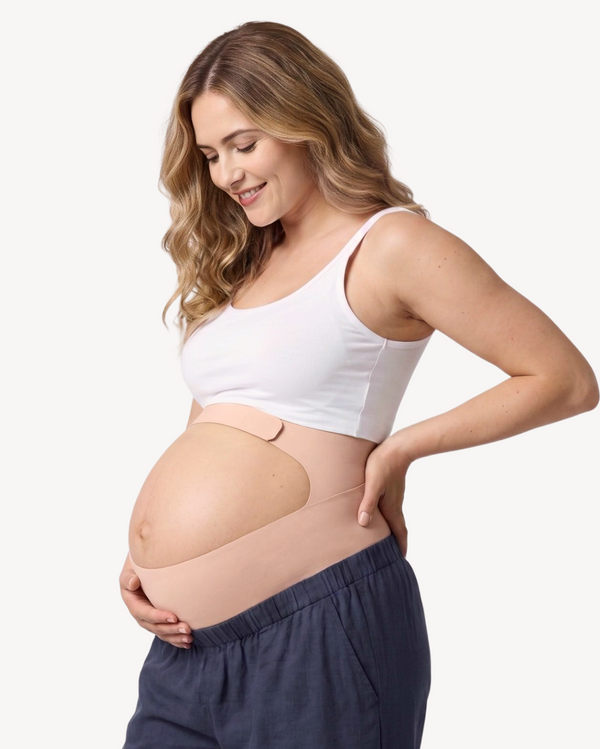
A pregnancy ball can sit comfortably alongside light bump support during daily movement. The BumpEase Momcozy Ergonest Maternity Belly Band offers lightweight support for expecting mums who want greater comfort during everyday activity.
For a twin pregnancy, triplets, or a larger, heavier bump, the Momcozy Go As You Grow™ Maternity Belly Band offers support suited to fuller bump support needs. Browse the Momcozy maternity belly band collection for more pregnancy support options.
Member price
£59.99Code Save 20%
Member price
£113.99Code Save 22%
When Should You Not Use a Pregnancy Ball?
Pause the session and contact your midwife, GP or maternity unit if you have bleeding, fluid loss, regular painful contractions before term, chest pain, severe shortness of breath, dizziness, faintness, a severe headache, calf pain or swelling, or a clear drop in your baby’s usual movements. Seek individual clearance before exercise after a pregnancy complication, a medical restriction or a recent change in symptoms.
During a session, stop at the first sign of pain, loss of balance or feeling unwell. Choose a supported seated position, a gentle walk or rest until you have spoken with your care team.
FAQs
Q1: How to Dilate Faster Using an Exercise Ball?
An exercise ball can support upright positions and gentle pelvic movement as labour approaches. Sit tall, circle your hips slowly, or lean forwards over the ball between contractions. Your midwife or maternity team can help you choose positions suited to your labour.
Q2: Is It Safe to Bounce on a Pregnancy Ball?
Small, controlled bounces can suit some full‑term pregnancies after approval from a midwife or maternity team. Keep both feet on the floor, use a stable ball and pause if you feel tired, dizzy or unsteady.
Q3: Can I Start Bouncing on a Ball at 34 Weeks?
At 34 weeks, seated circles, pelvic tilts and side‑to‑side pelvic movement are gentle options. Save bouncing for 37 weeks onward, with approval from your midwife or maternity team.
Q4: What Are the Benefits of Using a Pregnancy Ball?
A pregnancy ball can add gentle movement to sitting, support a more upright posture and offer comfortable positions for stretching, rest and labour. Slow pelvic movement may feel especially welcome during later pregnancy.
Q5: Can a Pregnancy Ball Bring on Labour?
A pregnancy ball can support comfortable upright movement and flexible position changes as labour approaches. Use it for comfort and gentle mobility alongside advice from your midwife or maternity team.
Q6: How Long Should I Sit on a Pregnancy Ball Each Day?
An initial session of around 10 to 20 minutes gives you time to assess comfort. Several short sessions can fit naturally around meals, work or rest.
Q7: How Long Should I Bounce on a Ball to Induce Labour?
After 37 weeks and individual approval from your midwife or maternity team, a few minutes of small, comfortable bounces can form part of a gentle ball session. Keep both feet firmly on the floor and pause as soon as movement feels tiring or unsteady.
Moving at Your Own Pace for Comfort
How to use a pregnancy ball comes down to a stable setup, easy breathing and movements that suit your stage. A few pelvic shifts while seated, a supported stretch or a forward‑leaning labour position can add comfort without turning the day into a workout. Choose the position that feels right, keep your care team informed and give yourself time to move at your own pace.