Bouncing on ball to induce labour is one of the most searched late-pregnancy comfort strategies in the UK—and for good reason. Near your due date, a birthing ball (also called a maternity or yoga ball) can help you sit upright, ease backache and gently mobilise the pelvis. It is not a medical induction method and will not guarantee contractions, but used calmly—and with midwife or GP guidance if your pregnancy is complicated—it can support positioning and early-labour comfort.

Why people try to induce labour naturally
As the due date approaches, many women look for gentle ways to feel more in control. Late pregnancy often brings backache, pelvic pressure, bloating and deep tiredness. Natural approaches—walking, resting well, staying upright, and birthing ball exercises—can feel preferable to waiting for hospital induction medicines or procedures such as a membrane sweep.
If pregnancy continues past about 41 weeks, your maternity team may discuss induction options to reduce risks for baby. Some midwives also suggest calm, everyday movements—including time on a ball—to encourage a helpful baby position. These methods may support comfort and readiness, but they cannot promise labour will start. Always check with your midwife or obstetrician before trying anything new, especially if you have a high-risk pregnancy.
How a birthing ball works
A birthing ball encourages upright, open-hip sitting so gravity can help the baby settle lower in the pelvis. When you sit or bounce lightly, the pelvis can tilt slightly forward, the hips open, and the baby’s head may engage more readily. Slow hip circles or figure-of-eight moves keep pelvic muscles mobile and may support cervical readiness if your body is already heading toward labour.
So does bouncing on ball help baby drop? Gentle bouncing and upright rocking may encourage the baby to move lower into the pelvis for some women, which can feel like increased pressure. It does not “force” engagement, and results vary. Using the ball also often improves posture and eases lower-back load—useful whether labour is imminent or you simply need a kinder seat than a sofa.
UK sources such as the NHS birthing ball guidance and Tommy’s birth ball tips emphasise staying active, upright positions and practising in pregnancy so the ball feels familiar in labour—not using it as a guaranteed induction tool.
What is a birthing ball?
A birthing ball is a large, inflated ball designed for pregnancy, labour and often early postnatal sitting. Gentle bouncing, rocking and hip circles can ease back and pelvic pressure and keep the pelvis mobile in late pregnancy.
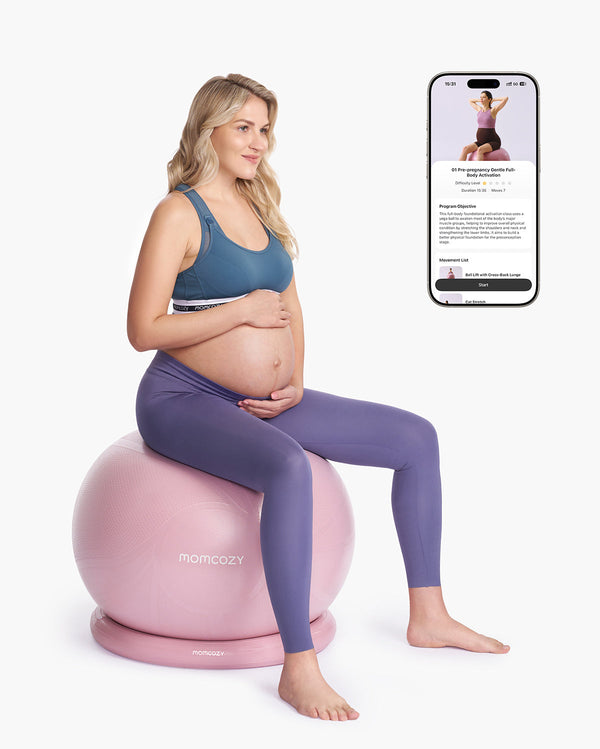
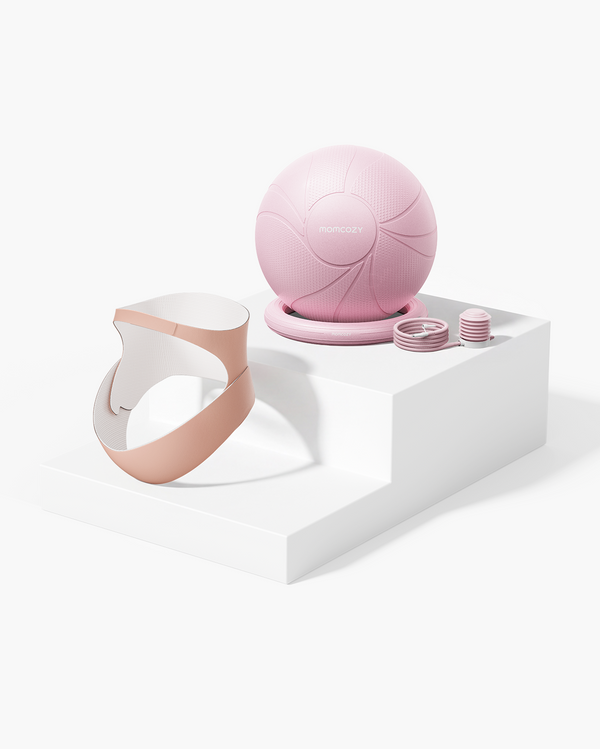
Some women choose a maternity-specific set such as the Momcozy BirthEase Maternity Ball Set, which includes a 65 cm ergonomic ball made from BPA-free, anti-burst PVC with a textured, anti-slip surface and reinforced base for stability. The set includes access to stage-based video courses in the Momcozy App for prenatal comfort, labour preparation and postpartum recovery, plus a foot pump for easier set-up.
Anti-Burst Design
Stability Base Included
Guided Training Program
Birthing ball moves and yoga ball exercises to induce labour
Pregnant women use balls to stay active, feel more comfortable and encourage a favourable baby position. These yoga ball exercises to induce labour are really labour-prep moves: they may help comfort and pelvic space, but they do not guarantee contractions. Keep every move slow and stop if anything hurts.
Bouncing or gentle up-and-down movements
Sit upright with feet flat and hip-width or slightly wider. Bounce lightly so the pelvis softens and the baby’s head can make contact with the pelvic inlet, often with less lower-back strain. This is the classic “bounce” people mean by bouncing on ball to induce labour—keep it small and controlled.
Hip circles
Slow circles while seated help pelvic muscles relax and stay flexible, which may support better fetal positioning.
Figure-eights
A figure-of-eight hip pattern blends rotation and rocking to increase pelvic mobility and ease tension—also recommended in NHS-style sitting guidance.
Rocking forward and backward
Gentle forward–back rocking on the ball can offload the back and help some babies settle lower.
Side-to-side rocking
Rocking left and right stretches hip and lower-back tightness and keeps the pelvis moving through early discomfort.
You can practise these birthing ball exercises at home on a Momcozy pregnancy ball or any anti-burst birth ball that fits your height. They may help comfort and pelvic positioning; they still will not guarantee labour starting. If you have complications, get personal advice first.
How to use a birthing ball safely
Safe set-up reduces falls and strain:
-
Choose the right size: Sit with feet flat. NHS height guidance suggests about 65 cm if you are up to 1.73 m (5 ft 8 in), and about 75 cm if taller, aiming for knees roughly 10 cm lower than your hips. Many women also find a 65 cm ball works well when knees bend comfortably around 90 degrees—fit matters more than a brand label.
-
Use a stable surface: Place the ball on a non-slip mat or carpet. Avoid slippery floors; Tommy’s notes carpet often feels more stable.
-
Sit well: Tall spine, soft shoulders, engaged core—avoid deep slouching or leaning too far back.
-
Move slowly: No sudden jerks when bouncing, circling or rocking.
-
Keep support nearby: Wall, sturdy chair or worktop within reach if you feel wobbly.
-
Listen to your body: Stop for pain, dizziness, bleeding, reduced baby movements or unusual contractions.
-
Limit sessions: Start with about 5–10 minutes and build only if you feel fine. Long sessions can tire you.
If waters break or fluid spills near the ball, clear the floor before getting back on, to avoid slipping.
When to start bouncing on a birthing ball
When to start bouncing on birthing ball work depends on comfort and clinical advice. Many women introduce a ball in the second or third trimester once the bump grows and back or hip ache appears. Earlier on, sitting for posture and gentle core work may still help if your midwife agrees.
Most focus on late pregnancy—often from around 32 weeks—when baby is more likely to be moving into a birth position. That is when bouncing, rocking and hip circles are commonly used to keep the pelvis mobile. Always ask before starting if you have placenta issues, bleeding, preterm labour risk, or other complications.

Benefits of using a birthing ball during labour
During labour (once you feel safe using the ball from pregnancy practice), common benefits include:
-
Opens the pelvis: Sitting and gentle bouncing can create more space for baby to find a helpful position.
-
Encourages upright positioning: Gravity may help descent and make contractions feel more productive for some women.
-
Relieves back and hip pain: Rocking and circles can ease pressure through contractions.
-
Promotes relaxation: Slow movement plus breathing can reduce tension.
-
Supports core and pelvic muscles: Balancing recruits muscles you may use when pushing.
NHS advice also notes birth balls can ease labour pain and help keep you active. They still do not medically trigger labour on their own.

How long should I bounce on a ball to induce labour?
There is no fixed time that will start labour. Bouncing can ease discomfort and mobilise the pelvis, but it does not directly switch contractions on. Most women use short, repeated sessions—often about 5–10 minutes at a time, a few times a day—based on energy and comfort.
Rest if you feel pain, dizzy or exhausted. Keep the bounce light. Only use the ball as labour prep if your maternity team is happy for you to do so, especially in higher-risk pregnancies.
Will bouncing on a ball induce labour?
Will bouncing on a ball induce labor (or labour) in a medical sense? Usually no. Research and clinical commentary differ on how much ball work changes labour outcomes; there is no clear consensus that bouncing alone induces labour if your body is not ready. What bouncing can do is support comfort, upright posture and pelvic mobility—and, for some, encourage baby to settle lower—while you wait for labour’s natural cues. Treat it as preparation and comfort care, not a DIY induction drug. Speak to your midwife before relying on any natural method, and seek clinical induction advice if your team recommends it.
FAQs
Should I bounce on a ball when pregnant?
Yes—for many low-risk pregnancies, light bouncing on a birthing ball is considered reasonable when movements are slow, the floor is stable and non-slip, and you stop for pain or dizziness. If you have pregnancy complications, ask your midwife or GP first. That is the practical answer to should I bounce on a ball when pregnant.
What size birthing ball should you use?
Choose a ball that lets your feet stay flat with comfortable knee bend. Many women use around 65 cm; taller people may need about 75 cm. NHS guidance links height to size and prefers knees a little lower than hips. Balance and comfort beat a one-size rule.
Can bouncing on a ball break water?
No. Gentle bouncing on a birthing ball does not typically break your waters. The amniotic sac is well protected; labour usually begins with contractions or spontaneous membrane rupture timed by your body—not by ball work. Bouncing may aid comfort and pelvic position, but it does not directly cause waters to go.
Does bouncing on a ball help early labour?
It can help some women cope in early labour by keeping you upright, easing backache and giving you something rhythmic to do through tightenings. It may support progress by encouraging helpful positioning, but it is not a guarantee that early labour will speed up. Practise in pregnancy first so the ball feels familiar when labour starts.
How does bouncing on a ball affect labour?
Bouncing and related moves mainly affect labour by changing posture and pelvic space: upright sitting, gentle bounce and hip motion can reduce back pressure, help you stay mobile and may assist baby’s descent. They do not replace clinical monitoring or medical induction when those are needed. If you feel unsure during labour, follow your midwife’s advice on when to stay on the ball and when to change position.
Conclusion
A birthing ball is a practical tool for comfort, hip mobility and upright movement in late pregnancy and labour. Gentle hip rocking, bouncing and circling may ease back and pelvic pressure and help baby find a better position. It can support labour preparation, yet it does not reliably cause contractions. Use an anti-burst ball on a solid, non-slip surface, move slowly, and tell your midwife about any concerns—especially if you are exploring bouncing on ball to induce labour near your due date.