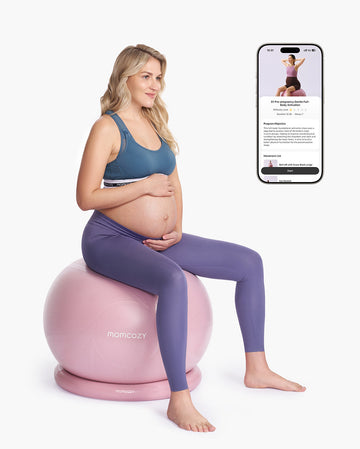
Pregnancy balls are usually more fun the further along you are. One minute you're sitting as you normally would; the next, your bump is making you change positions every few minutes. So, when to start using pregnancy ball becomes a fair question. You can utilize one earlier in pregnancy if exercise is safe for you, but it’s typically the second trimester when it’s especially helpful for day-to-day comfort.
But there is one important difference: a pregnancy ball does not ensure that labour will actually start. Its purpose is to facilitate comfortable mobility and provide a wider range of positional options. So, irrespective of whether you are 12 weeks pregnant and just interested or 38 weeks and looking for something comfortable to lean on, here is what you need to know.
What Is a Pregnancy Ball?
A pregnancy ball is a big, firm exercise ball that you can sit on, lean against, stretch with and move around as your body changes during pregnancy. You might also see it referred to as a birthing ball or maternity exercise ball, especially when used in the weeks prior to labour.
Going with the right one is a lot more than just picking a ball of the right colour or size. It should be stable, suitable for your height and made with anti-burst material. The standard size ball the NHS recommends is 65cm for women under 1.73m and 75cm for women over 1.73m. When you sit on it, your knees should be roughly 10cm lower than your hips.
Stability is the priority no matter what ball you opt for. You should feel stable and in control while sitting and moving on it, not like you're going to fall off.
What Are the Benefits of Using a Pregnancy Ball?

A pregnancy ball is most useful when you start feeling restless in one spot for too long. As your bump grows, you might find yourself scooting around in your seat, standing up more often, or looking for a position that takes some of the load off your back and hips. A ball gives you a different way to sit and move without having to make it a full-on workout.
Its key advantages include:
- Greater mobility: Soft rocking and pelvic circles allow you to move around without having to stand up.
- Simple comforts of daily life: Sitting on the ball can be a refreshing break from a hard chair as your bump gets heavier.
- Gentle pelvic tilts: You can keep yourself moving around the pelvis with small controlled movements.
- Upright positioning in labour: A birthing ball is one way to keep moving and upright while in labour, and it could help you manage contraction pain.
- Getting familiar with useful positions: Practising before labour means you can find positions that feel comfortable before contractions make everything a little harder to think about.
Hence, the ball is not so much about doing more but about having one more choice when the usual positions just don't feel quite right. If you're going to use one in labour, it's best if you use it in pregnancy so you know how to use it safely.
When Can I Start Using a Pregnancy Ball?
There is no magic week when you need to start using a pregnancy ball. If you have a healthy pregnancy and normal activity is suitable for you, you may be able to use one earlier on. For many UK mums, it’s more practical as the bump grows and they start to feel less at ease sitting still or getting about.
How you use the ball will likely change as your pregnancy changes: you start to get to know it in the first trimester, then begin using it more for comfort and movement in the second, and finally, you incorporate more position through labour in the third.
First Trimester (Weeks 1–13): Can I Use a Pregnancy Ball?
There is no need to wait until the third trimester simply because it is also called a “birthing” ball. If your doctor has given you the go-ahead for light workouts, you can use the pregnancy ball during the first trimester.
Just sitting on the ball or rocking back and forth a few times can help you get a sense of how to balance and how the ball feels. If you’re not accustomed to exercising, take it slow as you would with a new workout routine. If in doubt about whether this is the right kind of exercise for you, speak to your midwife or GP first.
Second Trimester (Weeks 14–27): The Ideal Time to Start Daily Use
For many UK mums, the second trimester is when a pregnancy ball really comes in handy. As your bump grows and your posture changes, you might feel restless and not want to sit still for too long. Aim to sit with your feet flat on the floor and your knees at hip level, or a little lower than your hips. When you feel steady, add slow pelvic circles or slow side-to-side swaying.
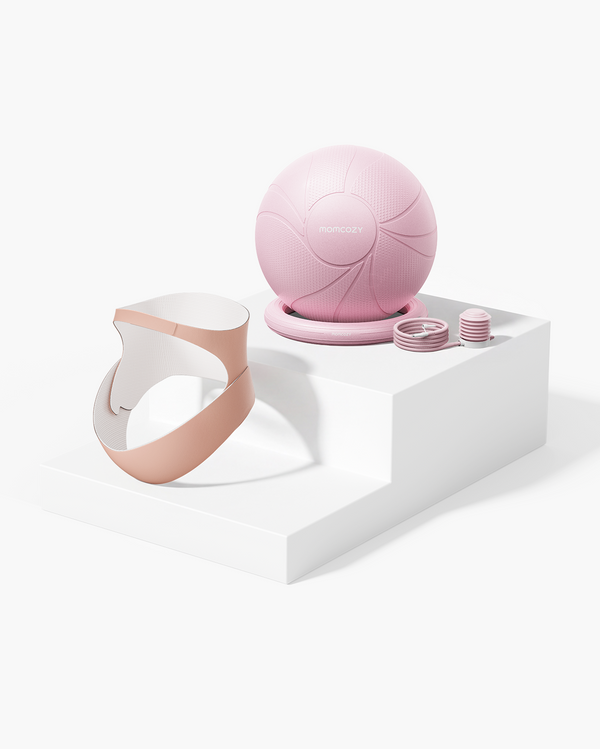
If you want a bit more guidance as you get familiar with using a pregnancy ball, the Momcozy BirthEase Pregnancy Ball Set features stage-based routines via the Momcozy App, plus a maternity ball that provides stability and has anti-slip properties. It can be used as your routine changes from pregnancy comfort to later labour preparation.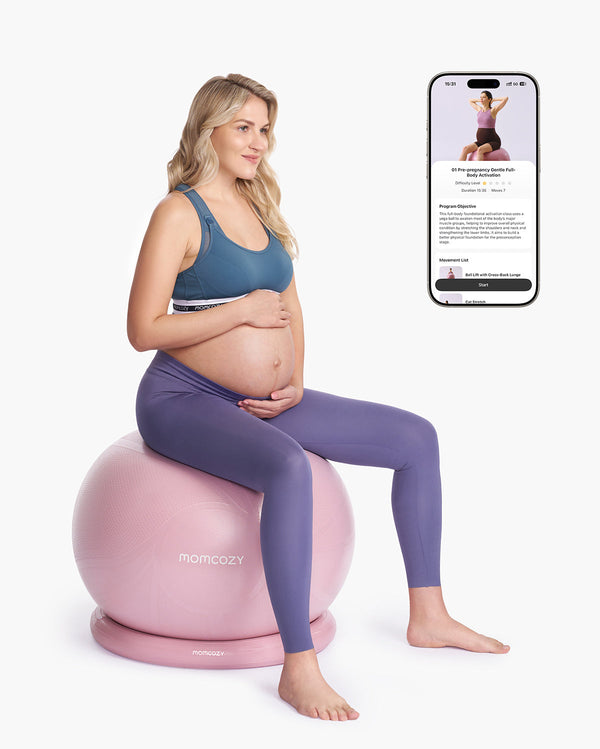
 Member price
£113.99
Member price
£113.99
Third Trimester (Weeks 28–36): Building Labour Preparation
Your pregnancy ball can be a good companion through your third trimester when you want to stay comfortable and mobile. Use it when your lower back is tight, your bump makes sitting uncomfortable, or you just need to get up and go.
Gentle movements can include:
- Slow hip circles
- Side-to-side rocking
- Sitting upright with your feet firmly planted
- Leaning forward over the ball
- Gentle pelvic movements
Be sure to keep the movements controlled rather than bouncing your body up and down rapidly. At this stage, it’s more about finding enjoyable ways to get moving than doing a particular workout.
Final Weeks (37+): Encouraging Optimal Foetal Position

From 37 weeks, you may find yourself more focused on labour and finding positions that feel right while you wait for your baby. A pregnancy ball can provide you with yet another option to remain mildly active, as well as practise upright positions such as sitting and rocking your pelvis, leaning forward or kneeling with the ball as a support.
It’s still important to keep a realistic outlook. A birth ball isn't going to guarantee a specific foetal position or make labour begin. Consider it instead as a comfort and movement aid.
How Long Should You Use a Pregnancy Ball at Each Stage?
There is no need to treat pregnancy-ball use like a workout with a countdown clock. The appropriate duration can vary with the stages of your pregnancy, so begin with brief sessions and make changes according to your comfort and stability.
As a practical guide, 10–20 minutes once or twice a day is sufficient for many mums. You can sit down, move around a little or try out different positions, then rest. If at any point you experience pain, dizziness or discomfort, discontinue and consult your midwife or GP if necessary.
How Long Should You Use a Pregnancy Ball at 1–13 Weeks?
If you haven’t used one before, begin by spending about 10 to 15 minutes on it at a time. You can just sit on the ball, practise getting on and off safely or even do a few easy rolls. You don’t have to integrate it firmly into a formal workout. If you already exercise regularly, the ball is just a casual alternative way to move.
How Long Should You Use a Pregnancy Ball at 14–27 Weeks?
A few 10-20-minute sessions at a time is a good rule of thumb to start with. If the ball feels good, you can come back to it over the course of the day rather than spending one long session on it. For example, you may use it while folding baby clothes, responding to emails, or watching television. The goal is to introduce some easy movement into your day.
How Long Should You Use a Pregnancy Ball at 28–36 Weeks?
As your bump gets bigger, sessions of 10–20 minutes might seem more doable than longer periods. Gentle circles, rocking, and position changes are sufficient. There's no need to force yourself through fatigue. If you start to get discomfort in your back, hips or legs, stand up, have a rest or move.
How Often Should You Use a Pregnancy Ball from 37 Weeks?
Even at 37 weeks, there’s no required length of time you have to be on the ball. You can use it for a few minutes at a time during the day, or any time you want to change position or feel the need for more comfort.
If you are going to use it in labour, it is more helpful to get to know the ball and learn various positions rather than attempting to use it for a specific amount of time.
Final Weeks (37+): Can a Pregnancy Ball Help Prepare for Labour?
At 37 weeks, using a pregnancy ball may shift from being about daily comfort to being about getting to know what feels good while you wait for labour to begin. But it is good to keep expectations realistic. Just remember that a pregnancy ball will not make labour start, make it go faster, or let you know how your labour will go. There’s no need to spend hours bouncing on it in an attempt to induce labour.
Instead, use these final weeks to find what feels comfortable for your body. Gentle rocking, small pelvic movements or leaning over the ball may become useful options to have in your toolkit when labour arrives.
Think of it as preparation rather than a countdown tool: you are practising what feels comfortable, not trying to make labour happen.
Top Tips for when to Use a Pregnancy Ball

A pregnancy ball is relatively easy to use, but a few minor details can help make it feel a lot safer and more comfortable, especially as your bump grows. You don't need an elaborate routine — just ensure the setup is right for you before you get moving.
- Ensure the ball is the correct size. When you take a seat, your knees should be at the same height as or just below your hips. Do not feel like you are burying too deep into the ball or you are tiptoeing.
- Check that it is anti-burst. Seek out a pregnancy or birthing ball that is made to deflate slowly if it gets punctured, not one that will burst all at once.
- Make sure you have room to move. Place a stability ball on a flat, dry, and non-slip surface with sufficient space around you, so you will not bump into any furniture.
- Let your feet be firmly on the ground before you go. Keep both feet flat on the floor and a little distance apart. A wider stance can make it easier to stay steady when rocking or making small circles.
- Keep the movements small. You don't have to bounce wildly to get something off the ball. You just need to gently rock, make slow circles, and make small adjustments of position.
- Consider getting off before you sit down. As your bump grows, getting on and off may take a little more effort than expected. Move slowly and use a stable surface for support if you need one.
- Have something sturdy nearby. A solid chair, worktop or other stable surface can give you something to hold when sitting down, standing up or changing position. Avoid using anything that could move or tip.
- Listen to your body and halt if necessary. Pain, dizziness, fainting, or difficulty maintaining balance are all reasons to stop. Pregnancy is not the time to power through anything that doesn't feel right.
- Try it before labour. If you plan to use the ball during labour, try different positions beforehand. It is easier to find what feels comfortable before contractions begin.
When Should You Not Use a Pregnancy Ball?
A pregnancy ball can come in handy, but it's not for every person or stage of pregnancy. If your situation changes, see if it still applies instead of thinking you have to keep using it. If your midwife, GP, or maternity care team has told you to restrict your physical activity, listen to their guidance rather than trying to modify a pregnancy-ball routine on your own.
Discontinue use of the ball if you have severe pain, dizziness, bleeding, or leaking of fluids and seek appropriate medical attention. If you feel ill or are too wobbly to use it, then stop.
When Should You Avoid Using a Pregnancy Ball in Early Pregnancy?
There is no blanket rule for using a pregnancy ball during the first trimester. However, should you be experiencing pregnancy complications, have mobility issues, or have been instructed to limit your activities, consult with your midwife or GP prior to use.
If you weren’t active prior to pregnancy, ease into it instead of turning the ball into an intense new workout. And if anything doesn’t feel right, stop — you don’t have to work through the pain.
Frequently Asked Questions
Can I Start Bouncing on a Ball at 34 Weeks?
Yes, if exercise is appropriate for you, you can use an exercise ball at 34 weeks. Keep the motion slow and gentle—slow rocking, pelvic circles, and gentle movements are enough. Still, keep in mind that bouncing is not a certain way to bring on labour.
How Long Should I Sit on a Pregnancy Ball Each Day?
There isn’t a set daily amount. If you haven’t used one before, 10-20 minutes at a time is a reasonable place to start. You can also use it for multiple short sessions instead of one long session.
When Is It Too Late to Start Using a Pregnancy Ball?
It's not necessarily too late to start at 37 weeks or later. If you're going to be using one, begin gently and give yourself time to get comfortable with the ball before experimenting with other positions you may want to use in labour.
Conclusion
So, when to start using pregnancy ball? If regular exercise is appropriate for you, you can add one earlier in your pregnancy, although many UK mums say it becomes more useful once your bump starts altering the way you sit and move.
If you want to use your birthing ball in labour, practise with it in advance. By the later weeks, it can feel like a routine, providing you with another way to move comfortably and test out positions you may want to use during labour. What’s more important is to get the hang of the movements that are comfortable for you and have a sense of confidence in using the ball.