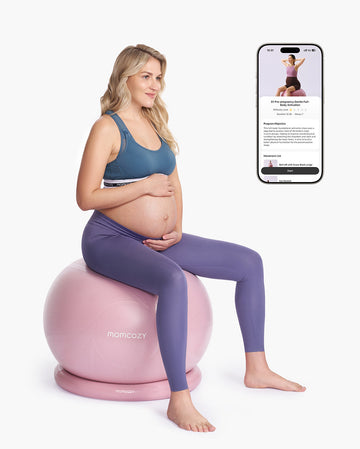
A birthing ball can support labour preparation by helping you stay upright, move your pelvis gently and find comfortable positions near your due date. Regular practice can make sitting, leaning and rocking positions feel familiar before labour begins.
Use the ball at a pace that feels steady and comfortable. Your midwife or maternity team can advise on movement that suits your pregnancy.
Can a Birthing Ball Help Induce Labour?
A birthing ball may support upright posture, pelvic movement and regular position changes in late pregnancy. These conditions can be helpful as your body prepares for labour, while labour timing remains individual.
The NHS sets out birthing ball positions for labour, including sitting, kneeling while leaning over the ball, hugging the ball and standing while leaning over it. Each position gives you a way to stay mobile during contractions.
How Birthing Ball Exercises May Help Baby Move Down
Sitting upright on the ball keeps your pelvis free to make small circles, side to side shifts and figure of eight movements. These movements can feel more comfortable than staying in one chair position for a long period.
During labour, upright positions may help your baby’s head move further down into the pelvis. Sitting with your feet planted also gives a birth partner room to massage your lower back.
A ball can support comfortable movement and position changes near your due date. Use it as a labour preparation tool, with maternity care guiding decisions about induction.
What Are the Benefits of Using a Birthing Ball?
A birthing ball provides a mobile seat for late pregnancy and labour preparation. Its practical benefits come from the positions and movements you can use on it.
- Upright sitting: A ball may feel more comfortable than a standard chair when your hips or lower back feel stiff.
- Pelvic mobility: Slow circles, figure of eight movements and pelvic tilts allow the pelvis to move gently.
- Labour preparation: Practising ball positions in pregnancy can make them easier to use during contractions.
- Forward leaning rest: Kneeling and resting your upper body over the ball can ease pressure through the back.
- Movement breaks: Brief sessions can break up extended periods of sitting.
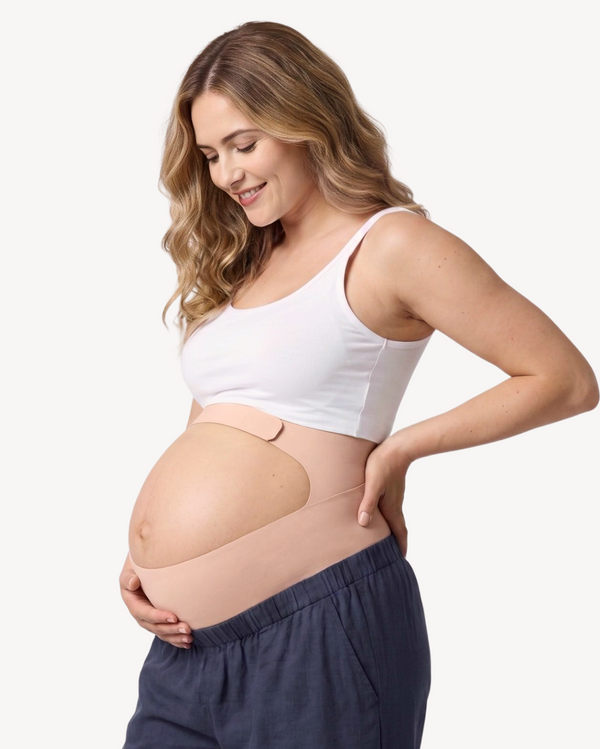
For most expecting mums seeking lightweight support during walking, standing or light activity, the BumpEase Momcozy Ergonest Maternity Belly Band offers a separate form of bump support. The ball supports seated movement, while a maternity band can support everyday activity.
Choose the ball when you want gentle movement or upright sitting. Choose a support band when your bump needs extra support during daily tasks.
The Best Birthing Ball Exercises to Induce Labour
The following eight movements use the exact titles from Momcozy’s late pregnancy course. Each one supports gentle mobility, stability or comfortable position changes.
Ball-Supported Forward Fold
Kneel on a mat with your knees about hip width apart. Hold the ball with both hands and rest your upper chest on it, allowing your torso to lean forward comfortably.
Roll the ball in slow circles in one direction, then change direction. Place a folded towel under your knees if you need more cushioning.

Cat Stretch
Come onto all fours with your shoulders over your wrists. Inhale to lengthen through the front of your body, then exhale as you round your spine gently.
Keep the movement small and relaxed. A towel beneath the knees can add comfort.

Pelvic Tilt
Sit in the centre of the ball with both feet flat on the floor. Inhale and tip the pelvis slightly forward, allowing a gentle natural curve in the lower back.
Exhale and draw the pelvis backwards, allowing the tailbone to curl under slightly. This exercise ball labour induction movement works well with six to eight slow repetitions.

Side-to-Side Pelvic Tilts
Sit securely with your feet comfortably apart. Inhale to prepare, then exhale as the right sitting bone lowers slightly and the pelvis glides right.
Inhale back to the centre, then repeat on the left. Keep your shoulders relaxed and reduce the range if your hips feel tight.

Seated-on-Ball Rocking
Sit in the middle of the ball with your feet grounded. Slowly roll the pelvis forwards and backwards, allowing the ball to move a small distance beneath you.
Keep your ribcage above your pelvis and your neck relaxed. The motion should feel smooth and controlled.

Seated Spinal Rotation
Sit tall on the ball with both feet stable. Place your hands on your hips or on the ball, then rotate gently through the upper back to one side.
Return to the centre before changing sides. Keep the pelvis stable and let the movement come from the upper body.

Dynamic Squat
Place the ball between your lower back and a wall. Step your feet forward slightly wider than shoulder width, then inhale as you lower into a small squat.
Exhale as you rise through your feet. Keep your knees in line with your toes and use a depth that feels comfortable.

Seated-on-Ball Bouncing (after full term)
Seated-on-Ball Bouncing (after full term) is reserved for 37 weeks and beyond in the Momcozy course. Sit centrally with both feet on the floor and use a light, controlled bounce.
Press gently through your feet as you inhale and lower back to the ball as you exhale. Hold a stable surface if you would like more balance support.

These movements provide several ways to sit, lean and mobilise your pelvis. Pick the exercises that feel best for your body instead of completing all eight in one session.
How to Naturally Induce Labour with an Exercise Ball
An exercise ball can fit into a gentle full term movement routine when activity feels comfortable and your maternity team supports it. The goal is upright movement and comfort rather than effort or intensity.
- Sit on the ball for five minutes with both feet planted.
- Complete six to eight Pelvic Tilt repetitions.
- Complete six to eight Side-to-Side Pelvic Tilts.
- Add several slow hip circles or figure of eight movements.
- After 37 weeks, add a short set of Seated-on-Ball Bouncing (after full term).
- Finish with Ball-Supported Forward Fold or a stable seated rest.
A ball exercise to induce labour can remain gentle and brief. Keep the pace comfortable enough to speak easily throughout the session.
How Long Should You Use a Birthing Ball to Induce Labour?
Session length depends on your comfort, balance and energy. Short sessions with regular breaks are usually easier to manage than a single long session.
How Long Should You Bounce at a Time?
After 37 weeks, begin with a short set of around 15 gentle bounces, matching the Momcozy course. Keep every bounce low and controlled.
Pause after the set and assess how you feel. Rest straight away if you feel tired, dizzy or uncomfortable.
How Often Can You Repeat Birthing Ball Exercises?
Begin with one session lasting 10 to 20 minutes. You can divide movement into shorter sessions, such as pelvic tilts in the morning and seated circles later in the day.
Your energy level should set the frequency. Ask your midwife for individual direction if you have pelvic pain, back pain or activity restrictions.
When Should You Take a Break?
Take a break when your posture becomes hard to maintain, your feet feel less stable or you become breathless. Drink water and return to the ball only when you feel settled.
Stop and contact maternity triage for bleeding, fluid loss, reduced fetal movements or contractions that concern you. These symptoms need individual assessment.
Regular breaks protect your balance and comfort. Good form matters more than a target number of minutes.
How to Use a Birthing Ball During Labour
Use the ball during labour after practising the positions during pregnancy. Place it on a non slip floor and keep a birth partner or midwife nearby if you want balance support.
- Sitting: Sit with feet about shoulder width apart and make small circles or side to side movements.
- Leaning: Kneel on a mat and rest your upper body over the ball.
- Hugging: Kneel with your bottom raised, hug the ball and rock gently.
- Standing and leaning: Place the ball on a stable raised surface, then rest your arms and upper body over it.
A familiar ball position can help you focus on your breathing through contractions. Switch positions whenever another option feels more comfortable.
How to Choose the Right Ball for You
Ball size, surface grip and construction affect how stable you feel. Check these details before buying and before each use.
Size is matter
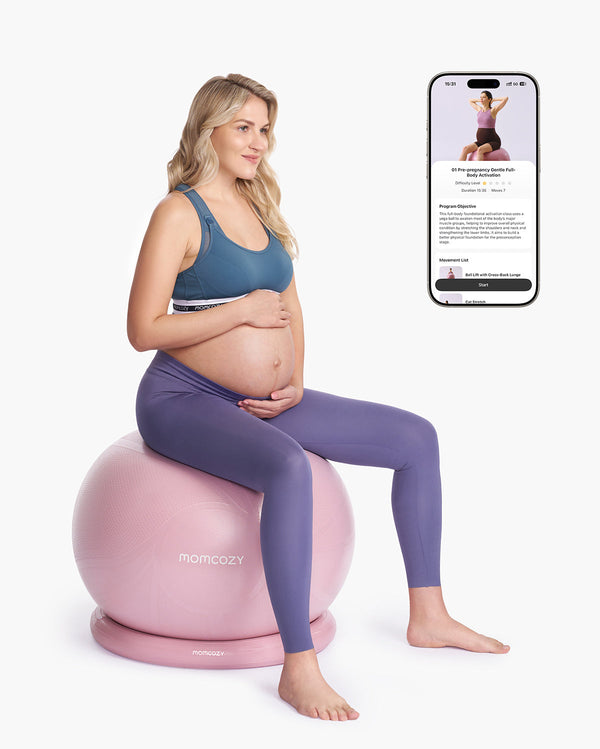
Choose a ball size that allows your feet to sit flat on the floor. The NHS uses 65 cm as a general size for people up to 1.73 m or 5 ft 8 in, and 75 cm for people taller than 1.73 m or 5 ft 8 in.
When sitting, your knees should sit around 10 cm lower than your hips. This position gives your pelvis room to move and keeps your stance stable.
Anti-Burst Material
Choose a ball made from anti burst material. This material deflates slowly after a puncture instead of bursting suddenly.
Check the weight capacity, inflation instructions and surface texture. Keep the ball away from sharp objects, pet claws and rough flooring.
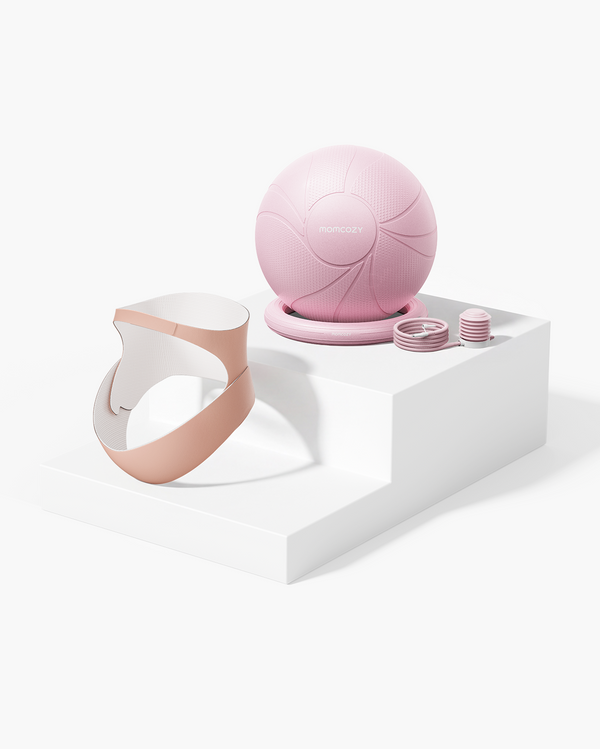
The Momcozy BirthEase Pregnancy Ball Set includes anti burst PVC, a textured anti slip surface, a reinforced base and stage based routines in the Momcozy App. A correctly sized ball with stable construction makes comfortable sitting and movement easier.
Member price
£113.99Code Save 22%
Exercises to Avoid in Late Pregnancy
Late pregnancy movement should feel stable, controlled and manageable. Choose low impact exercises that allow you to breathe comfortably and keep your balance.
Avoid the following during ball sessions:
- High or fast bouncing.
- Deep squats that cause pelvic, knee or lower back discomfort.
- Rapid twisting through the lower back.
- Positions where you feel likely to fall.
- Long periods lying flat on your back after 16 weeks.
- Any movement that causes pain, dizziness, breathlessness, bleeding or fluid loss.
The pregnancy activity recommendations also cover activities with a high risk of falling, contact sports, scuba diving and exercise at high altitude. A smaller movement range can still support comfort and mobility.
When Should You Not Use a Birthing Ball?
Some pregnancies need individual activity limits. Speak with your midwife or maternity team before ball exercise if you have been asked to limit movement or have a condition that affects safe exercise.
Seek individual maternity advice before using a ball if you have:
- Significant pelvic girdle pain, severe back pain or severe joint pain.
- Frequent dizziness, fainting or poor balance.
- Vaginal bleeding, fluid loss or concerning contractions.
- Reduced fetal movements.
- A recent injury that affects mobility.
- A high risk pregnancy or a specific activity restriction.
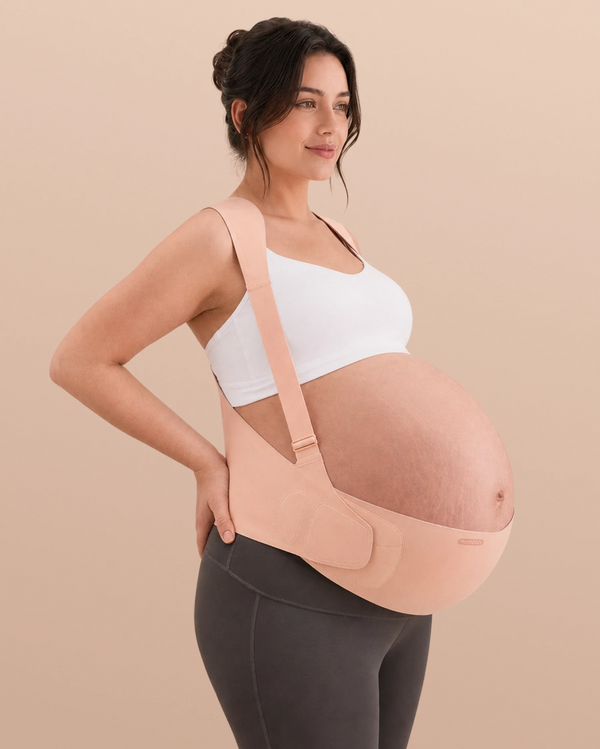
For twin pregnancies, triplets or a larger, heavier bump, the Momcozy Go As You Grow™ Maternity Belly Band is specifically designed to provide more structured support. It may also suit mums who spend long periods standing and want support that helps distribute bump weight.
Individual maternity advice takes priority over a general ball routine. Your symptoms and medical history determine whether the ball suits you that day.
Member price
£59.99Code Save 20%
When to Call Your Midwife or Maternity Unit
Call your midwife, maternity triage service, GP or maternity unit promptly if you have symptoms that need assessment. Save your maternity triage contact number in your phone before your due date.
Call for help if you have:
- Vaginal bleeding.
- A gush or continuing trickle of fluid.
- Reduced or changed fetal movements.
- Severe abdominal pain or pelvic pain that continues.
- Severe headache, visual changes or sudden swelling.
- Fainting, chest pain or difficulty breathing.
- Contractions that feel regular, intense or concerning.
A birthing ball session should end immediately when these symptoms arise. Prompt contact with your maternity team gives you the right next step.
Other Exercises and Activities to Bring on Labour
Gentle activity can support comfort and circulation during late pregnancy. These activities can sit alongside a birth ball exercise to induce labour routine, with your maternity team’s advice shaping the level of activity.
Try a Gentle Walk
A comfortable walk keeps you upright and allows your hips to move naturally. Choose level ground, wear supportive shoes, carry water and shorten the walk if you feel tired.
Keep the pace easy enough for conversation. Walking with a partner can make rest breaks easier.
Practise Pelvic Floor Exercises
Pelvic floor exercises support muscles that work hard during pregnancy and childbirth. Breathe normally, relax between contractions of the muscles and follow the routine that suits your body.
For clear steps, use the NHS pelvic floor exercise information. These exercises can fit into a daily routine while sitting or resting.
Choose Pregnancy Suitable Swimming
Swimming can feel comfortable because the water supports your changing body weight. Tell the instructor that you are pregnant and leave the pool if you feel unwell, tired or dizzy.
A gentle walk, pelvic floor work and swimming provide alternatives to ball sessions. Use the activities that feel comfortable and realistic for your day.
Frequently Asked Questions
Can You Use a Birthing Ball Before 39 Weeks?
Gentle sitting, supported positions and pelvic movement may suit some mums before 39 weeks. Seated-on-Ball Bouncing (after full term) is reserved for 37 weeks and beyond in the Momcozy course.
Ask your midwife which movements suit your pregnancy stage. Keep your feet stable and your movements gentle.
Who Shouldn’t Try Birthing Ball Exercises to Naturally Induce Labour?
Anyone with activity restrictions, significant balance concerns, bleeding, fluid loss, reduced fetal movements or concerning pain should seek individual maternity advice before using a ball. This also applies to high risk pregnancies and medical conditions that affect exercise.
Your maternity team can recommend movements or rest positions that match your care plan. Personalised care takes priority over a general routine.
Do Birthing Balls Help You Dilate?
A birthing ball may help you stay upright and mobile during labour. Cervical dilation follows your individual labour progress and cannot be measured through ball exercises.
Use the ball for positions that feel comfortable during contractions. Your midwife can assess labour progress.
What Is the Fastest Way to Open the Cervix?
There is no safe home technique that opens the cervix on demand. Labour progresses at different speeds, and maternity professionals can discuss clinical options if induction becomes appropriate.
Focus on rest, hydration, comfortable positions and support from your birth team. Contact your maternity unit if you have concerns about labour progress.
Can Bouncing on a Birthing Ball Break Your Waters?
Bouncing does not provide a reliable way to break your waters. Any suspected gush or ongoing trickle of fluid needs a call to your maternity unit.
Use low, controlled bouncing only after full term when it feels comfortable. Stop immediately if you notice fluid loss.
Can a Birthing Ball Bring on Contractions?
A birthing ball may help you practise upright movement and comfortable labour positions. It cannot promise contractions or set the start time of labour.
Use the ball for comfort and pelvic mobility near your due date. Contact maternity triage if contractions become regular, intense or concerning.
Can I Use an Exercise Ball to Start Labour?
An exercise ball may support upright movement and comfortable positions near your due date. Use it for gentle mobility and contact your maternity team if contractions, fluid loss or other symptoms concern you.
Moving at Your Own Pace for Comfort
A birthing ball can support upright positions, gentle pelvic movement and labour preparation in late pregnancy. Practising sitting, leaning and rocking can make these positions feel familiar once labour begins.
Use a correctly sized anti burst ball, follow the 37 week limit for Seated-on-Ball Bouncing (after full term) and contact your maternity team for individual concerns. Browse Momcozy pregnancy belly bands for additional bump support options during pregnancy.