Your bump is in constant change throughout the pregnancy, and this can cause curiosity and anxiety. One of the many that you might encounter is B-belly pregnancy, also referred to as a b-shaped pregnant belly or b-bump pregnancy, which is a misunderstood one. It is not a sign that something has gone wrong.
This is a UK guide to what a B bump is like and how it compares to other bump shapes, what it's caused by, when to talk to your midwife about your bump, and some helpful tips on how to dress and support your body with a B bump, with confidence.
What Is a B Belly in Pregnancy?

Definition and Visual Features
A B-shaped belly appears as two separate sections from the side, creating a silhouette like the uppercase letter B. Unlike the classic D-shaped pregnancy belly—the smooth “basketball under the shirt” dome—a B belly has an indentation or soft fold where the upper and lower abdomen meet.
This crease typically falls around the belly button. The top portion contains the growing uterus and baby, and the lower portion may contain some stomach tissue or fat. In the profile view, the dip makes up the middle bar of the B—the breast is not the top curve; nearly any pregnant woman would have a B shape in the profile, if the chest did.
How Common Is a B Belly?
The B-bellies are not as unusual as glossy magazines make them seem. They are mentioned by maternity communities and pregnancy resources in about 30-40% of pregnancies. They can be seen more frequently when:
- If you are a first-time mum, your body is adjusting to its first-time expansion;
- you were overweight prior to pregnancy or had an abdominal distribution of weight; or
- you have had previous pregnancies and abdominal tissue has already stretched.
These patterns underline a simple truth: pregnancy bodies are far more diverse than the single “perfect bump” shown in adverts and social feeds.
Is a B Belly Normal in Pregnancy?
Yes. A b shaped belly pregnant profile is a normal anatomical variation—not evidence that you or your baby are unhealthy. Many women only discover the term after searching forums and realising others share the same shape (UK mum discussions on Mumsnet are full of “I thought I was the only one” posts).
Emotionally, a non-typical bump can still sting. Common feelings include:
- insecurity when your belly does not match media images or friends’ round bumps;
- anxiety driven by idealised pregnancy photos on social media;
- pressure from cultural ideas about how a “proper” pregnant body should look.
Your midwife or GP can reassure you during routine antenatal checks. If mood or body image is affecting daily life, say so—emotional well-being deserves the same attention as blood pressure or scan results. All bump shapes are valid variations.
What Causes a B Belly During Pregnancy?
No single factor explains every b belly pregnancy bump. Shape usually reflects anatomy, history, lifestyle and genetics working together.
Physiological Explanations for the Constitution
- Abdominal muscle separation (diastasis recti): The rectus muscles may separate along the middle of the abdomen and form a noticeable dip. NHS-affiliated pelvic health guidance says separation is a natural process of making space for the baby.
- Core muscle tone: Abdominal muscle tone before pregnancy affects the distribution of the stretch of the abdomen around the baby.
- Skin elasticity: Variations in stretch and recoil of the skin from person to person can cause tissue domes or folds.
- Uterine position: The position of your uterus and the natural height or tilt it has can alter how the bump presents itself.
Lifestyle Factors That Influence the Belly
- Pre-pregnancy weight: Higher rates of abdominal fat prior to pregnancy are typically connected with “B-shaped” bellies, even though slim women can have them too.
- Previous pregnancies: If the abdomen was stretched during previous pregnancies, then the chance of having a fold may increase the next time.
- Activity level: Regular movement can help maintain core strength and posture, which can have a subtle effect on making an impression on the contour (Healthline also highlights that fascial health, hydration, stretching and gentle movement are contributing factors).
Genetic Considerations
Family patterns often repeat. Genetics can influence:
- where your body stores fat;
- inherited skin elasticity;
- baseline muscle tone and torso structure.
Many women notice their bump resembles their mother’s or sister’s pregnancy shape—another reminder that heredity plays a real role alongside lifestyle.
Will a B Belly Round Out Later?

Sometimes the indent softens as pregnancy advances—some mums joke they are “waiting for my B to become a D.” Others keep a distinct B-shaped baby bump until delivery. Both are normal.
Second and third trimesters bring the most visible change: baby growth, amniotic fluid, posture shifts and weight redistribution can smooth the middle crease—or occasionally make it more obvious week to week. There is no guarantee of a rounder outline, and that is okay. Track comfort and clinical measurements, not comparison photos.
Does a B Belly Mean Anything Is Wrong With the Baby?
From a medical perspective, a B-shaped belly generally poses no direct health risk to your baby. Key points your care team would agree on:
- Impact on baby: External belly shape does not control fetal growth, development or well-being. Growth scans and fundal height matter more than silhouette.
- Pregnancy monitoring: Midwives and sonographers can monitor fetal growth effectively regardless of bump shape—though deep folds may occasionally make belt monitors trickier (a belly band can help).
- Skin health: The primary physical nuisance is irritation or moisture accumulation in the fold. Keep the area clean, dry and lightly moisturised to reduce intertrigo.
- Post-pregnancy recovery: Women who have B bellies can experience varying patterns of abdominal healing during pregnancy and after birth, particularly if the diastasis has not resolved; physiotherapy can assist with this.
If a high BMI was a cause of your shape, then healthcare professionals might talk to you about the usual tests for the risks associated with it (gestational diabetes or pre-eclampsia, for example—not about the letter shape itself). Follow NHS weight-in-pregnancy guidance and attend all antenatal appointments.
Other Pregnancy Belly Shapes
The Spectrum of Pregnancy Belly Types
Pregnancy bellies come in many forms—each normal and valid:
- D-belly: The classic rounded dome resembling the letter D from the side.
- B-belly: A divided upper and lower section—the focus of this guide.
- Apron belly: The lower abdomen hangs below the upper bump.
- Compact belly: A smaller, neater profile, often with strong core muscles.
- High belly: The uterus and baby sit higher in the abdomen.
- Low belly: The uterus and baby sit lower, closer to the pelvis.
Comparison Chart: Key Characteristics
Use this table to see how common bump types differ at a glance. No shape is “better”—each reflects your unique body.
|
Belly type |
Side profile |
Key visual feature |
Often seen when |
Typical comfort note |
|
D-belly |
Smooth curve like “D” |
Single round dome, no waistband crease |
Many body types; common in media images |
Standard maternity wear usually fits easily |
|
B-belly |
Two-part “B” shape |
Horizontal indent or fold around mid-abdomen |
Higher central weight, first pregnancy, prior stretching, diastasis |
Full-panel bottoms and belly bands help unify sections |
|
Apron belly |
Upper bump + hanging lower pannus |
Lower tissue droops beneath the main bump |
Previous pregnancies, significant abdominal skin laxity |
Support underwear; fold hygiene; gentle lift from bands |
|
Compact belly |
Small, neat outward curve |
Tight, forward-projecting bump |
Strong core tone, athletic builds, some first pregnancies |
May “pop” later; fundal height still guides care |
|
High belly |
Bump sits under ribs |
Visible fullness high in the torso |
Uterine position, body proportions |
Shortness of breath or rib pressure—mention at checks |
|
Low belly |
Bump anchored near pelvis |
Weight low in abdomen |
Uterine position, multiparity |
Pelvic pressure; supportive belts may ease back load |
Your bump may blend traits—many women sit between categories. What matters is healthy pregnancy progress, not matching a chart exactly.
What Maternity Clothes Flatter a B Belly?
Supportive and Flattering Clothing Options
The appropriate maternity attire can make for a more comfortable and confident look. You can either celebrate a visible B, or you can smooth it. These are all acceptable options.
- Full-panel maternity trousers, leggings or skirts: A continuous panel over the top and bottom of the abdomen that does not have a tight seam in the waist that will cut into the crease of the abdomen.
- Empire-waist dresses and tops: Lace or fabric drapes from below the bustline, just below the natural midline crease and creates a streamlined line.
- Layered looks: Open cardigans, longline shirts, or light jackets provide additional vertical interest and versatility when it comes to temperature changes.
- Supportive undergarments: Seamless over-bump briefs or soft maternity knickers minimize digging between bump sections.
Supportive Products for Comfort
Specialist items can add gentle structure beyond everyday clothing:
- Belly bands: Flexible fabric wraps that offer light compression and support across the whole abdomen—excellent for pregnancy shapewear for b belly styling (plus-size pregnancy advocates often recommend bands for smoothing and antenatal monitoring sessions).
- Pregnancy support belts: These are more structured than soft bands and help to distribute weight, which can help reduce back strain during extended periods of standing or walking.
- Maternity compression garments: All-over support for mums that want a smoother silhouette beneath fitted garments, focusing on breathability
Comfort, airflow and fit are more important than how flat your bump may look when selecting support wear.
Does Having a B-Shaped Belly Affect Pregnancy?
Belly outline plays little to no role in how pregnancy itself unfolds:
- Fetal growth: Your baby can grow healthily regardless of whether your bump is B-shaped, D-shaped or anything else.
- Length of pregnancy: Bump shape does not affect the length of gestation.
- Labour and birth: There was no evidence to suggest that B-shaped bellies are systemically different from other shapes in terms of labour and birth experiences. The birth plan is not about the shape; it's about monitoring and making adjustments, so if straps slip, consider bringing a ‘belly band' with you.
Concentrate on antenatal preparation, movement under the guidance of the clinician and preparation for birth rather than trying to press the belly into another letter.
How to Manage a B Belly During Pregnancy

Comfort Strategies That Help Day-to-Day
While it is not possible to completely redesign your torso in 9 months, there are things you can do that can make a huge difference:
- Gentle core exercises: Pelvic tilts, side stretches, and some prenatal yoga are all safe to do while pregnant and do not place strain on the midline.
- Posture awareness: With ribs stacked over the pelvis keeps lower-back stress to a minimum and distributes weight more evenly.
- Supportive sleep positions: Sleep on your side with a pregnancy pillow between your knees and under your bump will help relieve pressure on the fold and on hips.
- Skin care: Moisturise belly and crease; pat dry after bathing to prevent irritation.
-
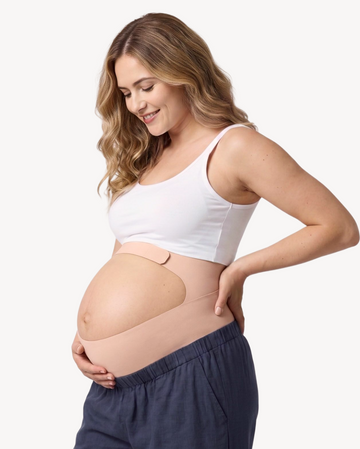
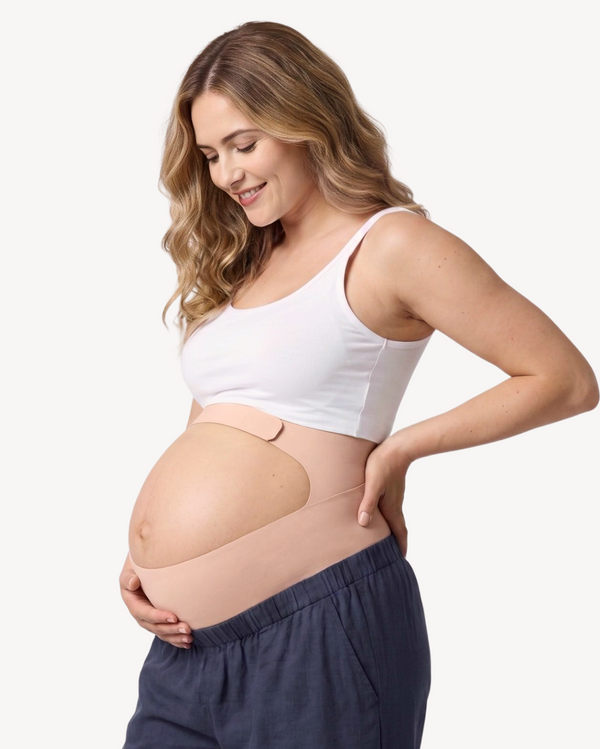
Maternity belly band: A properly fitted band can pull up and join both parts and provide relief from back and belly pressure. The one-piece Momcozy Maternova Belly Band is suitable for smaller, firmer or higher bumps, and for subtle everyday wear. The Momcozy Ergonest Maternity Belly Band offers more structured support for medium, evenly rounded bumps, daily movement and prenatal exercise. For larger, lower or twin/multiple bumps, consider the Go As You Grow™ Maternity Belly Band. Browse the full maternity support belt range to compare styles and sizing.
 Member price£59.99Code Save 20%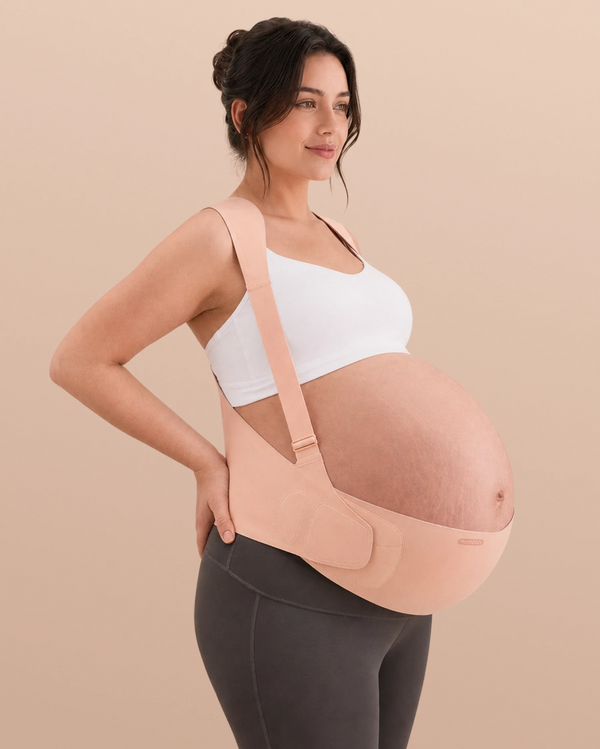
Non-Surgical Support Options
Additional professional and practical help includes:
- Prenatal physiotherapy: Targeted assessment for diastasis, pelvic girdle pain or posture related to your bump shape.
- Prenatal massage: Relief for compensating back, hip and shoulder tension.
- Properly fitted support garments: As above—bands and belts redistribute weight when sized correctly.
How to Prepare Before Pregnancy
Genetics set much of the template, yet general readiness may help tissue cope when conception happens:
- Activate your core: GP-approved strength work before pregnancy can support muscle tone through the first trimester.
- Improve overall fitness: Cardiovascular and strength habits often make later pregnancy modifications easier.
- Maintain healthy skin: Hydration and balanced nutrition support skin elasticity as stretching begins.
- Reach a healthy weight for your body: With clinician support if needed—this may influence how your abdomen expands, though it cannot guarantee a D-shaped bump.
These steps support well-being; they do not “pick” your final belly letter. Genes still play a major part.
What About a B Belly Postpartum?
The crease might persist during the involution of the uterus and repair of the abdominal muscles. For some, this will continue to smooth out over the course of months, while for others, a mild B or apron shape will remain throughout time—particularly if there is still some diastasis or 2loose lower abdominal tissue.
NHS guidance on separated stomach muscles notes that many gaps narrow within weeks after birth. If a gap wider than two finger-widths persists with doming or discomfort, ask your GP about pelvic health physiotherapy.
Postpartum compression or support garments may feel helpful once internal healing is cleared—distinct from pregnancy belts, so follow timing advice from your clinician. Recovery is about function and comfort, not forcing a pre-pregnancy outline.
FAQ
Quick answers to common questions—including myths that circulate online about b belly pregnancy.
Is It Normal to Have a B-Shaped Belly at 20 Weeks Pregnant?
Yes. At 20 weeks, some bumps are already clearly B-shaped; others stay flat or D-shaped until later. Fundal height measurements and scan growth matter more than outline at this stage.
Does Having a B Belly Affect Pregnancy?
Shape does not change gestation length or inherently harm the baby. It may make belt-style fetal monitoring trickier—bring a belly band so straps stay in place, and ask about wireless monitoring in labour if needed.
Does a B Belly Go Away After Pregnancy?
It may soften as swelling resolves and muscles recover, but many women retain a mild B or apron contour. Surgery is elective and personal—not required for health.
What Is a B Belly?
A side profile with a horizontal crease dividing the upper and lower abdomen during pregnancy—the middle bar of the letter B. Also called a double belly or B-shaped baby bump.
Does a B Belly Mean You're Having Twins?
Myth. Belly shape reflects your body structure, fat distribution, muscle tone and how you carry—not baby count. Twins are confirmed by ultrasound, not by silhouette.
Does a B Belly Mean Bad Maternal Health?
Myth. A B belly is a normal variation. It is not a diagnosis of poor health. Clinicians assess wellbeing through history, examinations and screening—not bump letters.
Can You Completely Change Your B Belly Shape During Pregnancy?
Myth. Gentle exercise, posture work and supportive garments can improve comfort, but fundamental anatomy, genetics and late-pregnancy size have a strong influence on shape. Aim for ease, not perfection.
Conclusion
Belly shapes during pregnancy—whether B, D, high, low or somewhere in between—reflect the beautiful diversity of the human body in transformation. Your bump is not a measure of your worth as a mother or your baby’s health. By understanding what influences appearance, dressing for comfort, and using thoughtful support such as the Maternova or Ergonest belly bands, you can focus on the joy of pregnancy rather than cultural expectations about how a body “should” look.