You've warmed a bottle of expressed breast milk or prepared some formula, but your baby hasn't finished it. Perhaps they've fallen asleep, become distracted or simply wanted less than you expected.
You might be tempted to put the bottle back in the fridge and warm it again when your baby wants to eat again. But is it safe to do so?
The answer depends on the type of milk, how it has been stored and whether your baby has already drunk from the bottle.
For expressed breast milk, the NHS advises using warmed milk within one hour and discarding any leftover milk after feeding. For infant formula, freshly prepared feeds are recommended, and any formula remaining after a feed should be thrown away.
In this guide, we'll explain whether you can reheat breast milk or formula, what to do with unused milk and how to prepare smaller feeds to reduce waste.
If you regularly warm bottles for feeds, a suitable bottle warmer can make the process more convenient. In this guide, we'll explain whether you can reheat breast milk or formula, what to do with unused milk and how to prepare smaller feeds to reduce wast

Can You Reheat Breast Milk?
The safest approach is to avoid repeatedly warming and cooling expressed breast milk. The NHS recommends consuming warmed breast milk within one hour and throwing out any warmed milk that remains.
This means that if you've warmed a bottle but your baby doesn't finish it, you shouldn't simply put the remaining milk back in the fridge to save for another feed. The difference between warmed milk that you’re yet to give your baby and the milk that your baby has already consumed should not be overlooked as well.
What If Breast Milk Has Been Warmed but Your Baby Hasn't Drunk It?
If you've warmed a bottle but your baby hasn't started feeding, don't assume you can cool it down and safely reheat it later. The NHS advises using warmed breast milk within one hour.
For a straightforward feeding routine:
- Warm only the amount you expect your baby to drink.
- Avoid leaving warmed milk standing for an extended period.
- Use warmed milk within one hour.
- Discard any milk that remains after this period.
The one-hour guidance is particularly important when planning feeds in advance. Rather than warming several bottles at once, prepare each portion closer to the time it's needed.
What If Your Baby Has Already Drunk from the Bottle?
After your baby starts feeding, bacteria from your baby’s mouth will get into the breast milk. The NHS advises that breast milk remaining in the bottle after a feed should be used within one hour or thrown away.
The remaining portion of the milk should not be placed back into the fridge for future feeds nor reheated to make it last longer. If your baby keeps leaving behind some milk, start by giving him small amounts and then make more if necessary.
How Many Times Can You Warm Breast Milk?
For everyday feeding, it's best to warm breast milk only once. Repeated warming and cooling makes milk handling more complicated and can increase the risk of it being kept under unsuitable conditions.
Instead of worrying about how many times the milk can be warmed, what is more important is following a regular schedule.
Warm Only What Your Baby Needs
Babies don't necessarily drink the same amount at every feed. Their appetite can vary depending on the time of day, how recently they last fed and their individual feeding patterns.
Try these practical steps:
- Check how much your baby usually drinks at a particular feed.
- Start with a small quantity that is appropriate.
- Warm the milk using an appropriate method.
- Continue to feed more if the baby is still hungry, according to safe milk-handling guidelines.
- Avoid warming additional milk unnecessarily.
Store Expressed Milk in Smaller Portions
If you regularly express and store breast milk, dividing it into smaller quantities can make feeding more flexible. Purpose-designed storage bags or sterilised containers can help you organise individual portions.
Momcozy Breast Milk Storage Bags are ideal for storing expressed milk and can help you manage your supply.
 Member price
From£59.99Code Save 20%

When storing expressed milk:
- Use clean, sterilised storage containers or suitable breast milk bags.
- Label each portion with the date it was expressed.
- Store milk at the back of the fridge rather than in the door.
- Follow NHS storage periods.
- Take out only the amount you expect to need.
According to NHS guidance, expressed breast milk can be stored at the back of a fridge at 4°C or below for up to eight days. If you're unsure about your fridge temperature, or it operates between 5°C and 10°C, the NHS recommends using the milk within three days.
For more information, read the NHS guide to expressing and storing breast milk.
Can You Reheat Formula Milk?
Formula milk also requires careful handling, as the remaining formula after feeding should never be stored for later use.
But there is a difference in the way formula and breast milk are stored. The NHS recommends making powdered formula freshly when needed to reduce the risk of making your baby ill.
Can You Reheat Formula That Has Already Been Prepared?
If you've prepared a bottle of formula but your baby hasn't started drinking it, follow the NHS preparation and storage instructions. The NHS recommends preparing feeds when needed. If you have no choice and need to store a prepared feed, seek advice from your health visitor about the appropriate procedure.
For formula that has been prepared and refrigerated correctly, follow the applicable NHS storage guidance and the manufacturer's instructions. Don't warm and cool feeds in the same bottle more than once.
Can You Reheat Formula After Your Baby Has Drunk from the Bottle?
No. Once your baby has started drinking, saliva can enter the bottle and introduce bacteria. The NHS advises throwing away any formula left after a feed.
Do not:
- Put leftover formula back in the fridge.
- Reheat the remaining formula for another feed.
- Mix leftover formula with a freshly prepared bottle.
- Keep unfinished formula for later.
Preparing smaller quantities can help reduce waste while keeping feeding routines straightforward.
Does Powdered Formula Need to Be Heated Again?
No. The process of preparing powdered formula requires certain safety procedures. The NHS recommends mixing powdered formula with freshly boiled water that has cooled for no longer than 30 minutes, so that the water is still at least 70°C when it comes into contact with the powder.
This helps kill harmful bacteria that may be present in the powder. Once ready, the bottle has to be cooled to the right temperature for feeding to be given to your baby.
The 70°C requirement applies to preparing powdered formula, not to the temperature at which your baby should drink it.
For detailed instructions, see the NHS guide to making up baby formula.
Can You Put Warmed Breast Milk Back in the Fridge?
This is a common question, particularly when a baby doesn't finish a feed as expected. The important difference is between unused warm milk and used milk, which has already been fed to your baby.
What If Warmed Milk Hasn't Been Used?
The NHS recommends using warmed breast milk within one hour. It does not provide a general recommendation that warmed milk can be cooled again and safely reheated for a later feed.
Therefore, don't build your feeding routine around repeatedly refrigerating and reheating the same portion. If the milk has been warmed, do not rely on cooling it to make it last longer as recommended by the NHS. Follow their one-hour recommendation instead.
What If Your Baby Has Already Drunk from the Bottle?
As soon as your baby has taken a bottle of breast milk, the NHS recommends that you either use the milk left over within an hour or throw it away. Putting the bottle back in the fridge does not make the remaining milk suitable for another feed.
The same concept applies to formula: excess milk after feeding should be disposed of.

What About Previously Frozen Breast Milk?
There are certain instructions for frozen breast milk. The NHS recommends defrosting frozen milk slowly in the refrigerator whenever possible. After the defrosting process, it needs to be used immediately and cannot be frozen again.
If you need to know how to distinguish defrosting from warming, read our article on how to safely thaw frozen breast milk.
When Shouldn't You Rewarm Milk?
There are several situations when it is not recommended to reheat or reuse milk.
1. Milk Has Already Been Used for a Feed
If your baby has drunk from the bottle, follow the relevant NHS guidance for leftovers. For breast milk, if there is any leftover milk, consume it within an hour.
For formula, throw away anything left after the feed.
2. Warmed Breast Milk Has Exceeded the One-Hour Period
The NHS recommends the use of warmed breast milk within an hour. When this time limit has passed, throw away the leftover breast milk instead of reheating it.
3. Milk Has Been Stored Incorrectly
If you cannot confirm how long the milk has been stored, or that it has been kept at the right temperature, then do not attempt to reheat it to make it safe. Reheating will not solve any problems resulting from incorrect storage.
Consult your health visitor and NHS guidelines on this point if you are unsure.
4. Frozen Milk Has Been Defrosted and Left Unused
It is important that when the frozen breast milk has defrosted, it should be consumed immediately according to the NHS guidelines. Breast milk that has been defrosted cannot be frozen again.
5. Milk Has an Unusual Appearance or Smell
Stored breast milk has a natural tendency to form layers, with the fat separating at the top. This is quite natural and can easily be mixed back together by gently swirling the bottle. However, if there are any doubts regarding the milk’s storage and its state, you should not attempt to make it usable by reheating it.
How to Reduce Milk Waste and Handle Leftovers
A little planning can make a noticeable difference to how much milk gets wasted. Do not prepare more milk than what your baby requires.
Prepare Smaller Portions
If you store the expressed breast milk in small amounts, you will have greater control. You can start with a portion that reflects your baby's usual appetite and prepare more if necessary. This is particularly helpful when different family members share feeding responsibilities.
Label and Organise Stored Milk
Expressed breast milk should always be labeled with the date of collection. Label and organise the refrigerator and freezer to use older suitable portions first. Store milk in the back of the fridge where the temperature is more even.
Warm Milk Closer to Feeding Time
Avoid warming bottles too far in advance. There is no advantage in keeping the milk warm unnecessarily if the baby is not ready to feed.
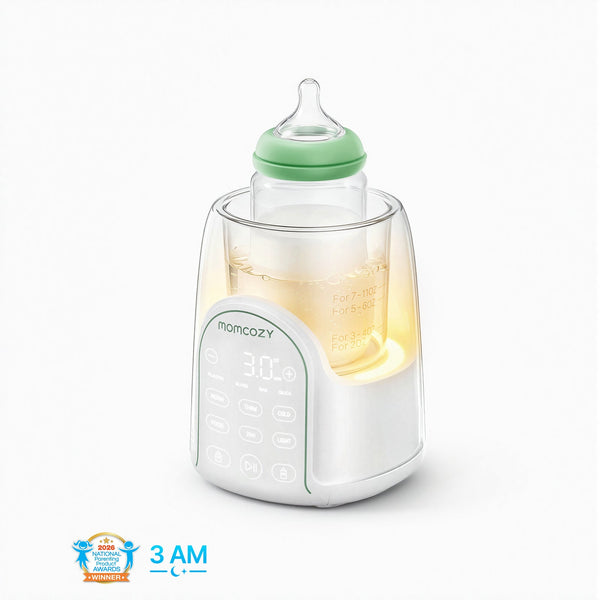
It can be easier to warm just one bottle if you have a suitable bottle warmer.
Momcozy NightPro Baby Bottle Warmer has various warming programmes for compatible containers and milk starting temperatures.
See How to Use a Bottle Warmer at Night for details about its settings and usage.
Member price
From£59.99Code Save 20%
Keep a Simple Feeding Routine
Everyone involved in feeding your baby can follow the same steps with the help of a practical routine:
- Check the type of milk and how it has been stored.
- Prepare and serve as needed.
- Warm the milk if required, using a suitable method.
- Check the temperature before feeding.
- Follow the relevant NHS time limits.
- Discard leftovers when required.
Consistency is more useful than trying to find ways to reuse milk that has already exceeded its recommended handling period.
FAQs About Reheating Breast Milk and Formula
Can You Warm Breast Milk Twice?
It's best to avoid warming breast milk more than once. The NHS recommends that warmed breast milk should be fed within one hour and any warmed milk that is left over after feeding should be thrown away. Rather than cooling and reheating the same portion, prepare smaller quantities for individual feeds.
Can You Reheat Breast Milk If Your Baby Hasn't Drunk from It?
The NHS does not provide a general safe allowance for repeatedly cooling and reheating previously warmed breast milk. Its guidance is to use warmed milk within one hour. For a simple and cautious routine, warm only the amount you expect to use and avoid keeping warmed milk for a later feed.
Can You Put Breast Milk Back in the Fridge After Warming It?
Don't assume that placing warmed milk back in the fridge makes it suitable for another feed. The NHS recommends that breast milk should be used when warmed up to one hour. If your baby has already drunk from the bottle, whatever is left should be finished within an hour, or else discarded.
Can You Reheat Formula in a Bottle Warmer?
A bottle warmer may be used to warm an appropriately prepared feed when permitted by the product instructions. It should NOT be used to reheat formula more than once. If there is any formula left over after a feeding, it should be thrown away.
For more information, read Can You Heat Up Formula in a Bottle Warmer?.
Can You Reheat Breast Milk in a Microwave?
No. The NHS advises that breast milk should not be heated or defrosted in a microwave, as this can cause uneven hot spots that may burn your baby's mouth. Use a jug of warm water or running warm water instead.
Does Reheating Breast Milk Destroy Its Nutrients?
Some components in breast milk are temperature sensitive and can be damaged by repeated or high temperatures. It would not be correct to state that every additional warming cycle eliminates all the nutrients or antibodies. The primary practical consideration is that of avoiding unnecessary heat and safe handling and feeding procedures.
What If My Baby Only Drinks a Small Amount at Each Feed?
Try starting with smaller portions that reflect your baby's usual appetite. If your baby wants more, make or offer another appropriate amount—not a large bottle that your baby might not finish. Your health visitor or feeding specialist will be able to give you advice about how much milk your baby should have, if you are not sure.
The Bottom Line: Warm Only What Your Baby Needs
The safest approach is to avoid repeatedly warming and cooling the same bottle. Expressed breast milk does not need warming if your baby is happy to drink it cold. If you choose to warm it, follow the NHS guidance and use it within one hour.
Prepare formula feeds fresh whenever possible, cool them to a safe feeding temperature and discard any milk left after feeding.
Prepare feeds of formula as required and never save milk used after a baby has finished a feed. A few simple habits can help reduce waste: store smaller portions, label expressed milk, warm bottles closer to feeding time and follow the relevant NHS guidance.
For anyone who needs a handy on-the-go option, give the Momcozy NightPro Baby Bottle Warmer a try, which warms individual bottles at home. Momcozy Breast Milk Storage Bags can help to organize portions of expressed milk for future feeds.
Ultimately, the goal isn't to find ways to reheat the same milk repeatedly. It's to make each feed easier to prepare while keeping your baby's milk handling safe and straightforward.
This article provides general information about breast milk and infant formula handling. Always follow current NHS guidance, product instructions and any individual advice from your midwife, health visitor or healthcare team. Babies who are premature, unwell or have specific feeding needs may require different guidance.