Storing breast milk by freezing gives you more options. You can have your partner take some feed, or be prepared to leave some milk for a busy day at work.
When it’s time to feed, you may worry about how to thaw breast milk, how long it takes, or if you need to warm it.
The good news is you don't need to create a complicated routine. The NHS states that to thaw frozen breast milk, you can use the fridge, or if you are pressed for time you can use warm water. After that it's mainly just a matter of not using too much heat and using it as soon as possible.
Pick the Right Thaw Method for Your Timeline
When thinking about how to thaw breast milk, you need to consider when your baby is going to need the milk. If you have time to plan, thawing in the fridge is best. If you need to provide milk quickly, the NHS recommends a warm water method.
Best Default: Defrost Breast Milk in the Fridge
Thawing milk in the fridge is the preferred method of the NHS. There are a few steps:
- Choose the oldest milk, based on the date on the bag, and make sure there are no holes or rips in the bag.
- Stand the milk in a container in the fridge to catch any leaks.
- Leave the milk to thaw.
- Use the milk as soon as it has finished thawing, as the NHS states.
Thawing times can vary depending on the amount of milk, the shape of the frozen milk, and the temperature of your fridge.
Faster Option: Use Warm Water
If you need the milk sooner, the NHS says you can defrost it in a jug of warm water or hold it under running warm water. To do this safely:
- Wash your hands before handling the container.
- Check the bag or bottle is properly sealed and suitable for this method.
- Use warm water, not boiling or very hot.
- Keep the opening of a storage bag clear of the water to reduce the risk of contamination.
- Once the milk has defrosted, give it a gentle shake if it has separated.
- Use it straight away.

How long this takes depends on the amount of milk, the container and the water temperature. Resist the urge to hurry things along with hotter water.
Can You Use a Bottle Warmer to Defrost Frozen Breast Milk?
Not all bottle warmers allow you to use the defrost setting with frozen milk.

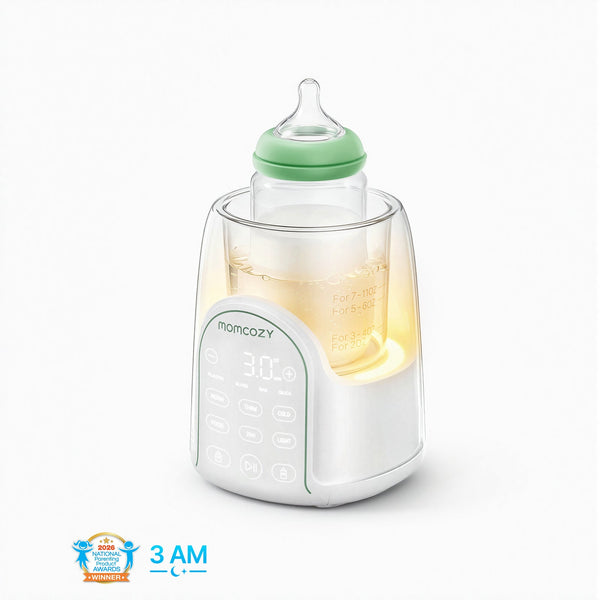
The Momcozy Night Pro Baby Bottle Warmer has a THAW setting with which you can use milk storage bags. According to Momcozy, in order to use the THAW setting you will need to add 240 ml of water to the chamber. Glass bottles should not be used with THAW, since rapid changes in temperature can cause the glass to break.

If you decide to use a warmer, make sure to read the instruction manuals for both the warmer and the storage container, and select the container type on the display (plastic, glass, silicone or bags) as the wrong type can cause the milk to overheat or not heat up enough. You can find step by step instructions on how to use a bottle warmer at night, or compare the Momcozy UK bottle warmer range.
Member price
From£59.99Code Save 20%

Follow the Post-Thaw Time Windows
Storage advice differs between countries, so follow the NHS guidelines.
How Soon Should You Use Defrosted Breast Milk?
According to the NHS, once breast milk thaws, it has to be used immediately and cannot be frozen again. So, don't think that defrosted milk can be stored in the fridge for later use.
For more details visit the NHS page on expressing and storing breast milk.
What If Your Baby Doesn't Finish the Bottle?
According to the NHS, if your baby has drunk from a bottle of breast milk, you should use the remaining milk within the hour and discard the rest. To avoid wasting breast milk, begin by offering your baby a small amount and make more if needed.
Can You Refreeze Thawed Breast Milk?
No, according to the NHS, breast milk that has been defrosted should not be refrozen. If you’ve defrosted more than your baby needs, do not refreeze it. Next time, freeze smaller amounts.
Breast Milk Storage: NHS Reference
|
Storage location |
NHS guidance |
|
Fridge at 4°C or below |
Up to 8 days, stored at the back |
|
Fridge with an uncertain temperature, or 5–10°C |
Use within 3 days |
|
Ice compartment of a fridge |
Up to 2 weeks |
|
Freezer at −18°C or below |
Up to 6 months |
The times given do not account for extra storage time once frozen milk has been thawed. If your baby is premature or if they have any illnesses and your healthcare team has provided you storage instructions different from the NHS recommendations, then use those.
Warm and Check Milk Safely Before Feeding
The NHS says that expressed milk can be taken straight out of the fridge and fed to your baby if they are happy to drink it cold. If they prefer it warm, you will need to warm it up yourself.
How Warm Should Breast Milk Be?
The NHS says that breast milk can be warmed to body temperature before feeding. If warming it, make sure it’s only comfortably warm to the touch.
How to Warm Defrosted Breast Milk
If the milk has safely defrosted:
- Pour it into a clean, sterilised bottle, if needed.
- Stand the bottle in a jug of warm water or hold it under running warm water.
- Let it warm up gently.
- Give it a quick gentle swirl to mix.
- Put a few drops on the inside of your wrist to check the temperature. It should feel warm or cool, never hot.
A compatible bottle warmer can also be used, and you should follow the warming programme, taking it out as soon as it’s finished. Some warmers will keep the milk warm for you, but the NHS says that once milk has been defrosted it should be fed to your baby right away, so make sure you don’t let it sit in the warmer.

Why You Shouldn't Use a Microwave or Hob
The NHS advises against using a microwave or a hob to defrost or heat breast milk. Milk can heat unevenly in a microwave and create hot spots, which can burn your baby’s mouth. Also, don’t boil milk or stand a storage bag on a hot hob ring to heat things up.
Does Warming Affect Breast Milk Quality?
Heat is the main concern. If breast milk gets too hot, it can scald your baby’s mouth. Warming is optional. If your baby is happy with cold milk, there is no need to warm it. When you’re using any of these methods, make sure you’re doing it safely and following the instructions for your equipment.
Store Bags in Ways That Make Thawing Easier
Some organisation when freezing milk can help with later feeds and let you know what to use first.
Freeze Milk in Smaller Portions
Rather than freezing milk in large pieces, freeze it in smaller pieces, in the amount your baby usually drinks. Smaller pieces can be more convenient and faster to thaw.
Choose Suitable Breast Milk Storage Containers
Breast milk can also be stored in containers that have been previously sterilised or in special breast milk storage bags. One option is the Momcozy Breastmilk Storage Bags which have a double-zip seal and a flat design so they take up less space in the freezer.
Member price
From£59.99Code Save 20%
With any bag:
- Don’t fill it beyond the level marked on the bag.
- Leave some space for the milk to increase in size when it freezes.
- Seal it tightly.
- Check for holes or tears before using.
- Follow the instructions on the bag for freezing and thawing.
Label Every Portion
According to the NHS, you should write the date you expressed milk on the container before freezing, for appropriate labelling. If you have a few portions, you should make sure the oldest milk comes out first. If your baby is in hospital, follow the unit’s labelling and storage procedures.
Flat Freezing and Freezer Organisation
Breast milk storage bags that are designed to freeze flat help you save space and give you easier to handle portions. Once frozen, you can stack the bags in an appropriate container. Make sure to store the container where the freezer stays at or below -18°C.

For more options, browse the Momcozy UK breast milk storage collection.
Keep Cleanup Practical, Not Perfect
“Safe milk handling” does not necessarily mean practicing an extravagant cleaning routine. However, anything that touches your baby’s milk must be thoroughly cleaned and sterilised.
Start with Clean Hands and Equipment
Before handling expressed milk:
- Wash your hands with soap and water.
- Use clean and sterilised bottles and other equipment.
- Make sure storage containers and bags are sealed and intact.
- Try not to touch the inner surfaces of bottles, teats or bag openings.
Follow the NHS advice on sterilising baby bottles.
What If a Storage Bag Leaks During Defrosting?
A small leak while a bag is submerged in water does not mean that the milk is safe to use. The milk may have been contaminated by the water or other contaminants. Assume the worst and throw out the contaminated milk. Standing the bag in a container while defrosting helps to catch any leaks and also helps to reduce contamination if a bag leaks.
Clean Your Bottle Warmer After Use
You'll need to clean your Night Pro Warmer according to the directions provided by the manufacturer. You’ll also need to follow their instructions for descaling the warmer. Empty the water chamber according to the instructions and let it cool down before you clean it.
Extra Care for Premature or Unwell Babies
If your baby was born prematurely, is sick or is receiving additional care, the general rules for storing and cleaning may not apply. The NHS suggests you get additional info from the hospital team that is caring for your baby. You should always follow the directions given to you by the hospital team before any info you find online.
Thawing Methods Comparison
Here's how the main ways of defrosting frozen breast milk compare.
|
Method |
Best for |
Key considerations |
|
Defrosting in the fridge |
Planned feeds |
NHS-preferred method; allow enough time |
|
Warm running water |
Milk needed soon |
Keep the container sealed; avoid very hot water |
|
Jug of warm water |
Quicker defrosting |
Use a suitable sealed container and prevent contamination |
|
Compatible bottle warmer |
Supported containers and programmes |
Check the instructions and the container material |
|
Microwave or hob |
Not recommended |
Can heat unevenly and create hot spots |
How Long Does Breast Milk Take to Defrost?
There isn't a set time for every portion, as it depends on:
- Milk volume: The bigger the portion the longer it takes to defrost.
- Frozen shape: A thick block of frozen milk will take longer to defrost than a thin, flat portion.
- Container: The material and thickness of the bag or bottle can make a difference.
- Conditions: the method you choose to defrost the milk will play a role, as will your freezer temperature.
Fridge thawing requires advance planning and may take several hours, depending on the portion size and how the milk was frozen. If you expect to need the milk the following day, move the portion to the fridge ahead of time and check that it has fully thawed before feeding. If you need it sooner, use one of the NHS-recommended warm-water methods. Don't use hot water to hurry it along.
FAQ
Can I Defrost Breast Milk Overnight in the Fridge?
Yes. The NHS suggests defrosting slowly in the fridge if you have the time. Plan ahead, and use the milk as soon as it’s fully defrosted.
Can I Defrost Frozen Breast Milk in Warm Water?
Yes. The NHS says to put the milk in a jug of warm water or to run warm water over the milk. Don’t use very hot water. Use a sealable container.
Can I Use a Bottle Warmer for Frozen Breast Milk?
Some warmers have a defrost setting. The Momcozy Night Pro has a THAW mode if you’re using a compatible milk container. Always follow the instructions for the container and/or the warmer.
How Long Can I Keep Breast Milk After Defrosting?
The NHS says once breast milk is defrosted, it should be used immediately. If your baby has drunk some from a bottle, use the remaining milk within one hour, then throw it out.
Does Defrosted Breast Milk Need to Be Warmed?
No. Babies can drink defrosted breast milk that’s still cold. Warm it up if you’d like, but make sure it’s not too hot before feeding.
Why Does Defrosted Breast Milk Sometimes Separate?
Since separation occurs when the components of milk don't blend evenly, it is normal for stored milk to separate, with the fat rising to the top. The NHS advises that once thawed, milk can be given a gentle shake to blend the components. Separation by itself will not tell you if the milk is safe, therefore you need to consider how the milk was stored and handled.
Can You Refreeze Breast Milk After It Has Thawed?
No. The NHS advises against this. Freezing smaller portions of milk may reduce the amount of milk that goes to waste.
Can I Microwave Frozen Breast Milk?
No. The NHS advises against this. Use one of the methods above instead.
Practical Next Steps
- Select a portion. Choose the oldest dated milk and check the container.
- Defrost safely. Use the refrigerator if you have time. You can use warm water if you need it to defrost faster.
- Use promptly. Once milk thaws, you need to use it right away and never refreeze it.
- Warm only if needed. If your baby takes it cold, you can skip this step.
- Check before feeding. If you’ve warmed it, it shouldn’t be hot to the touch.
- Deal with leftovers. Use any milk left in the bottle within an hour of your baby drinking from it, or throw it away..
- Clean up. Make sure your feeding equipment is clean and sterilised. Tidy your remaining frozen milk as well.
If you are starting a freezer stash, Momcozy Breastmilk Storage Bags help you separate individual servings. For a home feed warmer, we suggest the Momcozy Night Pro Baby Bottle Warmer and its THAW function. For more on whether a warmer is necessary, check out Do You Need a Bottle Warmer?

Remember defrosting and warming are different steps. Defrost the milk using the NHS methods, then check if it is comfortable for your baby to eat.
This article provides general information about expressing and storing breast milk and feeding your baby breast milk. Follow NHS guidelines for the most up-to-date information. If your baby is very premature or has specific needs, ask your midwife or health visitor for help.