Are you wondering why nappy bins are still smelling even after cleaning them and disposing of the nappies properly? Or are you looking for a solution on how to stop a nappy bin from smelling? Several factors contribute to a smelly bin, including the waste age, heat, retained residue, or the bin’s placement. Also, the bag or seal does not work the same way for every child. What works at one stage can stop working later, as the child gets older.
Key Takeaways
- A smelly nappy bin calls for changes in your routine. Remove waste sooner, clean residue, control heat exposure, and check whether seals and liners are functioning.
- Baby's poo changes when they start eating solids, and that makes the odour harder to manage. Some disposal routines may stop containing the smell.
- Hot rooms can intensify odour. You may need to empty bins early depending on the weather and clean the bins more frequently. You may also need to move the nappy bin.
- A smelly empty nappy bin indicates it's not the bag of nappies that's causing the odour. It means there's residue or odour retained by the container itself.
- A dedicated nappy bin is not the only workable option. Some families manage smell with tightly wrapped nappies, a small lidded bin, and frequent outside disposal.
- A better sealing design can reduce odour escape during storage and bag changes. However, regular emptying, correct bag use, and cleaning are still more important.
Start With the Cause: Is the Smell Coming From the Nappies, the Bin, or the Routine?
Some parents have noticed that a bin that looks clean still smells, and they cannot pinpoint why. They tried to use powders or deodorizers to mask the odour with fragrance. But unfortunately, it does not address the root cause of the odour problem.
They suspected that it might be due to the following:
- fresh waste load
- how long waste sits
- retained residue/material after emptying
- odour escaping during opening or bag removal.
Ultimately, identifying the cause and taking appropriate steps can make a difference.
Smells Only When Opened
If the nappy bin smells only when you open it, it means the sealing is not that effective. The odour escapes the bag and the bin before you can close it. A bin with better sealing technology can help prevent this.
Smells Even When Empty
Suppose you have taken out the bag and the nappy bin still smells. That's due to residue. Once the bag is removed, a small amount of waste or moisture can still be left behind inside the bin, lid, or other parts. Over time, this residue continues to produce an unpleasant smell, even if there is nothing in the bin.
Smells Mainly After Poo Nappies
If the nappy bin smells after you dropped a new nappy in, it's the fresh load that is causing the problem. Poo nappies tend to produce stronger odours than wet nappies. As a result, the smell may be most noticeable shortly after you add one. This is even more likely if your baby has started solids already.
Smells Worse After Several Days
If the nappy bin's smell intensifies as days go by, the build-up of waste is causing the problem. The odour becomes stronger as more nappies collect inside. If your trash bag is almost full, this is even more likely to be the cause.
Why Nappy Bin Smell Often Changes After Starting Solids

After the baby has started eating solids, many parents notice that the nappy bin’s smell changes too. This is because solids are digested in a different way than breast milk or formula, resulting in a smellier poo. As such, routines that worked before may not work anymore.
Managing the odour of the nappy bin becomes more challenging. It may need earlier removal or different handling.
The table below shows the difference and what actions you can take:
|
Before starting solids |
After starting solids |
Decision |
|
Poo nappies had a relatively mild smell |
Poo nappies now have a noticeably stronger smell |
Expect the odour of the bin to change too. Prepare to change your routines. |
|
The bin could hold several nappies without a noticeable smell |
The bin smells soon after a poo nappy is added |
Check how well the bin contains fresh poo-nappy odours. Ensure the lid is closed. You may need to look for a bin with a better seal if the current one can't contain odour well. |
|
The bin only smelled when it was opened |
The smell lingers around the bin while it is closed |
Check for retained odour or residue inside, around, and at the lid of the bin. |
|
The bin stayed reasonably fresh for several days |
The smell becomes stronger as more nappies collect |
Consider how long waste sits in the bin and whether the longer holding time contributes to the smell. Empty it sooner if it does. |
Hot Weather Can Make a Previously Manageable Bin Much Harder to Live With
Have you noticed that bins can get really smelly in summer, or when the room feels warmer? The main reason is that heat can make organic waste break down faster. When that happens, bad smells can show up sooner.
If the weather has warmed up and the bin has become noticeably smellier, check what is happening around the bin. Keep it away from direct sun and any heat sources. Also, try not to let waste sit in the bin for too long. More importantly, if the nappy has leaked, clean it right away. Leaving residue there will make the problem last.
Adding extra fragrance might hide the smell for a bit. But it will not remove the waste or residue that is causing it. So, if a previously manageable bin becomes noticeably smellier during hot weather, consider the effect of heat before assuming the bin itself has failed.
Do Not Wait for “Full”: Match Emptying Frequency to Smell, Stage, and Your Home
Some parents empty small nappy bins daily. While others empty theirs only when it is full. Or only after a few days because of disability, lack of support, or because they live on a higher floor.
That said, capacity is not the only indicator of when you should empty your bin. Use this table to identify when you should empty your nappy bin earlier:
|
Trigger |
Consider emptying sooner? |
Why |
Alternative if outside-bin runs are difficult |
|
The bin starts smelling while closed |
Yes |
Odour escaping from a closed bin suggests the waste inside is already producing a noticeable smell. |
Keep the bin in a well-ventilated area away from living spaces where practical. |
|
Several poo nappies have been added |
Yes |
Poo nappies generally produce stronger odours than wet nappies, so the bin can become unpleasant before it reaches capacity. |
Use a smaller waste bag or another contained option for poo nappies if that fits your household routine. |
|
The smell gets stronger each day |
Yes |
Waste that sits for longer can produce more noticeable odours, particularly in warm conditions. |
Set a regular emptying day rather than waiting until the bin is full. |
|
A nappy has leaked inside the bin |
Yes |
Moisture and waste left inside the bin can leave residue and contribute to lingering smells. |
Clean the affected area as soon as practical, even if the bin itself is not ready to be emptied. |
|
Your baby has recently started solids |
Possibly |
Solid foods can change the smell of poo, so a previously manageable bin may become noticeably smellier. |
Adjust the frequency based on odour rather than continuing to use the same schedule. |
|
The weather is unusually hot |
Possibly |
Warm conditions can make waste odours build faster than they do in cooler conditions. |
Keep the bin away from direct heat or sunlight where practical and monitor how quickly the smell develops. |
If the Empty Bin Still Smells, Treat It as a Container Problem
Let's say you have removed the bag, but the smell lingers. It is possibly a container problem. Check for:
- Waste or residue left inside after the bag is removed
- Split or leaking liners that may have allowed waste onto the bin
- Hard-to-reach areas where waste or moisture may have collected
- Seals and other closing parts that may have trapped odour
- The bin material itself, which may retain smells even after the waste is gone
- Scratches in plastic bins that may make the nappy bin absorb odours over time.
A small amount of residue can be enough to keep producing a smell, especially if it has been sitting inside the bin for some time. Leaks can also be easy to miss because waste may get underneath the liner or into areas that are not visible during normal use. This can explain why the smell remains even though the bin looks empty.
The same applies to parts of the bin that are not directly exposed to the waste. Seals, hinges, lids, and other enclosed areas can collect moisture or residue over time. If the smell is strongest around these parts, the source may be the bin rather than the nappies currently inside it.
You should wash the bin regularly to remove lingering waste and odours. If you have emptied the bin but it still smells, cleaning it is a sensible next step before assuming you need a different bin or disposal system. Follow our nappy bin cleaning routine for the recommended cleaning steps.
Bagging and Wrapping Can Help, but It Is Not a Substitute for Source Control

Some families find success by using nappy sacks, tight wrapping, or even double-bagging. However, others still report odour escaping once the main bin is opened.
The way you throw nappy waste away also affects your nappy bin running cost, particularly if your system requires specialized liners or frequent bag replacements.
How well this works depends on the type of nappy waste going into the bin. Some households may choose to wrap poo nappies more carefully while handling wet nappies differently.
The important thing is that the extra wrapping needs to contain the waste properly. Suppose the bag is torn, it fits loosely, or the sack is overfilled. That can allow waste or moisture to reach the inside of the nappy bin and cause a bad smell.
Once that happens, the problem is no longer just the smell coming from the nappy. Residue left inside the bin can continue to produce odour after the bag has been removed.
Where the Bin Lives Changes What “Acceptable” Smell Control Looks Like
Where you keep your nappy bin can change how noticeable and manageable the smell is. A bin may seem fine in a well-ventilated room. But it may be much harder to live with in a small nursery, bedroom, or studio flat. These places typically have little airflow, and people are always nearby.
The same applies to how easy it is to take the waste outside. For some households, carrying a bag outside every day is simple. For others, particularly those living upstairs or dealing with mobility limitations, frequent trips outside may not be realistic.
In those situations, keeping odours contained between rubbish runs becomes more important.
The room itself can also affect your experience. A nappy bin in a kitchen or bathroom may fit more naturally into a household's existing rubbish routine. However, this does not necessarily eliminate the smell. You may still notice a strong burst of odour when opening the bin or removing the bag.
This is why advice based on simply "empty the bin more often" does not work equally well for every household. What matters is whether the bin's odour is manageable within your actual home, space, routine, and ability to remove the waste.
When a Regular Bin or Outside-Bin Routine May Work Better
Managing soiled nappies goes beyond choosing the right bin. Some parents find that a nappy bin does not deal with smell well enough, while others who live in a tiny flat may find that taking nappies frequently outside is more practical. So, which option is right for your home?
So, what bin do nappies go in? It depends on how your day runs, how much room you have, and how often you can throw the waste away
Regular Bin VS. Nappy Bin: When Each May Work?
|
Regular Bin |
Nappy Bin |
|
Limited odour control |
Helps contain unpleasant nappy odours |
|
Requires frequent emptying |
May require less frequent emptying |
|
Simple and practical setup |
Convenient but may cost more |
|
Less enclosed which may raise hygiene concerns |
Designed with a multi-layered barrier that reduces exposure to germs and bacteria. |
Every parent struggles with how to dispose of soiled nappies. A regular bin may work well for those who can empty it regularly or take the nappies outside soon after disposal. On the other hand, a nappy bin may suit parents who want a better odour control when disposing of nappies.
If you’re still weighing up your options, check out “Do You Need a Nappy Bin?” for a broader look at the pros and cons.
Where a Better-Sealing Nappy Bin Can Help — and What It Cannot Fix
One of the complaints of parents is the unpleasant odour that can escape from used nappies when opening or emptying the bin. A better-sealing nappy bin might help contain and reduce odour, but it cannot guarantee its complete elimination, as odour can be affected by several factors such as previous leaks or residue, storage time and the condition of the waste.
For instance, the Momcozy Triple-Seal Nappy Bin is designed to help contain odours with its rotating upper seal and clamped bag opening. This tighter barrier can help minimise odour escaping when nappies are added, stored or removed.
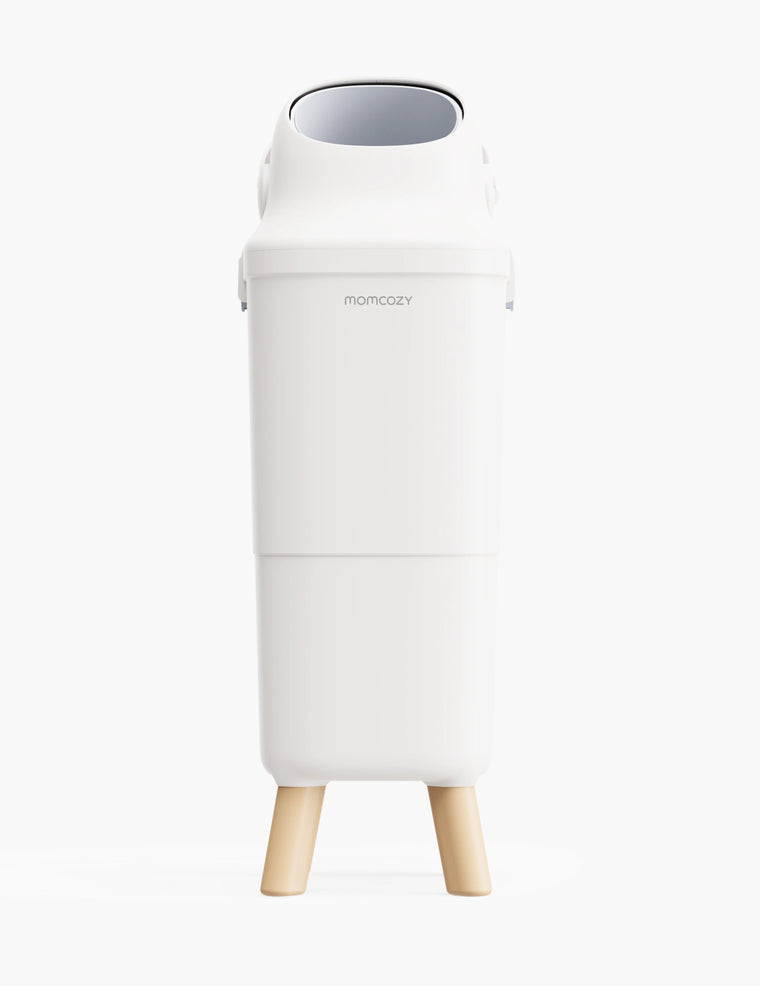
It also works with standard 13-gallon drawstring bags, offering a practical option for indoor nappy disposal. If you are comparing cassette vs standard bin liners, consider the cost, availability, capacity, and convenience of each system before choosing one.
Ultimately, a well-sealed nappy bin can help minimise unpleasant smells, but shouldn't be thought of as an entirely odour-free solution. Regular cleaning and timely emptying are still required to keep the bin smelling better.
Build a Simple Nappy-Bin Odour Routine You Can Actually Maintain

Managing a nappy bin odour doesn’t have to mean following a complicated cleaning schedule or trying a different deodorising hack every day. A simple but repeatable routine helps keep unpleasant odours under control.
Avoiding common nappy bin mistakes can make your odour-control routine much easier. Small issues such as leaving waste too long, failing to clean leaks, or using an unsuitable liner can contribute to persistent smells.
Here’s A Simple Nappy-Bin Odour Workflow
|
Situation |
First Thing to Check |
Practical Next Step |
When to Clean |
When to reconsider the bin/setup |
|
Every nappy change |
Is the nappy properly contained? |
Wrap the soiled nappy securely before putting it in the bin. |
Wipe the opening if residue builds up. |
If odour escapes after proper disposal, check the bin’s sealing system. |
|
Rooms condition |
Is heat making the odours stronger? |
Move the bin to a well-ventilated location away from direct sunlight. |
Regular cleaning is needed if odour or residue develops. |
Consider a different location or disposal routine if odours remain noticeable. |
|
Bin filling quickly |
Is the bin being emptied based only on its capacity? |
Empty it when the odours or waste load becomes noticeable rather than waiting until it is completely full. |
Wipe the inside during emptying if needed. |
Reconsider the bin size or emptying frequency if it fills too quickly. |
|
Leaks or residue |
Is anything escaping from the nappies or bags? |
Check for leaks and clean affected areas promptly. |
Clean whenever residue or liquid is found. |
Reconsider the liner, bags or bin if leaks happen repeatedly. |
Adjustment in disposal routine may be needed over time. While deodorisers may provide optional support, controlling the source of the odour, keeping the bin clean, and emptying it regularly should remain the main priorities.
Frequently Asked Questions
Why does my nappy bin still smell after I change the bag?
Even after changing the bag, a nappy bin may still develop odour due to residue, moisture, or bacterial build-up inside the bin.
Can hot weather make a nappy bin smell worse?
Yes, high room temperature can make the nappy bin odour more intense.
Do newborn nappies smell less than nappies after starting solids?
Yes, newborn nappies often smell less than nappies after a baby starts eating solid foods, although this can vary from baby to baby.
Should I keep a nappy bin in the nursery or bathroom?
It depends on your household routine and where you change your baby’s nappy most of the time. Either, it is essential to ensure proper ventilation and empty the bin regularly.
Do nappy sacks stop smells completely?
Nappy sacks can help minimise the unpleasant smell but rarely eliminate it entirely. The odour from the bag can be noticeable when it is opened, thrown in the bin, or when several sacks are stored together.
Can I use bicarbonate of soda in every nappy bin?
It depends on the bin’s mechanism. Bicarbonate of soda can help absorb some unpleasant odours, but it is not suitable for every nappy bin.
When should I replace a bin that has absorbed odour?
If the smell persists, it may have absorbed odour into its seals. At this point, replacing the bin may be more practical, particularly if the smell returns quickly after cleaning.
Is a deodoriser enough if the bin itself smells?
Usually not. A deodoriser may help mask or reduce the smell temporarily, but it does not necessarily remove the residue or moisture causing the odour.
Conclusion
A smelly nappy bin is not always a sign that you need a new bin. Start by identifying the source, whether it is waste build-up, heat, residue, leaks, poor sealing, or a routine that no longer suits your household. From there, you can then alter your method of wrapping, storing, cleaning and emptying nappies . A consistent routine, alongside effective odour containment, can make all the difference to nappy disposal and put an end to nasty smells.