You've expressed some breast milk, stored it in the fridge and now it's time for your baby's next feed. Should you warm it first, or can you give it to your baby straight from the fridge?
It may surprise you, but there is no need to warm up expressed milk before giving it to your baby. As long as your baby is happy, cold expressed milk is fine. (NHS)
However, some babies like their milk to be warmer. If your baby is in this group, there are a number of easy ways to safely warm up a bottle.
In this article we will guide you through warming your breast milk from the fridge. We will show you how to do it, what method/s to use and also what not to do. Whether you are preparing feeds throughout the day, sharing feeds with your partner or getting ready for a night feed!

Do You Need to Warm Breast Milk from the Fridge?
No. You can give cooled breastmilk to your baby without heating it up.
The NHS guidance on expressing and storing breast milk says that you can give expressed milk to your baby cold from the fridge.
Some babies will be fine with cold breastmilk. However, others may prefer it to be slightly warmed, which can be especially the case if they have been feeding directly from the breast.
Both of these are fine. It is not necessary to warm all bottles of refrigerated breastmilk.
If your baby is happy to take breastmilk cold, no warming is required. If they prefer it warmer, choose an option based on what fits in with your lifestyle, and lets you check the milk is fine.
Three Ways to Warm Breast Milk from the Fridge
If your baby prefers warmed milk, you don't necessarily need a specialist appliance. Here are three practical methods to consider.
1. Use a Baby Bottle Warmer
If you are frequently giving your baby bottles of expressed milk, using a bottle warmer may be useful.
Depending on the model you have, it may operate by warming the milk in hot water, or by other methods. Please check the operation of your bottle warmer.
Using a bottle warmer which warms milk in hot water:
- Ensure the milk and bottle are safe to use in the warmer.
- Pour in the recommended amount of water.
- Put the well sealed bottle into the warmer chamber as instructed in the manufacturer's guidance.
- If available select a setting appropriate for milk from the fridge.
- Select any additional settings for the type of bottle and amount of milk in the bottle.
- Switch on the warmer.
- Once the warming cycle is complete, carefully swirl the bottle.
- Check the temperature of the milk.
The different models will take varying times to warm the milk, and may have slightly different settings. Always refer to the manufacturer's instructions.
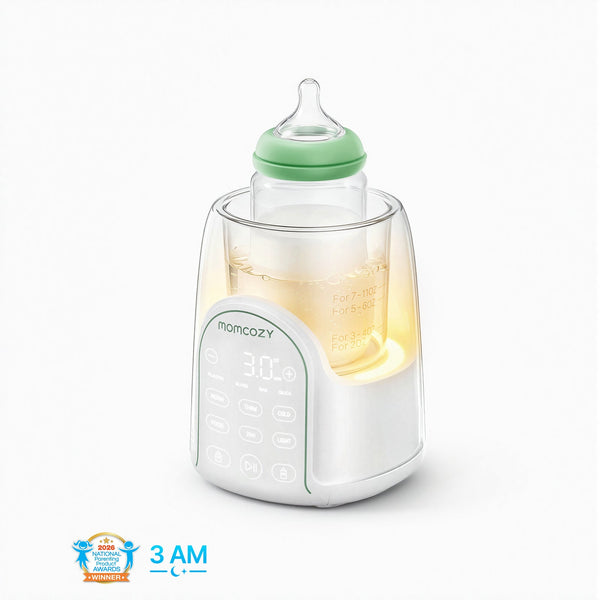
For example, the Momcozy NightPro Baby Bottle Warmer has a dedicated COLD mode for milk taken directly from the fridge. It also offers different settings for compatible bottle materials and milk volumes.
We'll look at how to use these settings later in the guide.
Member price
From£59.99Code Save 20%

2. Hold the Bottle Under Warm Running Water
You can also warm the baby’s bottle in running water. The NHS recommends this method.
To do this:
- Ensure that the feeding bottle is securely closed.
- Place the Bottle Under Warm Running water.
- Make sure that the teat and bottle opening are not underneath the water.
- Give the bottle a gentle turn to help distribute the heat.
- Once the milk has reached a comfortable temperature, remove the bottle.
- Wipe the bottle dry and give it a gentle swirl.
- Test a few drops.
This can take varying times depending on the quantity of milk, initial temperature of the milk, and the bottle size/material.
Do not use very hot water. There is no advantage in warming the milk any hotter than required. Although this is a good way to warm small amounts of milk occasionally, it may be inconvenient if you need to prepare several bottles during the day.
3. Place the Bottle in a Jug of Warm Water
A jug or bowl of warm water is another simple way to warm refrigerated breast milk.
It's particularly useful at home when you don't have a dedicated warmer nearby.
To try this method:
- Fill a clean jug or suitable container with warm, not boiling, water.
- Make sure the bottle is securely closed.
- Stand the bottle in the water, keeping the teat and openings above the water level.
- Allow the milk to warm gradually.
- Remove the bottle once it reaches a comfortable temperature.
- Dry the outside, gently swirl the milk and check its temperature before feeding.
Don't use boiling water or place the bottle in a pan on the hob.
You also don't need to keep warming the milk until it reaches an exact temperature. If your baby accepts slightly cooler milk, there's no reason to continue heating it.

What About Leaving Breast Milk at Room Temperature?
Although it may be tempting to remove a bottle from the fridge and leave it at room temperature, this is not ideal. It can be difficult to know how long the milk has been left out of the fridge.
If the baby is happy drinking cold milk, you can give them a bottle directly from the fridge. However, if they need the milk warmed up, either warm water or an appropriate bottle warmer should be used.
Which Breast Milk Warming Method Is Best?
The right method depends on how often you prepare bottles and what equipment you already have.
|
Method |
Best suited to |
What to remember |
|
Baby bottle warmer |
Regular bottle feeds |
Follow the appliance's settings and instructions |
|
Warm running water |
Occasional feeds |
Keep water away from the teat and openings |
|
Jug of warm water |
Simple home preparation |
Use warm, not boiling, water |
|
Leaving milk on the worktop |
Not recommended as a warming method |
Avoid unnecessary time outside the fridge |
You don't need to buy a bottle warmer just because you express breast milk. If warm water works well for your routine, that's perfectly reasonable.
How to Warm Refrigerated Breast Milk with the Momcozy NightPro
If you regularly prepare bottles, a dedicated warmer can make the process easier to manage.
The Momcozy NightPro Baby Bottle Warmer uses a water-bath heating system and has a COLD setting for refrigerated milk.
Here's what to know when using it.
Step 1: Take the Breast Milk Out of the Fridge
Suitable bottles (plastic, glass or silicone) and suitable storage bags can be used. The Take the expressed breast milk out of the fridge when you're ready to prepare the feed. Check that it has been stored correctly and that the bottle or storage bag is securely sealed.
Step 2: Check Bottle Compatibility and Add Water
NightPro can be used with suitable plastic, glass and silicone bottles, and suitable breast milk storage bags.
NightPro accommodates compatible bottles with an external diameter of up to 82 mm. Check the bottle's shape and accessories to ensure a proper fit.
Check that your bottle or storage bag can be used in this warmer. Ensure the bottle is placed correctly in the warming compartment.
Fill with water according to the manufacturer’s instructions for the quantity of milk in your bottle.
Do not estimate the quantities of water. Different volumes of water will be required depending on the bottle.
Step 3: Select the COLD Mode
NightPro offers different programmes depending on the starting temperature and type of contents.
For refrigerated breast milk, select COLD.
You'll also need to choose the correct container material:
- PLASTIC for compatible plastic bottles
- GLASS for compatible glass bottles
- SILICA for compatible silicone bottles
- BAG for suitable breast milk storage bags
Next, select the milk volume.
For example, if your bottle holds 240 ml but contains only 120 ml of breast milk, choose the setting that corresponds to the milk inside rather than the bottle's full capacity.
Using the correct settings helps the warmer follow the appropriate programme for your feed.
Step 4: Start the Warming Cycle
Once the material, setting and amount of milk have been selected, begin warming.
The device will show how many minutes are left to go.
When the cycle finishes, NightPro sounds a completion alert. For best milk quality, Momcozy recommends removing the bottle within 30 seconds. Although the warmer has a 60-minute keep-warm function, this should not be used as a guide to how long breast milk can be safely stored.
Follow the manufacturers guidance and NHS guidance for using warmed breast milk.
Step 5: Swirl and Check Before Feeding
Breast milk may separate when it is stored. Fat from the breast milk can pool at the top.
Shake the bottle gently to mix.
Before feeding, place a few drops onto the inside of your wrist. It should be warm or cool. Do NOT feed baby if the milk is hot.
Do not rely on the temperature shown on the device, or the programme chosen. Always check the temperature manually.
For more information about the controls, water levels and warming programmes, read our guide to using a bottle warmer at night.
How Long Does Refrigerated Breast Milk Take to Warm?
Depending on various factors, including how much milk you are heating, what temperature the milk was at to start with, what bottle you are using, and which warmer you have, the heating time may vary.

Milk Volume
The larger the volume of milk being heated, the longer it may take.
However this is not necessarily double for double the volume. Warming 240ml of milk may not take twice as long as warming 120ml of milk.
If your warmer allows for selection based on the volume of milk in the bottle, pick the correct option.
Starting Temperature
If you are heating milk straight from a cold fridge, it will take longer to heat to the desired temperature than milk that has been left at room temperature.
NightPro has two options for temperature. COLD or NORM.
We recommend selecting the correct option for the temperature of the milk you are heating.
Bottle Material
Different types of bottles (plastic, glass, silicone) will heat at different rates.
In addition, depending on the thickness of the bottle, shape and construction, the rate of heating may change.
Depending on the warmer, the fastest heating material may be different. If your warmer has options for different materials, select the correct one.
What Are the Advertised NightPro Warming Times?
Momcozy's UK product information indicates that 120 ml of refrigerated milk can be warmed in approximately three minutes under specified test conditions. Warming larger volumes, such as 240 ml, may take longer depending on the bottle material, starting temperature and selected settings.
These are indicative figures, not guaranteed times for every bottle or feeding situation.
The actual result can vary depending on the milk's starting temperature, container material and other conditions.
Use the manufacturer's recommended settings and always check the milk before feeding.
Breast Milk Warming Safety: What Should You Avoid?
Warming expressed milk is usually straightforward, but a few common shortcuts are best avoided.
Don't Use a Microwave
Do not warm or thaw breast milk in a microwave oven.
It may not warm evenly. The milk could be very hot, but not noticeable in the bottle. This could result in burns to your baby’s mouth.
Warm the milk in warm water or in an appropriate bottle warmer.
Don't Heat Breast Milk on the Hob
Do not put the expressed milk directly in a pan or place the container on a hot surface.
It is not advised to warm/defrost expressed breast milk on a cooker (NHS).
Place in a jug of warm water or appropriate bottle warmer.
Don't Overheat the Milk
The milk does not have to be at a specific temperature.
If you are able to feed the milk at a lower temperature then there is no need to heat.
Don’t reheat more than once. Check the temperature of the milk before feeding.
Don't Leave Milk in Keep-Warm Mode Unnecessarily
Some bottle warmers include an automatic keep-warm function.
It's important to understand that this is an appliance feature, not a guide to how long breast milk can safely remain warm.
For example, NightPro has a 60-minute keep-warm function, but Momcozy advises removing the bottle within 30 seconds of the completion beep.
Don't use the keep-warm setting as a substitute for safe milk handling. Prepare the feed when needed and follow the manufacturer's instructions.
What Should You Do After Warming Breast Milk?
Once the milk has been warmed, there are a few things to keep in mind before and after feeding.
Check the Temperature Before Feeding
Gently swirl the bottle to distribute the milk and check a few drops on the inside of your wrist.
It should feel warm or cool rather than hot.
If it feels too warm, allow it to cool before offering it to your baby.
Use the Milk Without Unnecessary Delay
Avoid warming a bottle long before you expect your baby to feed.
NHS guidance recommends using warmed breast milk within one hour. Once your baby has drunk from the bottle, any remaining milk should be used within one hour or discarded. Do not save leftover milk for another feeding session.
Preparing smaller portions can help reduce waste, especially if your baby's appetite varies between feeds.
For more information, read our guide to how long warmed breast milk is good for.

What If the Breast Milk Was Frozen?
Previously frozen breast milk needs to be defrosted before you use it.
The NHS recommends allowing frozen milk to thaw slowly in the fridge where possible. If you need it sooner, you can use a jug of warm water or hold the sealed container under warm running water.
Once defrosted, use the milk straight away and never refreeze it.
This is different from taking freshly expressed, refrigerated breast milk out of the fridge to prepare a feed.
FAQs About Warming Breast Milk from the Fridge
Can I Feed My Baby Cold Breast Milk Straight from the Fridge?
Yes. The NHS confirms that expressed breast milk can be offered straight from the fridge if your baby is happy to drink it cold. Warming is optional.
Can I Warm Breast Milk in a Storage Bag?
Some bottle warmers support compatible breast milk storage bags. The Momcozy NightPro, for example, has a BAG setting.
However, check that your particular storage bag is suitable for the appliance and follow both manufacturers' instructions. Don't assume every milk storage bag can be heated in every warmer.
Does Breast Milk Have to Be Warmed to 37°C?
No. Breast milk doesn't have to reach exactly 37°C before feeding.
If your baby accepts cold milk, there's no need to warm it. If you choose to warm it, check that it feels comfortable rather than hot before offering the bottle.
Can I Use a Portable Bottle Warmer for Refrigerated Breast Milk?
Yes, provided the appliance is designed for warming breast milk and you follow its instructions.
The Momcozy Superfast Portable Baby Bottle Warmer is designed for use at home or when you're out and about.
Unlike NightPro's water-bath system, the portable model heats liquid inside its own container. You can then transfer the warmed milk into your baby's feeding bottle.
Always follow the manufacturer's cleaning instructions, particularly for parts that come into contact with milk.
Why Is My Breast Milk Separating in the Fridge?
It's normal for stored breast milk to separate into layers, with the fat collecting near the top.
Gently swirling the container can help redistribute the milk before feeding.
Separation on its own doesn't mean the milk has gone off. However, always check that it has been stored and handled correctly.
Can I Put Warmed Breast Milk Back in the Fridge?
It's best to warm only the amount your baby is likely to drink rather than repeatedly heating and cooling the same portion.
The NHS advises using warmed breast milk within one hour and discarding any milk left after a feed.
Don't put leftover milk back in the fridge for another feeding session.

The Bottom Line: How to Warm Breast Milk from the Fridge Safely
Knowing how to warm breast milk from the fridge can make expressed milk feeds easier to manage, but it doesn't need to become another complicated part of your day.
If your baby is happy drinking cold breast milk, you can offer it straight from the fridge. If they prefer it warmer, a jug of warm water, warm running water or a suitable bottle warmer can help prepare the feed.
For regular feeds at home, the Momcozy NightPro Baby Bottle Warmer offers a dedicated COLD mode and settings for different compatible containers and milk volumes.
If you often prepare feeds away from home, the Momcozy Superfast Portable Baby Bottle Warmer offers another option.
You can also explore the full Momcozy UK baby bottle warmer collection to compare available models.
Whichever method you choose, remember the basics: store expressed milk correctly, avoid excessive heat, check the temperature before feeding and follow NHS guidance on using warmed milk and handling leftovers.
This article provides general information about expressing, storing and warming breast milk. If your baby was born prematurely, is unwell or receives specialist care, follow the individual feeding advice provided by your midwife, health visitor or hospital care team.