Postpartum gas catches many new mums off guard. Between night feeds and healing, the last thing you want is sharp postpartum gas pain, a swollen tummy or embarrassing trapped wind. This guide explains why gas pain after birth happens, what gas pain postpartum usually feels like, and practical ways to settle it — including C-section-specific tips.
You will find clear timing guidance, postpartum bloating remedies, and steps for trapped wind after C-section, plus when to call your midwife or GP in the UK.
Is it normal to have gas pain after giving birth?
Yes. Farting more than usual and feeling gas pain after birth is common while your gut and pelvic floor recover. Digestion often runs slower for a while after pregnancy, so air builds up more easily.
Many sources suggest most new mums notice extra gas and bloating — Momcozy’s original guidance cites a figure around 85%, especially after caesarean birth. Exact percentages vary by study and birth type, so treat any single number as a rough guide rather than a personal diagnosis. Stretched abdominal muscles, shifting hormones and a healing pelvis all add up to a more gassy few weeks.
Postpartum gas often shows up as trapped wind, bloating, cramping and more flatulence. It can feel awkward, but it is usually your body catching up after months of carrying a baby — not a sign you are doing recovery “wrong.”

What causes postpartum gas pain?
Understanding the drivers behind gas pain postpartum makes the symptom feel less mysterious and points you toward relief that actually helps. Most mums are dealing with more than one factor at once.
Hormonal changes and digestion
Pregnancy hormones such as progesterone slow gut motility. Those effects do not switch off the day you give birth. It can take weeks — sometimes longer if you are breastfeeding — for hormone levels and bowel rhythm to settle. Slower transit gives gas more time to form and get stuck.
Surgical recovery and C-section effects
If you are searching for how to pass wind after C-section, you are not alone. Surgery moves abdominal organs temporarily, anaesthesia slows the gut, and opioid pain relief can constipate you further. The incision also makes it harder to brace your core the way you normally would to help gas move — so wind sits in uncomfortable pockets.
Weaker abdominal muscles
Nine months of pregnancy stretch and soften the abdominal wall. Those muscles help propulsion through the bowel. When they are weaker, gas is more likely to trap, with cramping and bloating as the result.
Diet and feeding routines
Breastfeeding raises calorie and fluid needs, and many mums lean on dairy, higher-fibre foods or quick convenience meals — all of which can increase gas for some people. Erratic meal timing in the early weeks also unsettles digestion.
How to ease postpartum gas pain
Settling postpartum gas pain works best when you combine gentle movement, smarter eating, and positions that help wind travel — while you heal at a safe pace.
Movement and light activity
Gentle movement is one of the most reliable ways to shift gas after delivery. Short walks around the house or garden stimulate the bowel. Even a few minutes each hour can help.
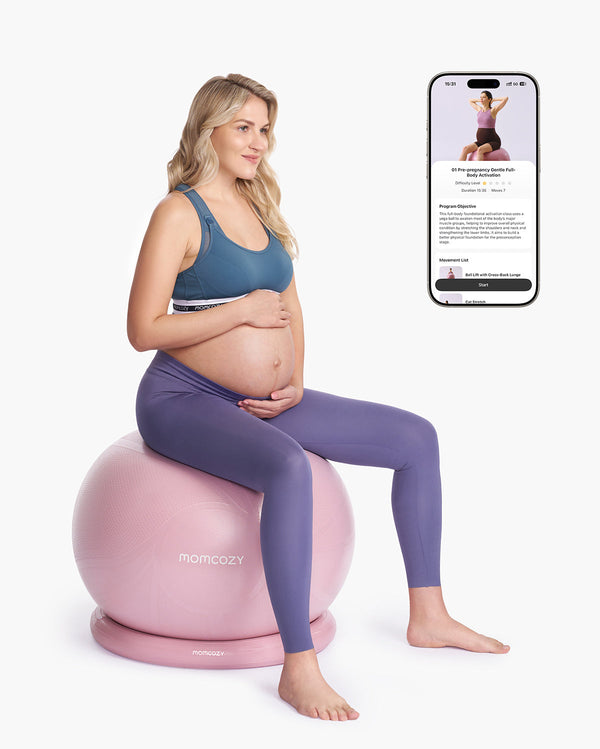
To support early postnatal movement once your midwife or GP agrees it is appropriate, the Momcozy BirthEase Maternity Ball Set offers a guided, beginner-friendly option. It uses anti-burst technology and a stable, anti-slip surface; the 65 cm ergonomic ball is rated to support up to about 150 kg (330 lb). Gentle pelvic rocks on a stable ball may help some mums ease trapped wind. The Momcozy App adds phase-specific video courses and personalised postnatal workouts, and the Cozy Mom Lifestyle Guide e-magazine includes wellness and nutrition ideas for recovery.
Anti-Burst Design
Stability Base Included
Guided Training Program
After a caesarean, movement still matters — but keep it clinician-approved: standing, short walks and gentle stretches rather than strenuous core work until you are cleared.
Dietary tweaks
Smaller, more frequent meals are often easier than large plates while your gut recovers. Chew thoroughly and eat slowly to swallow less air.
It can help to ease back on common gas triggers such as beans, broccoli, fizzy drinks and very fatty foods. If you are breastfeeding, do not cut whole food groups without checking with your midwife, GP or a dietitian — you still need steady nourishment for milk supply.
Positioning and posture
Lie on your left side with knees drawn toward your chest — many mums find this helps trapped gas move through the colon. Gentle knee-to-chest stretches in bed can also ease pressure.
Sit tall rather than slumping, which can compress the abdomen. When feeding, use pillows so you are not hunched for long stretches.
Some new mothers also feel more comfortable with light abdominal support while they walk and care for baby. The Momcozy Ergowrap Postpartum Belly Band offers adjustable, breathable compression designed to support the core and aid comfort during diastasis recti recovery. Used with gentle movement and better posture, support like this can make early weeks with postpartum gas pain feel more manageable. After a C-section, wait for clinician clearance before wearing any binder.
Postpartum
Support
Comfort
Effectiveness
Postpartum bloating remedies
Looking for practical postpartum bloating remedies? These home measures target the swollen, tight feeling that often travels with gas — without jumping straight to medication.
Gentle heat
Low, steady warmth on the tummy can relax intestinal muscle and encourage gas to move. Use a heat pad on a low setting, a warm compress, or a comfortably warm bath. Keep heat moderate, especially if sensation is reduced after epidural or surgery.

Herbal teas and simple natural options
Peppermint tea is traditionally used to ease gut spasm; ginger tea may nudge digestion; fennel tea is another option many people try for bloating. If you are breastfeeding, check any herbal remedy with your midwife, GP or pharmacist first — some herbs can affect supply or pass into milk.
Clockwise tummy massage
Light abdominal massage in a clockwise circle follows the path of the large bowel and may prompt gas to move. Start with very light pressure and increase only as comfort allows — especially after abdominal surgery.
Trapped wind after C-section
Trapped wind after C-section is one of the most common early recovery complaints. Gas can feel sharp, stabbing or like deep pressure, and some women notice pain referring toward the ribs or shoulder as air shifts. The combination of handling the bowel in theatre, anaesthetic effects, pain medicines and a healing incision explains why caesarean recoveries often feel windier than vaginal births.
This is usually temporary, but it can be intense enough to disrupt sleep and feeding. Focus on short walks, left-side lying, warmth, hydration and clinician-approved wind remedies rather than forcing hard core work against a fresh scar.
How to pass wind after C-section
If you are wondering how to pass wind after C-section, try this practical sequence once your maternity team says gentle activity is OK:
- Walk short distances often rather than one long outing.
- Change position regularly — left side, knees soft, then upright again.
- Sip warm fluids; stay hydrated to reduce constipation that traps wind.
- Use low heat on the abdomen if it feels soothing.
- Ask your midwife or pharmacist about simeticone-based wind remedies (UK products such as Wind-eze) before you take anything while breastfeeding.
- Do not hold wind in out of embarrassment — letting it go is part of recovery.
- Support the incision with a pillow when you cough, laugh or bear down.
Avoid straining on the toilet. A footstool and an easy exhale can help your first bowel movements feel less frightening, which also reduces gas build-up.
How long does postpartum gas last?
So how long does postpartum gas last? For many mums after a vaginal birth, gas pain after birth eases over the first one to two weeks as hormones settle and daily movement returns.
After a C-section, gas discomfort often lasts longer — commonly around three to six weeks, and sometimes beyond — because abdominal healing and bowel “wake-up” take more time.
Your timeline still depends on overall health, how much you move, what you eat, breastfeeding status and any previous gut issues. Some women improve in days; others feel gassy for months while the body fully readjusts. Persistent or worsening pain deserves a clinical check rather than waiting it out alone.
How long does it take for a belly to shrink after birth?
A soft, rounded tummy after birth is not the same problem as trapped wind, but the two often arrive together — and searchers frequently ask both. The uterus usually shrinks back toward its pre-pregnancy size over about six weeks, while stretched skin, fluid shifts and abdominal muscle separation (diastasis recti) can keep the belly looking fuller for longer.
Swelling and slowed digestion can make the tummy look and feel bigger day to day even when involution is on track. Gentle walking, hydration, pelvic floor rehab when advised, and — if your clinician agrees — supportive wraps such as a postpartum belly band may help some mums feel more secure. They do not “melt” fat overnight. For general UK recovery context, see the NHS page on your post-pregnancy body. Individual timelines vary; ask your midwife or GP if you have concerns about pain, a gap in the abdominal wall or delayed healing.

When should you call your doctor or midwife about postpartum gas?
Gas after birth is usually normal, but some patterns need prompt review. Contact your midwife, maternity triage line or GP if you have severe abdominal pain that does not ease with movement or position changes — especially with fever, nausea or vomiting.
Also seek help if you cannot pass wind or open your bowels for more than three days, your abdomen is markedly swollen and firm, you see blood in stools, or a surgical wound looks infected. If gas pain stops you caring for yourself or your baby, or symptoms worsen instead of settling, get checked. Your clinician can rule out complications and suggest safer treatments.
Take action on postpartum gas pain
Do not let postpartum gas run the early weeks if simple measures can help. Start with gentle movement, meal tweaks and comfort strategies today. For most mums, diligent self-care brings clear improvement within weeks.
If symptoms linger or intensify, ask for personalised advice. Your comfort matters — and settling wind often makes bonding and day-to-day care feel more manageable.
Frequently asked questions
Can breastfeeding positions decrease gas discomfort?
Yes. Upright or semi-reclined feeds often feel better than lying fully flat, because gravity can reduce swallowed air and support digestion. Side-lying can trap gas for some mums. Experiment with pillow support, change position during long feeds, and try a rugby/football hold if your abdomen is sore.
Is it safe to take over-the-counter gas relief medicines when breastfeeding?
Simeticone wind remedies (often sold in the UK under brands such as Wind-eze; similar to products labelled Gas-X elsewhere) usually act locally in the gut with little absorption into blood or milk. Still, confirm with your midwife, GP or pharmacist before taking anything while breastfeeding. Some mums prefer non-medicine measures first.
Why does gas pain feel worse at night?
Lying flat for long stretches can park gas in awkward spots, digestion slows during sleep, and daytime hormone and activity patterns change overnight. Try slight elevation with a maternity pillow, gentle stretches before bed, a short walk if you wake gassy, and earlier evening meals rather than a large feed right before sleep.
How does C-section recovery affect gas pain compared with vaginal birth?
Caesarean recovery often means stronger, longer gas pain postpartum because surgery affects abdominal muscles and organs directly. Anaesthesia slows the gut; pain medicines add constipation; the incision makes bracing uncomfortable. Many mums need around four to six weeks for this piece to settle, versus about one to two weeks after an uncomplicated vaginal birth — though individuals differ widely.
Why am I so gassy 5 weeks post C-section?
Five weeks after a caesarean can still fall inside a normal window. Source guidance notes C-section-related gas may last three to six weeks or longer while the abdomen heals and bowel motility returns. Ongoing opioids, low activity, constipation, or diet triggers can stretch the timeline. If pain is severe, one-sided, paired with fever, vomiting, wound problems, or you cannot pass wind or stool, contact your maternity team rather than assuming it is “just gas.”
Can postpartum gas pain signal more serious digestive problems?
Usually it is benign, but stubborn or intense symptoms can point to issues such as IBS, food intolerances that became clearer in pregnancy, or birth-related complications. Red flags include pain that escalates, inability to pass gas or stool, hard severe bloating, blood in stool, or fever with gut symptoms. When in doubt, get assessed.