Gas after C-section is one of the most uncomfortable early recovery surprises. When surgery, anaesthesia and limited walking slow your gut, air builds up as trapped wind after C-section or trapped gas after C-section — often felt as painful gas after C-section or sharp gas pain after C-section. Most mums improve within about a week. This guide explains why it happens, how long it lasts, and practical ways to pass and release gas so you can focus on your baby.
What is gas after C-section?
Gas after C-section is the build-up of air in the gut after caesarean birth. Stuck wind causes bloating, pressure and tummy pain that can range from mild to intense. After a C-section it is often worse because abdominal muscles and intestines were moved aside during surgery, so digestion runs slowly for a while. Gas sits in the intestines and stomach, leaving the belly sore, swollen and tight. You may pass a lot of wind, burp, cramp or feel stabbing pains that come and go as bubbles move. Almost every new mum notices some gas and bloating in the first days after delivery.
Is postpartum gas after a C-section normal?
Yes. Increased gas and bloating after birth are normal — especially after caesarean. Pregnancy, labour and surgery all affect the digestive system. In a C-section, intestines are temporarily rearranged, anaesthesia slows gut movement, and pain medicines (especially opioids) can constipate you and create more gas. Hormone shifts also slow transit. Less walking in early recovery lets air sit longer. Uncomfortable as it is, this is usually part of healing and often eases within about a week as motility returns.

Why am I having a gas problem after a C-section?
If you are asking why you have a gas problem after surgery, several factors usually stack together:
Effects of abdominal surgery
During a C-section, intestines are moved aside so surgeons can reach the uterus. That manipulation can temporarily slow or pause segments of the gut — sometimes called postoperative ileus. Intestines need time to “wake up”; meanwhile gas has fewer easy exits.
Anaesthesia and pain medicines
Anaesthesia slows gut movement. Opioid pain relief often causes constipation by reducing intestinal contractions. Slow transit means more time for gas to form and trap.
Hormonal changes
After birth, progesterone and related shifts can keep smooth muscle — including the bowel — more relaxed, slowing digestion and allowing gas to accumulate.
Reduced movement
Walking stimulates the gut. After caesarean you move less at first, so gas is not pushed through as efficiently.
Changes in eating patterns
Irregular meals, hospital menus, supplements or rushed eating between baby care can increase gas. Swallowing air while eating quickly also adds to the problem.

Can diastasis recti cause bloating?
Yes. Diastasis recti — separation of the rectus abdominis (“six-pack”) muscles during pregnancy — can contribute to bloating and a lasting full feeling. The gap may be one to two finger-widths or wider.
Weaker core support
When the abdominal wall is less supportive, intestines may not get the same pressure help that moves food and gas along, so fermentation and bloating can increase.
Posture issues
A compromised core can affect posture, adding pressure on digestive organs and slowing motility further.
Visible tummy changes
Some women notice a persistent lower-abdomen “pooch” that worsens the sense of bloating. Diastasis is common after pregnancy — sources often cite figures around 60% of postpartum women — and can feel more marked after multiple pregnancies or caesarean birth. Exact rates vary by study.
Treatment options
Physiotherapy exercises aimed at reconnecting deep core muscles (not harsh traditional sit-ups) can rebuild support over time and may ease bloating as function improves. Ask your midwife or GP about women’s health physiotherapy referral.
How long after a C-section do you pass gas?
So how long after a C-section do most people pass gas again? Many women feel gas pain after C-section for about 3–7 days, often peaking around day 2–3, then improving. UK guidance from charities such as Tommy’s notes that the bowel can take a few hours to a few days to restart, and that trapped wind and constipation are common.
First 24–48 hours
The first day or two are often the hardest while intestines recover from surgery and anaesthesia — this is when painful gas after C-section frequently peaks.
Days 3–4
By days 3–4 many mums feel better as they walk more and gut function returns. Reducing opioids (when safe) often helps.
Around one week
Most find gas and bloating nearer to their usual baseline within about a week, once the bowel processes air more effectively.
What affects your timeline
Early walking, diet, how quickly pain medicines are tapered, and prior abdominal surgery can all change recovery speed. If bad gas pain lasts beyond 7–10 days, or flares after improving, tell your midwife or GP.
Trapped wind and trapped gas after C-section
Trapped wind after C-section and trapped gas after C-section describe the same problem: air stuck in a slow bowel, stretched against a healing incision. Pain can feel sharp in the tummy and sometimes refer toward the ribs or shoulder. Supporting the wound with a pillow when you cough, laugh or fart can make release less frightening. Letting wind go is part of recovery — holding it in only prolongs pressure.
How to relieve gas pain after C-section (pass, release and fart safely)
These steps cover how to pass gas after C-section, how to release gas after C-section and practical how to fart after C-section tips. Always check new techniques with your maternity team if you are unsure.
1. Walk regularly
Walking is one of the best ways to move gas. Start with a few minutes several times a day around the room or ward, then build up. Extra abdominal support can make walking easier: the Momcozy Ergowrap Postpartum Belly Band is designed for postpartum recovery — it supports the lower back and gently lifts the abdomen rather than harsh squeezing, with soft breathable fabric that is kinder to healing skin. Wait for clinician clearance after caesarean before wearing any binder.
Postpartum
Support
Comfort
Effectiveness
Postpartum
Support
Comfort
Effectiveness
2. Positions that help release trapped gas
Try lying on your back and gently bringing knees toward your chest, or hands-and-knees rocking if cleared. Left-side lying with soft knees also helps many people. Soft recovery underwear such as Momcozy Bamboo Pregnancy Postpartum Panties (low V-waist designed to sit below a typical incision) can reduce rubbing while you change positions — see Momcozy UK’s what to wear after C-section guide. Change position often so gas does not pool.
3. Maternity ball for gentle movement
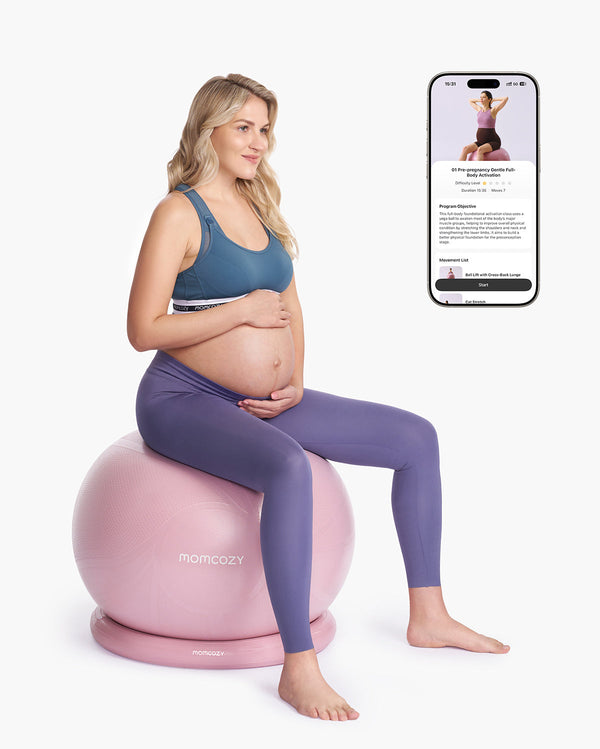
Small pelvic circles or tilts on a therapy ball can “wake” a sluggish gut. The Momcozy BirthEase Maternity Ball Set uses a 65 cm ergonomic, anti-slip design rated to support up to about 150 kg (330 lb). Phase-specific postnatal videos on the Momcozy App can guide safer movement. Only use once your midwife or doctor agrees gentle seated movement is appropriate.
Anti-Burst Design
Stability Base Included
Guided Training Program
4. Gentle clockwise tummy massage
With light pressure, start low on the right, sweep up toward the ribs, across to the left, then down — following the large bowel. Keep pressure very soft near the incision. Five to ten minutes, a few times a day, can help some mums.
5. Warm compresses
A warm (not hot) pad or towel for 15–20 minutes can relax gut muscle so gas moves. Place cloth between heat and skin; never sleep with a heat pad on. Avoid heat directly on an unhealed incision.
6. Digestion-friendly meals
Temporarily ease back on beans, cabbage, broccoli, fizzy drinks and artificial sweeteners. Favour easier options such as ginger tea, peppermint tea (confirm breastfeeding safety with a pharmacist), pineapple, papaya and live yoghurt if you tolerate dairy. Stay well hydrated.
7. Safe wind medicines if needed
Simeticone (UK brands such as Wind-eze; similar to Gas-X / Mylicon elsewhere) breaks up gas bubbles. Some probiotics may support gut recovery. Always ask your midwife, GP or pharmacist before taking medicines while breastfeeding.
8. Swallow less air
Eat smaller, more frequent meals. Chew slowly. Skip straws and avoid talking with a full mouth. Tommy’s also notes chewing gum may help some people get the bowel moving after caesarean — ask your midwife what they recommend on your ward.
What are the red flags after C-section?
Gas is normal; these patterns are not. Contact maternity triage, your midwife or emergency services as appropriate if you notice:
-
Severe or worsening pain that does not ease with home care, or pain that suddenly worsens after improving
-
Fever or chills — fever over 38°C (100.4°F) after birth can signal infection
-
No gas or bowel movement for more than 3 days after surgery — possible obstruction or ileus
-
Hard, board-like abdomen that is extremely tender
-
Persistent vomiting or inability to keep fluids down
-
Wound changes — redness, swelling, discharge or opening of the incision with gas pain
-
Shortness of breath with abdominal pain
-
One-sided leg swelling with pain — possible clot needing urgent care
These red flags matter beyond wind alone. Trust your instincts and get checked early.

Frequently asked questions
What happens if you don’t pass gas after a C-section?
No gas for 2–3 days can signal ileus — a temporary gut shutdown that may bring severe bloating, nausea and vomiting. Nurses ask about wind for this reason. If you have not passed gas within about 3 days, call your doctor or maternity team promptly.
What foods should be avoided after C-section?
Ease off beans, broccoli, cabbage, onions and fizzy drinks. Cut back on heavy processed foods, excess dairy and very spicy meals if they irritate you. Bland, light options (banana, rice, toast, yoghurt, water) in small frequent meals are often easier while you heal.
What helps gas pain after C-section?
Short walks several times a day, knee-to-chest or hands-and-knees rocking when cleared, simeticone if approved, warm (not hot) compresses away from the wound, warm drinks such as ginger tea, and smaller slower meals all help many mums. Let yourself fart — that is how how to release gas after C-section works in practice.
Feel better after C-section gas pain
Gas after C-section is normal but tough. Most mums feel clearer within a week as healing and gut motility return. Gentle walking, position changes and easier meals make a real difference. Take it day by day, and call your midwife or GP for severe pain, fever, or if you cannot pass gas for several days — so you can spend less energy on discomfort and more on those first days with your baby.