Have you tried searching online for breastfeeding essentials UK checklists? If so, you probably have seen those that are for mums from other countries. They tell you to buy several expensive gadgets. That leads one to ask, "Do I really need those, and do I need to buy them now?"
The honest answer is that you don't really have to do that. With the UK's healthcare system and local support networks, you don't need to spend a fortune before your baby arrives. You don't have to fill your house with all those gadgets. This guide will help you learn how to do so. Continue reading to learn what you can buy now and what you can buy later.
What You Actually Need vs What’s Nice to Have (The NHS View)
Speaking to an NHS midwife or a health visitor about feeding supplies usually leads to wonderfully reassuring advice. They will tell you that your body provides the milk, and your baby provides the appetite.
That said, you do not need a mountain of equipment on day one.
In contrast, organisations like The Breastfeeding Network and the NHS Breastfeeding Guidance say that you need only a few. The list includes:
- A couple of comfortable, non-wired nursing bras
- A pack of absorbent breast pads
- A tub of pure lanolin or organic nipple balm
- A few soft muslin squares
Marketing campaigns often push expectant parents to buy many items. They tell you to buy double electric pumps, sterilising stations, and dozens of bottles weeks before their due date. UK health experts advise a "wait and see" approach for heavy equipment instead.
Yes, having basic nursing items ready in your maternity bag gives you peace of mind. But holding off on major purchases like breast pumps have its benefits too. It allows you to see how your feeding journey unfolds naturally, which lets you know what items you actually need.
The Core Breastfeeding Essentials Every UK New Mum Needs
Creating a cozy, functional feeding nest in your home makes the early days of newborn care far smoother. Here is an overview of the core items every UK mum should consider having ready for those quiet daytime feeds and late-night clusters.
Core Essentials Overview
| Essential Item |
Why You Need It |
When to Buy |
| Nursing Bras & Sleep Vests |
Support without tight wires that could cause blocked ducts |
Weeks 36–38 of pregnancy |
| Breast Pads |
Protects clothing from milk leakage (reusable or disposable) |
Pack in maternity bag |
| Nipple Balm / Lanolin |
Soothes sensitive skin during early latching practice |
Pack in maternity bag |
| Ergonomic Support Cushion |
Prevents strain on arms, shoulders, and back during long feeds |
Third trimester |
| Muslin Squares |
Wipes up spills, burp milk, and unexpected leaks |
Third trimester (have 6–10 ready) |
| Hydration & Snack Station |
Keeps energy and fluid levels up during cluster feeds |
Before coming home from hospital |
1. Nursing Bras and Sleep Vests
Your breast size and shape change significantly during the final weeks of pregnancy and the first fortnight after delivery. This happens as your milk comes in. That said, you should invest in two or three non-wired, soft-cup nursing bras towards the end of your third trimester. You can also use drop-cup vest tops.
Look for stretchy, breathable cotton fabrics without underwires. According to NHS advice on mastitis and breast health, rigid underwires can press against tender breast tissueThat can lead to increased risks of blocked milk ducts.
2. Breast Pads (Reusable vs Disposable)
You may notice leaking milk in the early weeks of breastfeeding. That's normal. Your body is still adjusting its supply to match your baby's demand. You can use breast pads to absorb milk leaks and prevent stains. There are two types of breast pads. Choose based on your preferences:
-
Disposable pads: Great for your maternity bag and the first week when life is chaotic and laundry is mounting. You throw these away after using them.
-
Reusable bamboo pads: Softer against sensitive skin, eco-friendly, and highly absorbent. They are easy to pop into the washing machine with your normal baby laundry.
3. Nipple Cream or Balm
It's rare for mums and babies to perfect latching immediately. It requires practice. As you do, your nipples may turn sensitive or tender. A medical-grade pure lanolin ointment or an organic nipple balm can help soothe the discomfort. It helps create a protective barrier that soothes soreness. And the best part is that you don't need to wash off safe formulas breastfeeding. That's one less task for mums who are already busy.
4. A Supportive Nursing Pillow
You will spend several hours a day nursing your newborn. That also means you have to hold your baby for a long time. Now here's the thing. Holding your baby without support can strain your shoulders, neck, and lower back. As such, you should consider using a nursing pillow.
A supportive cushion brings your baby up to breast height so you do not have to hunch over. The Momcozy MaxSupport Nursing Pillow gives firm back and arm support during long feeding sessions. It takes the physical pressure off your body so that feeding is not as tiring. That said, it's one of the first nursing pillows to check out.
5. Muslins and a Cozy Feeding Spot
Muslin squares catch unexpected leaks and protect your outfit from burp milk. You can also use them to wipe up quick spills during nappy changes. That said, it's a good idea to keep half a dozen near your favourite armchair or sofa.
Mums also often pair them with a warm throw blanket, a dimmable nightlight, and a side table. This combination helps create a tranquil feeding station.
6. Hydration and Snacks
Producing breast milk requires energy and plenty of fluids. So it's a must to keep yourself well-hydrated. Keep a large water bottle with a straw and easy-to-eat snacks near your feeding spot. For the food, things like flapjacks, nuts, dried fruit, or oat bars are excellent choices. These help maintain your energy levels through round-the-clock cluster feeds.
If You’re Expressing Too: The Pumping Essentials
You do not need to buy expressing gear before your baby arrives. But many UK mums choose to pump milk at some point. Pumping lets you maintain or build your milk supply. It also allows your partner to feed your baby, which lets them bond. Furthermore, expressing milk also gives you the freedom to step out of the house for appointments. Your baby can feed on expressed milk while you are away.
Expressing & Pumping Setup
| Expressing Gear |
Main Benefit |
Best Suited For |
| Wearable Electric Pump |
Compact, quiet, hands-free milk collection |
On-the-go mums, returning to work, multitasking |
| Hands-Free Pumping Bra |
Holds pump flanges securely without manual support |
Multitasking while expressing milk |
| Milk Storage Bags / Bottles |
Space-saving, pre-sterilised milk storage |
Building a fridge/freezer milk stash |
| Bottle Washer & Dryer |
Automates cleaning and drying of pump components |
Saving time and effort on daily washing |
| Smart Bottle Warmer |
Gently and evenly warms expressed milk |
Quick night feeds without hot spots |
1. Choosing the Right Breast Pump
When picking a pump, consider how often you plan to express. Then, choose the appropriate type of breast pump. Here are your options:
Manual pumps
Manual breast pumps are lightweight, quiet, and inexpensive. They are great for catching occasional excess milk or clearing a full breast. The downside is that you need to squeeze them manually, and you have to do it continuously. That can strain your hand and wrist.
Hospital-grade electric pumps
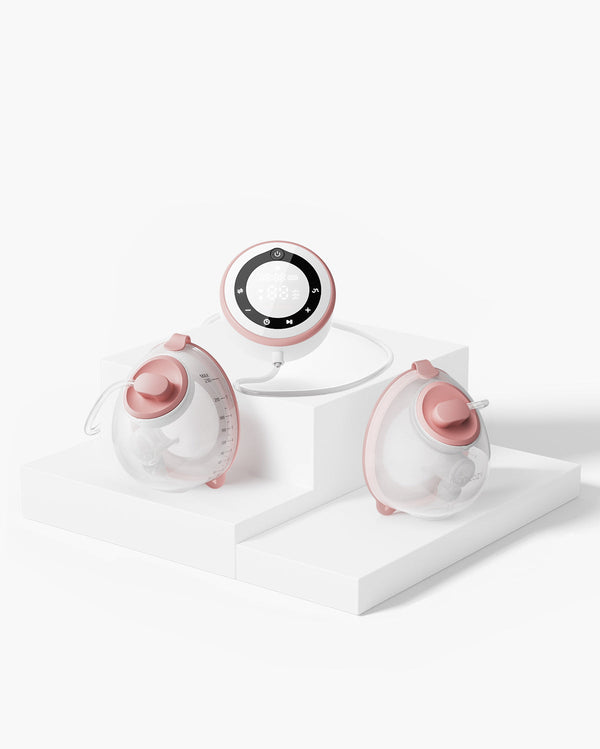
Hospital-grade breast pumps are excellent for boosting supply or pumping frequently.They express milk automatically, so you don't have to squeeze them manually. But keep in mind that they keep you tied to a power outlet or heavy base unit.
Wearable electric pumps
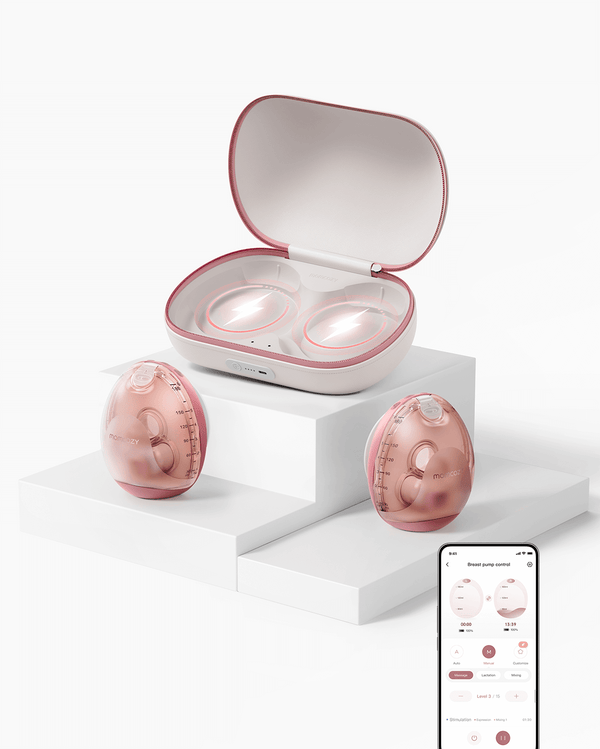
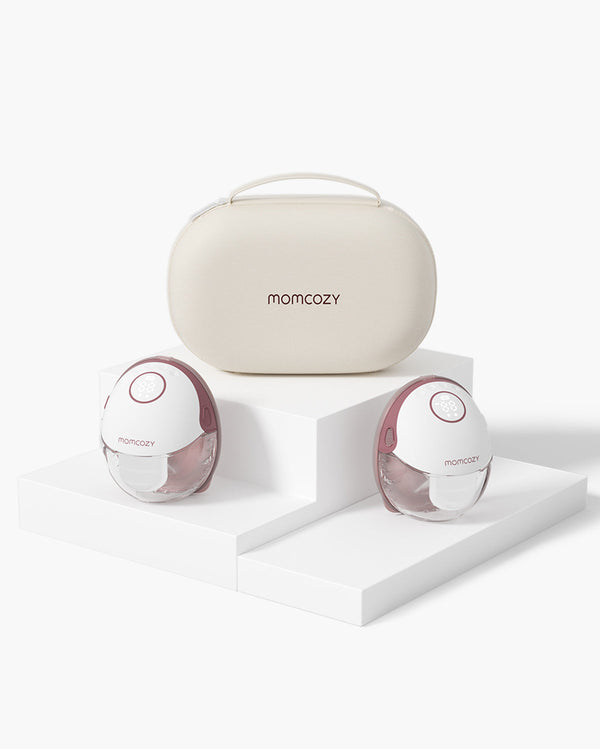
Wearable breast pumps are tucked directly into your regular nursing bra without dangling wires or tubes. They are perfect for UK mums balancing household tasks and baby tasks. Likewise, wearable pumps are the best options for mums preparing to return to work.
Compact options like the Momcozy Air 1 Ultra-Slim Breast Pump are your best choice. They allow you to pump quietly and hands-free.
Ultra-slim
Wireless Charging
Effortless Alignment
Smart App Control
For all breast pumps
Hands-Free
Spongy strap
2. A Hands-Free Pumping Bra
When you are pumping, you have to hold the flange against your breast. That doesn't sound like a problem; it's easy. However, you have to remember that pumping sessions last up to 20 minutes. Holding the flange for that long will tire your arms.
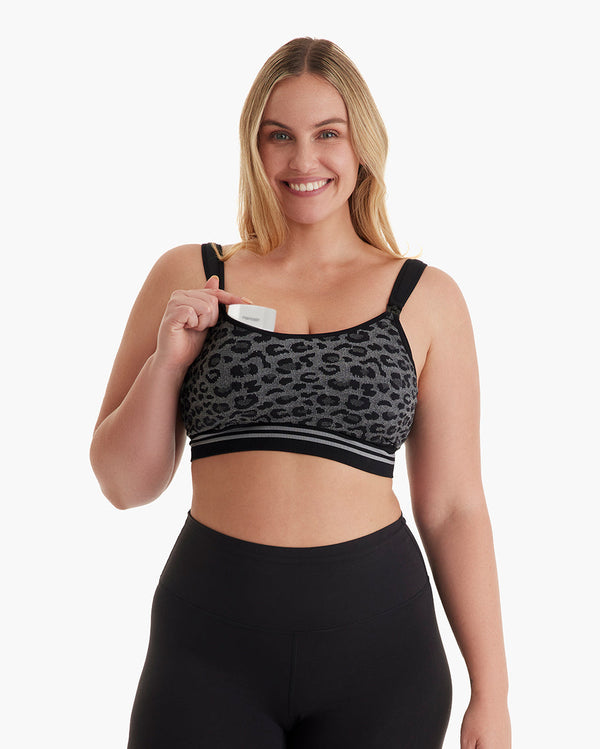
That is why you should invest in a couple of nursing bras. These will hold the collection cups firmly in place so you don't have to.
Consider using a multi-functional piece like the Momcozy 4-in-1 Hands-Free Pumping Bra. It can function as a nursing bra, pumping bra, and regular daily wear. If you have this, you don't need to change clothes for every action.
3. Milk Storage Bags and Bottles
Once you express milk, you need clean, safe containers to store it. Pre-sterilised, BPA-free breast milk storage bags are ideal for the freezer because they lay flat and save space. The NHS guidelines on expressing and storing breast milk recommends labeling each bag clearly. Write the date and amount using a permanent marker so you use the oldest milk first.
4. UK Sterilising and Cleaning Guidance
Guidelines from the UNICEF UK Baby Friendly Initiative and NHS Bottle Sterilising Advice recommend sterilising all feeding equipment until your baby is at least 12 months old. This includes your breast pump parts, valves, and bottles. You can use cold-water sterilising tanks with sterilising tablets, electric steam sterilisers, or microwave bags to do so.
Automated devices can help simplify the task of cleaning small parts. Using a dedicated appliance such as the Momcozy KleanPal Pro Baby Bottle Washer thoroughly washes, rinses, and dries pump components and bottles. It saves you valuable time during those busy early months.
Bottle Washer
Steriliser & Dryer
Washes More Than Just Bottles
Accurate Warming
Water Bath Heating
Keep Warm
5. Gentle Milk Warming
You need to use gentle heating when preparing expressed milk from the fridge or freezer for a night feed. It helps protect delicate nutrients and antibodies. Avoid using microwaves, as they create dangerous hot spots that can burn your baby's mouth.
An automated warmer like the Momcozy Nutri Smart Baby Bottle Warmer warms expressed breast milk evenly to body temperature at the touch of a button. It makes nighttime feeding calm and straightforward.
Build Your 2026 Starter Kit: A Practical Checklist
To help you organise your purchases without feeling overwhelmed, here is a practical checklist categorised by priority level. Having these unboxed, cleaned, and set up at home before birth ensures everything is ready the moment you arrive home from the hospital.
Pre-Birth Preparation & Feeding Checklist
| Category |
Item Description |
Status |
| Essential Before Birth |
2–3 Non-wired nursing bras or drop-cup sleep vests |
Hospital Bag / Day 1 |
| Essential Before Birth |
1 Pack of disposable breast pads |
Hospital Bag |
| Essential Before Birth |
1 Tub of pure lanolin or organic nipple balm |
Hospital Bag |
| Essential Before Birth |
6–10 Soft cotton muslin squares |
Hospital Bag / Home |
| Essential Before Birth |
Ergonomic nursing pillow (e.g. Momcozy MaxSupport Cushion) |
Home Feeding Spot |
| Recommended Before Birth |
Wearable electric breast pump (e.g. Momcozy M5 Smart, M6 Mobile or Air 1 Ultra-Slim) |
Home Setup |
| Recommended Before Birth |
Multi-functional pumping bra (e.g. Momcozy 4-in-1 Bra) |
Home Setup / Hospital Bag |
| Recommended Before Birth |
Bottle Washer / Steriliser (e.g. Momcozy KleanPal Pro) |
Home Setup |
| Recommended Before Birth |
BPA-free milk storage bags & newborn feeding bottles |
Home Setup |
| Recommended Before Birth |
Smart Bottle Warmer (e.g. Momcozy Nutri Smart Warmer) |
Home Setup |
| Recommended Before Birth |
Reusable bamboo breast pads (5–10 pairs) |
Home Setup |
Where to Get Free & Low-Cost Breastfeeding Support in the UK
One of the best aspects of having a baby in the UK is the wealth of free professional and community support available to new parents.
-
NHS Midwives and Health Visitors: Your primary support team during the first few weeks. They can check your baby's latch, monitor weight gain, and refer you to local NHS infant feeding clinics.
-
National Breastfeeding Helpline: Call 0300 100 0212 (available 9:30 am to 9:30 pm every day) for independent, confidential support provided by trained volunteers from The Breastfeeding Network and the Association of Breastfeeding Mothers.
-
Charity Support Groups: Organisations like La Leche League GB and the NCT run local drop-in peer support groups where you can share experiences with other local mums over a cup of tea.
-
NHS Healthy Start Scheme: If you receive certain benefits or are under 18, you may qualify for the NHS Healthy Start Scheme, which provides free vitamin drops for your baby and healthy food vouchers.
-
Free Dental Care and Prescriptions: All pregnant women and new mothers in the UK are entitled to free NHS dental treatment and free prescriptions for 12 months after giving birth via a Maternity Exemption Certificate (MatEx) provided by your midwife.

Breast Pumps on the NHS & UK Insurance: What’s Actually True
If you have read American pregnancy guides, you might assume that health insurance or public health systems automatically cover high-end double electric breast pumps for free. In the UK, the rules are quite different.
-
NHS Breast Pump Loans: The NHS does not routinely provide free breast pumps to all new mothers. However, hospital maternity units and community health teams often loan hospital-grade pumps for free if your baby is in the neonatal unit (NICU), born prematurely, or experiencing severe medical feeding difficulties.
-
Private Health Insurance: UK private policies (such as Bupa, AXA Health, or Aviva) rarely cover breastfeeding equipment or breast pumps as standard, viewing them as lifestyle items rather than medical treatments.
-
Local Pump Schemes: Some local authority Family Hubs or charities offer low-cost pump rental schemes if you need a heavy-duty pump for a short period.
UK Shopping & Money-Saving Tips for New Mums
Setting up for a newborn does not have to break the bank. Here are practical ways UK parents save money on feeding supplies:
-
High Street Loyalty Clubs: Sign up for the Boots Parenting Club or supermarket baby clubs to earn extra loyalty points, access exclusive discount vouchers, and collect free sample packs.
-
Supermarket Baby Events: Timing purchases around major baby events at stores like Aldi, Tesco, and Asda can save you up to 30% on basic items like muslin squares, breast pads, and baby clothing.
-
Buying Second-Hand Wisely: Platforms like Vinted and pre-loved sales are brilliant for picking up pre-owned items like nursing pillows, sterilisers, and clothes at fraction of high street prices. However, always buy new breast pump shields, silicone valves, and tubing for hygiene and safety reasons.
FAQ: Quick Answers for UK New Mums
Do I need to wash off lanolin nipple cream before feeding my baby?
No, medical-grade pure lanolin ointment and organic 100% natural nipple balms are completely safe for your baby to ingest in tiny amounts. You do not need to wash or wipe them off before latching your baby, which helps protect your delicate skin from friction and irritation.
Do I need separate nursing bras and pumping bras?
Not necessarily! While standard nursing bras only feature drop-down cups for direct nursing, multi-functional designs save space and money. Options like the Momcozy 4-in-1 Hands-Free Pumping Bra combine drop-down nursing clips with internal support slots to hold pump flanges, so you can nurse, express, and wear the same bra comfortably all day.
How many muslin squares and nursing bras should I buy before birth?
For your pre-birth setup, 2 to 3 non-wired nursing bras or sleep vests are plenty to get started while your milk supply settles. For muslin squares, aim for 6 to 10. Muslins are extremely versatile for catching milk leaks, wiping burp spills, and protecting clothing during feeds.
Do I need to sterilise breast pump parts after every single use in the UK?
Yes. NHS and UNICEF UK Baby Friendly guidelines state that all baby feeding equipment—including breast pump collection cups, valves, and bottles—must be washed in warm soapy water and sterilised after every single use for babies under 12 months old to protect them from harmful bacteria.
How long can I keep expressed breast milk in the fridge and freezer in the UK?
According to NHS infant feeding safety guidelines, freshly expressed breast milk can be stored:
- At room temperature (under 20°C) for up to 6 hours.
- In the main body of a standard fridge (at 4°C or colder) for up to 8 days.
- In a domestic freezer (-18°C or colder) for up to 6 months.
Conclusion
Preparing for breastfeeding in the UK does not require buying every gadget on the market. By starting with the true core essentials—comfortable bras, breast pads, soothing balm, and soft muslins—you create a calm, flexible foundation for you and your baby.
As your feeding routine settles in, you can choose to add convenient tools like ergonomic cushions, wearable pumps, or automated bottle washers to make daily life smoother. Trust your body, lean on free local NHS and community support networks, and take your feeding journey one day at a time.