MEDICALLY REVIEWED BY

Dr. Idoreyen Inyangotu is a GMC-registered Medical Doctor (MBBS, Barts and The London) with broad NHS clinical experience across paediatrics, obstetrics & gynaecology, internal medicine, general surgery, psychiatry, urology, and primary care. Through her frontline work, she has delivered direct patient care within multidisciplinary teams across acute, surgical, and community healthcare settings, with hands-on experience in clinical decision-making and patient safety. She also holds an intercalated degree in Global Public Health and has specialist training in Clinical Informatics. Her background combines frontline clinical experience with expertise in public health, patient safety, and evidence-based healthcare.
It is 2:47 a.m. The radiator went off hours ago. The flanges feel icy. Baby has finally gone down, your partner is twitching at every click, and you are holding a phone torch like a Victorian nightwatch. Do you really need to pump milk at night, or can you enjoy a longer stretch of sleep?
Night pumping (overnight expressing) matters most while supply is still being established. Later, many mums can stretch or drop sessions if baby is thriving and output stays steady. This guide covers whether you need it, how long you can go, a realistic schedule, and how to make a middle-of-the-night session less miserable. It is not a one-size fits all rule. When growth, pain or supply worry you, talk to your midwife, health visitor or an IBCLC.
Key Takeaways
- Night pumping (or overnight milk removal) supports supply while prolactin is higher overnight, especially in the early weeks.
- If baby sleeps longer, you do not always need a full middle-of-the-night pump. Age, growth, nappies, fullness and your feeding goals decide.
- Early on, a full eight-hour gap can risk engorgement or a supply dip for some mums. Others tolerate longer stretches once supply regulates.
- A bedside station, dim light, hands-free kit and a short comfort pump beat building a heroic kit stack at 3 a.m.
- Drop night pumps gradually and watch wet nappies, comfort and total daily output. Ask your midwife, health visitor or IBCLC if you are unsure.
What Is Night Pumping — and Why Do Mums Do It?
Night pumping means removing milk overnight with a pump (or hand expression), not only breastfeeding in the dark.
UK leaflets often talk about “expressing overnight”. Mums usually mean the same 3 a.m. session, whether they searched it as night pumping or not.
Mums pump at night for many reasons to establish or protect their milk supply, because they exclusively pump, because they wake painfully full, to build a small freezer stash before return to work, or so a partner can give a bottle while they get a longer stretch of sleep. Prolaction levels are often higher overnight, which is why many UK Trusts still advise at least one overnight expression while supply is getting going. But, that is a tendency, not a promise that a 3 a.m. session will always be your biggest yield.

Do You Have to Pump at Night If You’re Breastfeeding?
Not always. It depends.
In those newborn weeks, frequent milk removal is still important. If baby suddenly sleeps five or six hours but hasn't regained their birth weight, or you have been told to protect supply, a single overnight pump or hand expression can bridge the gap without turning the whole night into a project.
If you are exclusively breastfeeding, baby is gaining well, their nappies look as expected, and you wake feeling comfortable, you may not need to add a pump just because the internet said so. Exclusive pumpers usually need overnight removal for longer. Combo feeding sits in the middle: tailor your the plan to how much milk baby takes from you across 24 hours.
Decision factors include: baby’s age and weight gain, wet and dirty nappies, how full you feel, whether you are building stash for work, and how shattered you already are. Sleep matters, protecting your rest can help you keep feeding long term.
In the UK, start by speaking with your midwife or health visitor. Many areas have an NHS infant feeding team. The National Breastfeeding Helpline offers trained volunteer support. For urgent concerns, use NHS 111 or your GP.
Will Skipping Night Pumping Decrease Supply?
It can, especially early on. It does not always.
Supply responds to total milk removal over 24 hours, not only one sacred session. In the first weeks, long overnight gaps are more likely to nudge production down or leave you engorged. Once supply has been regulated (often somewhere around two to three months, with wide individual scatter), some breastfeeding mums skip a middle-of-the-night pump without a lasting dip.
Does pumping at night increase milk supply? It can help when you need more removal and overnight hormones are on your side. It is not a guaranteed booster on its own. If output or your baby’s weight gain still worries you, our overview of low milk supply signs and causes is a clearer next read than setting random alarms.
A practical “best time” for many mums is somewhere in the overnight to early-morning window, when you were going to be half-awake anyway. Right before your longest sleep stretch is a common compromise, although there is no single best time for everyone
Signs the stretch was too long: painful fullness, leaking through pads, a tender area or lump that worsens or makes you wonder about a blocked duct, or a clear fall in daily pumped volume over several days. Pumped volume can vary for many reasons so look for a clear pattern rather than judging by one session. Follow NHS advice on breast engorgement for ordinary fullness. Fever, spreading redness or feeling properly unwell needs clinical care, not another gadget tip. Use NHS guidance on mastitis as your red-flag map.
How Long Can You Go Without Pumping at Night?
There is no universal safe number of hours. Treat suggested ranges as starting points, then pay attention to your body and baby.
Can you go eight hours without pumping at night? Some mums can, once supply is established, baby is thriving, and you do not wake in pain. In the early weeks, UK expressing leaflets often keep overnight gaps shorter (commonly in the region of four to six hours while you are still building supply, with local advice winning if it differs). Exclusive pumpers usually protect overnight removal longer than mums whose babies transfer well at the breast.
Rough pattern, not a prescription:
- Early weeks: frequent milk removal across 24 hours; avoid inventing an eight-hour holiday yet.
- Establishing months: some stretch toward one longer night gap if day feeding, comfort and baby’s growth stay solid.
- Later: one night session, a pump-before-bed only, or none, if comfort and output hold.
If you stretch feeds and engorgement or output falls, shorten the gap again for a few nights and seek advice before you try a second change.
A Practical Night Pumping Schedule (Without Living by the Alarm)
Pick the lightest plan that protects supply and still lets you sleep in longer stretches.
| Stage | Overnight idea | Watch for |
|---|---|---|
| Early establishing | Milk removal every few hours, including at least one overnight session | Painful fullness, slow weight gain |
| One MOTN session | Pump or feed once in the night, plus a session before the longest sleep | Daily total output holding steady |
| Pump-before-bed | Empty well at bedtime, then a longer stretch if you stay comfortable | Waking soaked or sore |
A longer night gap usually needs slightly tighter daytime spacing so 24-hour removals do not crash. Typical session amounts vary; how much milk to pump in a full session is a different question from a short comfort pump.
No milk when pumping at night is often tired let-down, not an empty tank. Cold flanges in a British bedroom make that worse. Warmth, gentle massage, a baby cue, and stimulation mode before hard suction help more than panic. Fit and suction faults sit in our pump not working guide. A fuller 24-hour pattern sits in the pumping schedule.

How to Make Pumping Milk at Night Easier
The night win is fewer steps, not a perfect routine chart.
- Build a bedside station before you sleep. Water, spare flanges, wipes, and labelled storage bags beat a kitchen pilgrimage at 3 a.m.
- Keep light low. A dim lamp or warm torch protects melatonin better than the big ceiling light, especially when you room-share in the early months.
- Warm the start. Cold UK bedrooms make silicone feel brutal. A flannel helps. Start in stimulation mode before hard suction so you are not fighting icy silicone half-asleep.
- Go hands-free. Sit against the headboard. A hands-free pumping bra keeps flanges steady so you can compress, rest your eyes, or help with a bottle.
- Match the session to the need. Uncomfortable fullness may only need a short comfort pump. A full empty is for supply work, not every single wake.
- Nurse one side, catch the other. If baby wakes to feed, a silicone collector on the unused side can catch the spray without a second full pump setup.
- Park deep cleaning for the morning when you can. Follow your pump’s hygiene guidance. Fridge storage of parts is a judgment call; when in doubt, wash as directed rather than inventing rules from social media.
Where a warm-massage wearable earns the 3 a.m. slot
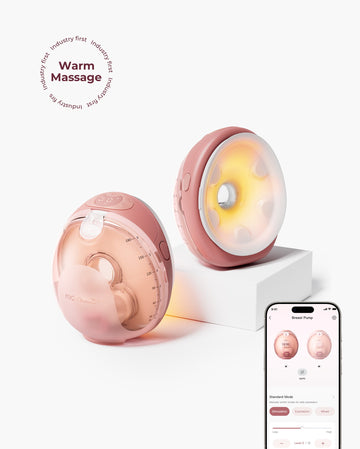
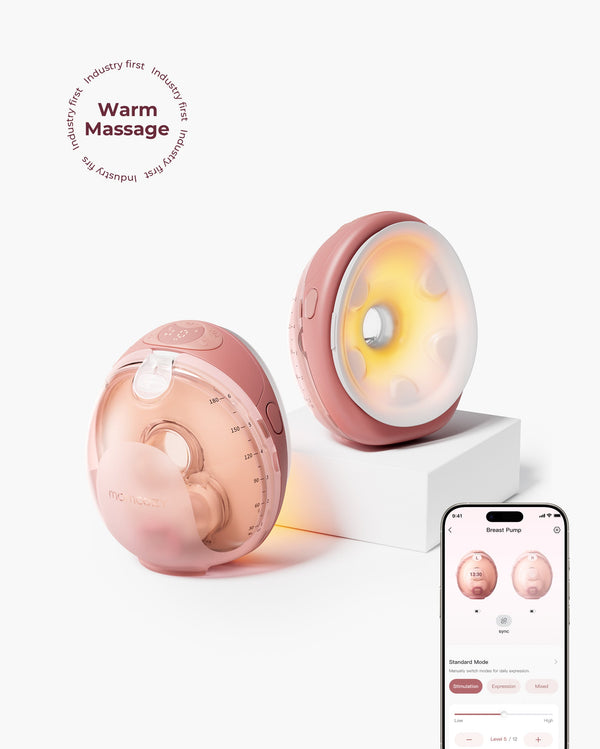
The hardest part of an overnight pump in a British house is usually the cold start, not a missing motor. Radiators click off. Silicone sits icy on the nightstand. A kettle run means the big kitchen light, a creaky stair, and a partner who was finally asleep. A flannel still works. If you want that warmth in the cup so you stay in bed, Momcozy Wellness 1 is the warm-massage wearable: 37°C, 39°C or 41°C wraparound heat, plus five-zone massage timed with suction. Set the warmth before you sleep if you can. Then the 3 a.m. session is on, not a-towel routine.
That helps if you are protecting one overnight removal while you are still half-asleep. Hands-free cups mean you can sit against the headboard, compress, or keep a hand on a stirring baby without building a desk of parts. Soft, baby-like suction (SoftPulse) is there so you are less tempted to crank the vacuum in the dark. Milk Boost, if you use it, is a set stimulation-to-expression rhythm for the session you already planned. It is not a promise that the freezer will fill, and it is not a substitute for frequent emptying if you are still building. Warmth auto-stops around 15 minutes and the massage cycle around five, which suits a short comfort pump better than a heroic hour.
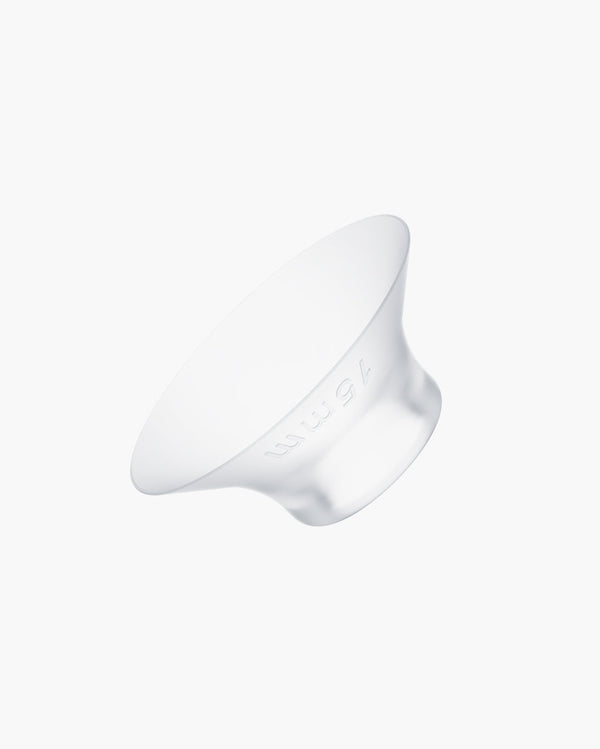
Kit around the session, not treatment: a hands-free pumping bra, breastmilk storage bags for the bedside station, and a breast milk collector if baby is on one side. None of these treat engorgement or mastitis.

Return-to-work stash planning sits beside night strategy in our guide to breastfeeding essentials for working mums. Hands-free shortlists for ordinary busy days sit in best wearable breast pumps for busy mums.
When and How to Stop Night Pumping
Stop when readiness shows, not on a random calendar date.
Clues you may be able to trial dropping a night session: supply feels steadier, breasts are less painfully full between feeds, leaking eases, baby’s longer stretches are consistent, and daytime output has held for a week or two. Exclusive pumpers often wait longer than direct-breastfeeding mums with strong transfer.
Wean gradually. Try pushing the overnight pump later by 30–60 minutes every few nights, or drop one session and watch comfort plus total daily volume for three to five days before the next change. If you wake soaked, add a short relief pump rather than white-knuckling through pain. Pads help with leaks while you experiment.
Stopping too fast can mean a supply dip, engorgement, or a higher chance of inflammatory problems like mastitis. Fever, spreading redness or severe pain means pause DIY stretching and contact your GP, midwife or health visitor.
Kit for leaks, not treatment: reusable breast pads.
FAQ: Quick Answers to Common Questions
Do I have to pump at night if I’m breastfeeding?
Not automatically. Early on, overnight milk removal still matters for many mums. Later, thriving babies and comfortable breasts often mean you can skip a dedicated pump. Base the plan on baby's growth, feeding pattern, nappies and your goals.
Will not pumping at night decrease my supply?
It might particularly in the early weeks, or if your total daily removals fall. Once supply regulates, some mums stretch overnight without a lasting drop. Watch output and comfort for several days after any change.
Can I go 8 hours without pumping at night?
Often yes after supply is established and you stay comfortable. It is riskier in the newborn weeks. Individual storage capacity varies, so treat eight hours as a trial, not a rule. If your baby is not gaining weight well or you have been given an expressing plan, follow that advice instead.
What is the best time to pump at night?
Whenever you can protect one overnight removal without shredding the whole night. Many mums use the overnight to early-morning window, or pump well before the longest sleep stretch.
When can I stop night pumping?
When baby’s pattern, your comfort and daily output look stable enough to trial a drop. Change one thing at a time and give it a few days. Ask a midwife, health visitor or IBCLC if you feel stuck.
Does pumping at night increase milk supply?
It can support supply by adding removal when prolactin is often higher. It is not a guaranteed increase on its own. Daytime removals and baby’s transfer still count.
Why do I get no milk when pumping at night?
Tired let-down and cold flanges are common culprits. Warm up, use stimulation mode, add a baby cue, and check fit before blaming supply. Persistent low output, especially alongside poor weight gain, fewer nappies or painful fullness needs clinical advice.
Conclusion
Night pumping is a tool for supply and comfort, not a forever badge of honour. Early weeks often need overnight removal. Later weeks may allow longer stretches if baby and output stay well.
Make the session kinder: fewer steps, warmer start, dim light, hands-free where you can. If cold flanges and a kettle queue are what wreck your 3 a.m., Momcozy Wellness 1 builds warmth and massage into a short wearable session. If a simple pump and a flannel already work, keep that and protect sleep instead.