You have just fed, and your breasts already feel empty. Baby is still rooting. That panic has a name — and it is often louder than the actual problem. Worry about low milk supply is common. The useful next step is to check nappies, weight and latch, then how well milk is being removed, before you rewrite the whole feeding plan.
If your baby is lethargic, not gaining weight, has fewer wet nappies than before, or you feel unwell with a hot, red breast, speak to your midwife, health visitor or GP today. You can also call the National Breastfeeding Helpline on 0300 100 0212.
Key Takeaways
- Worry about low milk supply is common; true insufficient supply affects roughly 15% of women.
- Check wet nappies, weight gain and feeding behaviour before you assume supply has dropped.
- Soft breasts after four to six weeks usually mean regulation, not failure.
- More frequent, effective milk removal is the first fix — not a special food or gadget.
- Ask for a breastfeeding specialist early if weight or nappies raise concern.
Is Low Milk Supply Common? (Perceived vs True)
Perceived low milk supply — believing you are not making enough when your baby is actually fine — is one of the most common reasons mums stop breastfeeding. True low supply, where the baby is not getting adequate milk despite frequent, effective feeding, is relatively uncommon.
Your breasts work on supply and demand. Milk removed signals your body to make more; long gaps or ineffective feeds signal less. That is why a temporary dip after a busy day or a missed feed is not the same as a chronic problem.
NHS guidance on milk supply starts with feeding on demand and fixing latch before anything else. That order matters.

How Do You Know If Your Milk Supply Is Low?
Signs of low milk supply in a baby are about output and growth, not how full your breasts feel. You cannot measure what a breastfed baby drinks from the outside, so you watch what comes out and how they behave.
Reassuring signs your baby is getting enough:
- At least six heavy wet nappies every 24 hours from around day five
- At least two soft, yellow, runny poos a day in the early weeks (poo patterns change later)
- Steady weight gain after the first two weeks (some loss in week one is normal)
- Calm, rhythmic suck-swallow pattern during feeds; content after most feeds
- Your nipples look similar after feeds — not pinched flat or white
How do you know if your milk supply is low? Look for the opposite pattern: fewer wet nappies than before, no weight gain, a baby who falls asleep within minutes at the breast every time, or who never seems satisfied. The Healthier Together guide lists red flags such as lethargy and breathing fast — seek urgent help if those appear.
Tip from the NHS: pour two to four tablespoons of water into a disposable nappy so you know what "wet enough" feels like. It is harder to tell with modern nappies than your grandmother's cloth ones.
False Alarms: Soft Breasts, Small Breasts and Other Misread Signs
Do soft breasts mean low milk supply? Usually no — especially after the first month. As prolactin levels settle, many mums' breasts feel softer between feeds even though supply is stable. That regulation often kicks in around four to six weeks and catches people off guard.
Do small breasts mean low milk supply? Cup size does not predict production. Storage capacity varies, but small breasts can make plenty of milk with frequent feeds.
Other false alarms include:
- No leaking between feeds — many mums never leak once supply regulates
- Shorter feeds as baby gets more efficient
- Cluster feeding and frequent night waking — often growth spurts, not hunger from empty breasts
- Low pumped volume — pumps remove differently than babies
- Baby taking a bottle after a feed — bottles flow fast; it is not proof they were still hungry
If weight and nappies are fine, softer breasts and quicker feeds are usually good news, not a crisis.
What Causes Low Milk Supply?
In most cases the problem is how much milk the baby removes, not a broken factory. Poor latch and ineffective sucking top the list — if milk stays in the breast, production slows through a feedback mechanism. Our article on babies who pull off and relatch may help if feeds feel constantly fussy.
Common causes you can often fix:
- Infrequent feeds or strict clock feeding instead of on-demand
- Formula top-ups or early dummies reducing time at the breast
- Sore nipples making you shorten feeds
- Separation without expressing to replace missed feeds
- Not eating enough or drinking too little — you need regular meals and fluids to cope, even if food alone will not fix supply without milk removal
- Can stress cause low milk supply? Chronic stress can interfere with let-down; addressing support and rest helps alongside feeding changes
- Does dehydration cause low milk supply? Severe dehydration can reduce output; drink when you are thirsty
- Can thrush cause low milk supply? Painful feeding may shorten sessions — treat thrush for both of you
- Does low iron decrease milk supply? Anaemia can leave you exhausted; ask your GP to check ferritin if you are wiped out
Medical causes need specialist input: thyroid disorders, PCOS, retained placenta fragments, previous breast surgery, or insufficient glandular tissue. Can mastitis cause low milk supply? Supply often dips during mastitis but usually recovers with treatment and frequent drainage.
Why Has My Milk Supply Dropped Suddenly?
All of a sudden my milk supply is low — that panic is real, and it usually has a recent trigger. Milk supply suddenly low after a few good weeks might trace back to:
- A growth spurt you met with longer gaps instead of more feeds
- Starting formula top-ups without increasing breastfeeds
- Illness, mastitis, or a painful feed you cut short
- A new contraceptive pill containing oestrogen
- Your period returning — a temporary dip mid-cycle is common
- A changed pump schedule if you express regularly — see our pumping schedule guide
Low milk supply after mastitis is common while breasts heal. Keep draining them — breastfeed or express to comfort — and watch nappies and weight. Fever, flu-like aches, or a red wedge on the breast needs same-day GP or NHS 111 advice, not just more fenugreek.
Note: Skip heat if the breast is hot and red, or you feel flu-like.
How to Increase Low Milk Supply
How to increase low milk supply starts with removal, not shopping. There is no honest way to increase low milk supply fast overnight — but over several days, more effective feeds and complete emptying usually help.
- Feed on demand. Offer the breast when baby roots, smacks lips, or fusses — often 8 to 12 times in 24 hours in the early months.
- Fix latch first. Ask your midwife to refer you to a breastfeeding specialist. A shallow latch looks like feeding but transfers little milk.
- Offer both breasts. Switch sides; use breast compressions during feeds to keep milk flowing.
- Skin-to-skin. Hold your baby against your chest between feeds — it boosts oxytocin and feeding cues.
-
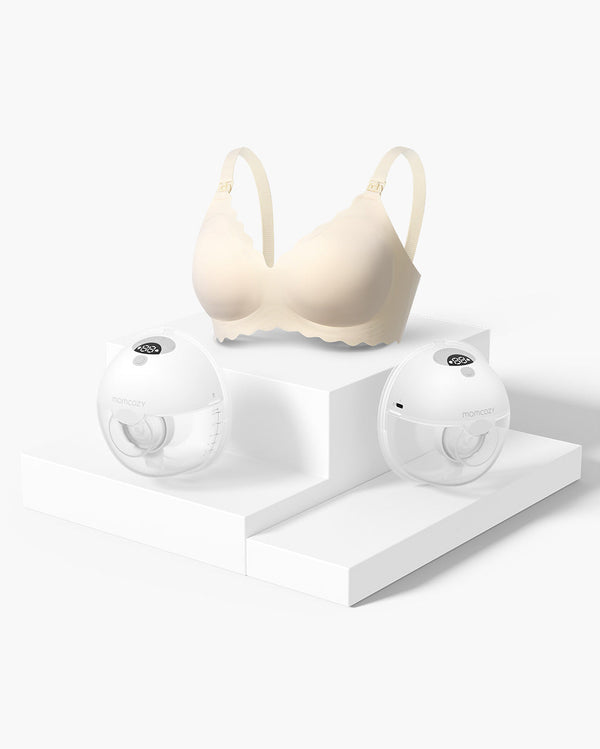
Express after feeds if breasts still feel full or baby did not drain well. A double pump session for 10 to 15 minutes signals demand. A hands-free pumping bra lets you express while you eat or hold the baby. Our Mobile Flow M9 suits post-feed drainage when you need efficient emptying without sitting tied to the sofa.
 Member priceFrom£159.99Code Save 15%
 Member price£349.99Code Save 15%
 - Gentle massage before feeds. Warmth and circular massage toward the nipple can help let-down — Sussex NHS trusts teach similar techniques. A warm flannel and your hands are enough for this step.
- Protect breastfeeds. Avoid unnecessary formula top-ups and delay dummies until feeding is established if you can.

Foods to increase milk supply get a lot of airtime. Oats, fenugreek and brewer's yeast will not outrun poor latch or skipped feeds. Eat regularly, drink when you are thirsty, and focus on removal first.
My milk supply is low — how can I increase it without power-pumping marathons? One extra morning feed or post-feed pump for several days beats one heroic hour. If you are considering herbs or medication, speak to a breastfeeding counsellor or GP first. If you do try a clustered hour later, the method sits in a power pumping schedule — it is a pattern of emptying, not a heroic one-off hour.
Still choosing whether you need a pump at all? Timing and flange fit sit in the breast pump selection guide and when to buy a breast pump.
If icy plastic is cutting the extra session short
The extra morning or post-feed pump is often the session that protects supply — and a British radiator that clicked off overnight is often why it fails. Cold silicone on a cold breast delays let-down. You watch a thin trickle, twist the vacuum up, then stop at minute eight. That shortened empty is a missed “make more” signal, not proof your body has given up.
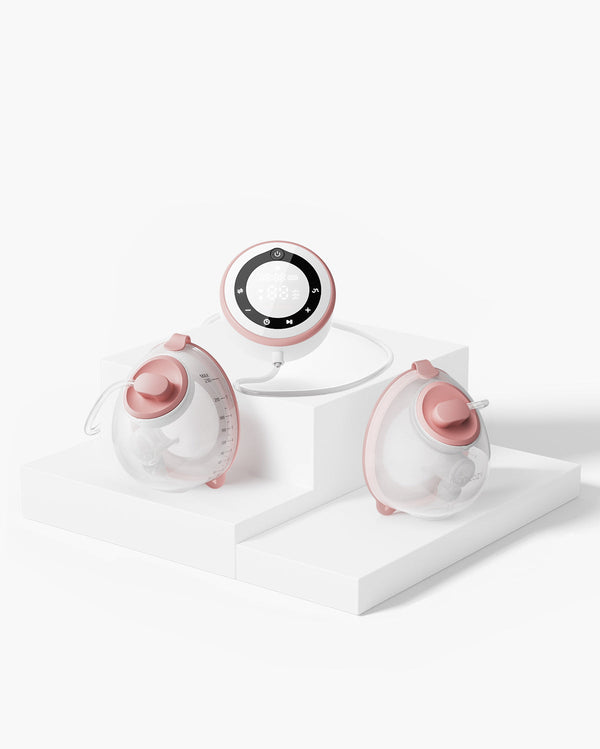
The Momcozy Wellness 1 puts wraparound warmth (37°C, 39°C or 41°C) and five-zone massage in the cup with the suction, so the first minutes can feel closer to a baby starting to feed than to fridge plastic. SoftPulse is a gentler pulse, which makes it easier not to crank. When let-down arrives and the session stays comfortable, you are more likely to sit through the 10 to 15 minutes that tell your body to keep making milk. That is the benefit for a mum worrying about low supply: finishing the empty you already planned, without a kettle, a flannel and a separate massager on the worktop.
It is hands-free, so that extra pump can happen while you eat or hold the baby instead of being skipped because you cannot face another sit-down. Milk Boost, if you use it, is a set rhythm for that hour. About 10 pumping-only sessions per charge, or about 6 when warmth and massage stay on. If you only need a slim cup under a jumper, skip this model. If you are still establishing supply, a hired multi-user pump or a strong personal double electric is usually the first kit conversation — not an in-bra cup.
Note: This is shopping information, not medical advice. It does not treat low supply. A consumer wearable is not a hospital hire. Milk Boost is not a promise the freezer fills. Skip heat if the breast is hot and red, or you feel flu-like — that is a GP / midwife / NHS check.
Low Milk Supply When Pumping
Low milk supply when pumping is a different question from low supply at the breast. Why is my milk supply low when pumping? Often it is flange fit, low suction comfort, infrequent sessions, or stress at the pump — not a true production failure.
What is considered low milk supply when pumping? There is no universal ml figure; pumped output varies by time of day, stress, and how long since the last feed. If baby is thriving at the breast but the pump collects little, check fit first. A thriving baby and a thin bottle often need the same checks as breast pump not working, plus realistic volumes in how much milk to pump.
Adding one or two daily pump sessions after feeds can boost demand while you fix latch. Wash parts after use. If icy flanges are why you keep cutting the extra session short, the warm-massage wearable named above is one option for that hour.
Return-to-work expressing is a different situation from this page. The best breast pump for working mums guide covers that split.
Note: A thin bottle does not diagnose low supply. Do not swap a working hire or sit-down double electric for a quieter cup while you are still trying to empty well.

Member price
From£99.99Code Save 15%
Member price
£226.99Code Save 15%

Member price
£488.99Code Save 15%
Low Milk Supply by Age and Stage: Dedicated Table
Low milk supply at seven months means something different from low milk supply at two weeks. Use this table as a guide — your baby is the final judge via weight and nappies.
| Stage | Often normal | When to worry | What to try |
|---|---|---|---|
| 2 weeks postpartum | Frequent feeds; some weight loss still recovering | Fewer than six wet nappies; not regaining birth weight by week 2–3 | Specialist latch check; express if baby sleepy; feed on demand |
| 4 weeks | Breasts softening as supply regulates | Signs of low milk supply at 2 weeks persisting — poor nappies, unsettled feeds | Switch feeding; skin-to-skin; avoid unnecessary top-ups |
| 3 months | Shorter feeds; baby more alert | Weight faltering; milk supply low at 3 months with fewer wet nappies | Rule out tongue tie; increase feeds during growth spurts |
| 4–5 months | Predictable patterns; occasional fussy evenings | Static or falling weight; very short feeds every time | Health visitor weight review; breastfeeding specialist |
| 6 months | Breasts feel emptier; solids approaching | Replacing breastfeeds with solids before milk feeds | Breastfeed before solids; NHS recommends breast milk alongside food to 12 months |
| 7 months | Low milk supply 7 months often means "empty" feeling — usually regulation plus solids | Weight drop; fewer wet nappies; baby too distracted to feed | Quiet room feeds; breast before meals; check latch still deep |
| 8 months | Breastfeeding 8 months with shorter daytime feeds; crawling and curiosity | Pumping supply drop if you express — volume may fall as demand shifts | Feed on waking and before bed; adjust the pumping schedule if expressing |
| 9 months | Fewer feeds but efficient; milk still important | Signs of low milk supply at 9 months with poor growth | GP or health visitor review; specialist if transfer suspected poor |
Feeling empty at seven or eight months is usually your body matching an older baby's rhythm — not a cliff edge. Trust nappies and the scales more than your bra.

When You May Need Medical Help
If you have improved latch, fed on demand, and drained breasts well but your baby is still not gaining, ask for referral to a breastfeeding specialist. Do not self-diagnose true low supply from breast feel alone.
Domperidone is sometimes prescribed for low milk supply in the UK, but only after a full assessment and once non-drug steps have been tried. NHS Specialist Pharmacy Service guidance states it is not first-line; your GP prescribes, usually reviews after seven days, and lactation support continues alongside it. Never buy prescription medicines online without medical supervision.
If your baby cannot latch at all, our exclusive pumping guide covers maintaining supply while you work on feeding. Combination feeding under a professional plan — paced bottles, protecting breastfeeds — may be appropriate; that is a clinical conversation, not a blog decision.
FAQ
How do I know if I have low milk supply?
Track wet nappies, weight gain, and feeding behaviour. If those are healthy, softer breasts or shorter feeds rarely mean true low supply.
Do soft breasts mean my supply has dropped?
Not usually after the first month. Breasts often feel softer as supply regulates around four to six weeks.
Can I increase milk supply after 6 months?
Yes — more frequent, effective removal still works, though it may take consistent effort. Specialist support helps if baby is mainly on solids.
Why is my milk supply low when I pump?
Check flange fit, pump frequency, and stress levels. Pump output does not always match what baby removes at the breast.
Why did my supply drop suddenly?
Look for recent illness, mastitis, formula top-ups, contraception changes, or missed feeds. Address the trigger and increase drainage.
When should I call my midwife or health visitor?
Call promptly if weight falters, wet nappies drop, or your baby seems unwell. For feeding technique, ask early — waiting makes fixes harder.
Will a warm-massage pump fix low supply?
No. Milk removal, latch and clinical care come first. Warmth and massage can make a session you already need kinder. They do not treat true low supply, and Milk Boost is a rhythm, not a medical course.
Conclusion
Low milk supply fear runs ahead of low milk supply facts for most mums. Start with nappies, weight, and latch. Fix removal before you blame your body. And if you need a voice at midnight, the helpline is still open — you are not meant to figure this out alone.
Time between sessions is easier to trust when you know how long after pumping breasts refill.