Most mums searching for a pumping schedule are not looking for a military timetable. You want to know how often to express, when to add a session, and what to do when you go back to work without your supply crashing.
If your baby feeds well at the breast, you may not need a fixed pumping routine at all in the first week. That surprises people who expect an eight-times-a-day grid from day one. A pumping schedule is really a rhythm of milk removal that protects supply when you are apart, building a stash, or topping up after feeds.
If expressing hurts, your baby is not gaining weight, or you feel unwell with a hot, red breast, speak to your midwife, health visitor or GP. You can also call the National Breastfeeding Helpline on 0300 100 0212.
Key Takeaways
- Most healthy mums do not need a fixed pumping schedule in week one if the baby is feeding well at the breast.
- From around four to six weeks, combination feeders often add one to two pump sessions, especially after the morning feed.
- At work, express about when your baby would feed — often every three to four hours.
- Sessions usually last 15 to 20 minutes once you have the hang of it; your first few may take longer.
- Hard, sore or leaking breasts are signs the rhythm needs tweaking, not that you have failed.
What Is a Pumping Schedule (and Why Flexibility Beats a Strict Clock)?
A pumping schedule is a planned rhythm of milk removal. It is not a rigid clock that overrides your baby's hunger cues. Supply follows demand: when milk is removed regularly, your body keeps making it. When sessions are skipped for days, output often dips.
For mums who nurse and pump, count breastfeeds and pump sessions together toward your daily removals. The total matters more than whether slot three was at 10:07 or 10:22. Think of a routine as a foundation you can flex, not a pass-or-fail chart.
NHS guidance on expressing stresses comfort and regular removal rather than identical times every day. That fits real life with a newborn.

When to Start Pumping: A Week-by-Week Guide
If breastfeeding is going well, you may not need to pump at all in the first few days. The NHS first-few-days advice focuses on skin-to-skin contact and feeding on demand — roughly 8 to 12 feeds in 24 hours at the breast.
You usually express in week one only if your baby is premature or unwell, cannot latch, you need to relieve engorgement, or a clinician has asked you to collect milk. If none of that applies, put the pump in the cupboard for now.
Weeks 2 to 3
Once feeding feels steadier, one optional pump after the morning feed can build a small stash or let someone else offer a bottle. Thirty to 60 ml is a normal start. Do not panic if it looks tiny.
Weeks 4 to 6
Supply is more established. Practice expressing after a feed or between feeds. Introduce bottles gradually — paced feeding helps babies accept a teat without refusing the breast. Our guide to when to buy a breast pump walks through timing if you are still choosing kit before maternity leave ends.
Six weeks and beyond
Pump more regularly only if you are returning to work, building a freezer stash, or separated from your baby for stretches. If you are not nursing at the breast at all, your rhythm looks different — see our exclusive pumping guide for that path.
Building a Pumping Routine That Fits Your Goal
Before you copy anyone's clock, ask four practical questions. Lansinoh's midwife-led content uses a similar frame, and it saves a lot of guilt.
- Why are you pumping? Relief, stash, work separation, or medical need?
- How old is your baby? Newborns need more frequent removal; older babies allow longer gaps.
- How often is baby feeding at the breast? The less direct feeding, the more pumping replaces it.
- What does your day look like? Desk job, shift work, travel, overnight feeds?
| Goal | Typical frequency |
|---|---|
| Occasional bottle | About 1 session per day |
| Building a stash | 1 to 2 sessions per day |
| Working parent (when apart) | Every 3 to 4 hours |
| Baby not latching / medical separation | See exclusive pumping guide (8 to 12 times in 24 hours early on) |
Still comparing pumps? Our breast pump selection guide covers fit and features without the jargon.
Pumping Schedule While Breastfeeding (Combination Feeding)
Most mums who nurse and pump need about two to four pump sessions a day to maintain supply and store milk — not eight to twelve pump-only sessions unless the baby is not nursing.
Wait until breastfeeding is well established, often three to four weeks, before adding regular pumps. Too early can trigger oversupply or sore nipples. When baby is with you, nurse before you pump in the early weeks.
A simple combo pattern: nurse on demand through the day, then pump once after the morning feed when breasts still feel a little full. Expect leftovers, not a full bottle. If you miss a feed while apart, pump when the baby would have fed.
Paced bottle feeding — holding baby more upright, keeping the bottle nearer horizontal, pausing often — helps protect the breastfeed when you are back together. UNICEF UK Baby Friendly has clear bottle-feeding resources if you want a refresher.

Pumping Schedule by Age: Month-by-Month
Stages are guides. Your storage capacity and your baby's appetite will differ from the mum in your WhatsApp group.
| Age | If combo feeding | Typical gap | Session length |
|---|---|---|---|
| 0 to 6 weeks | Pump only if needed; breastfeed on demand | Baby-led | 15 to 20 min when pumping |
| 2 to 4 months | 2 to 3 pumps if building stash or prepping for work | Every 3 to 4 hours when apart | 15 to 20 min |
| 6 to 12 months | Often 1 to 2 pumps as solids increase | Flexible | 10 to 20 min |
The 8 to 12 times in 24 hours figure you see on NHS leaflets applies when baby is not latching effectively — it is total feeding plus expressing, not a default pump target for every healthy breastfeeder.
Twins? Same removal logic. You might pump while one baby feeds, tag-team with your partner, or express after tandem feeds. Practical, not perfect.
Growth spurts are cluster-feeding weeks. Add a session temporarily rather than stretching gaps for several days in a row.
Back-to-Work Pumping Schedule
Plan to remove milk about as often as your baby would feed — typically every three to four hours, or two to three pump breaks in an eight-hour shift plus feeds when you are together.
Researchers working on the WORKFEED project at the University of Reading talk about a personal magic number: the minimum daily breastfeeds plus expressions that keep your supply steady. For many mums starting back around six months, that begins at roughly every three hours at work, then may reduce once supply stabilises and baby takes more solids.
Start practising two to three weeks before your first day. Do a trial run with childcare if you can. You have a legal right to reasonable breaks and a suitable private space to express at work — speak to HR early, not the night before. NCT's returning-to-work guidance has practical tips if you want a second opinion before the conversation.
A sample workday for a four-month-old:
- 7:00 — nurse or pump before the commute
- 10:00 — mid-morning pump (15 to 20 minutes)
- 13:00 — lunch pump, often the most productive session
- 16:00 — mid-afternoon pump
- 18:30 — nurse when you collect from nursery
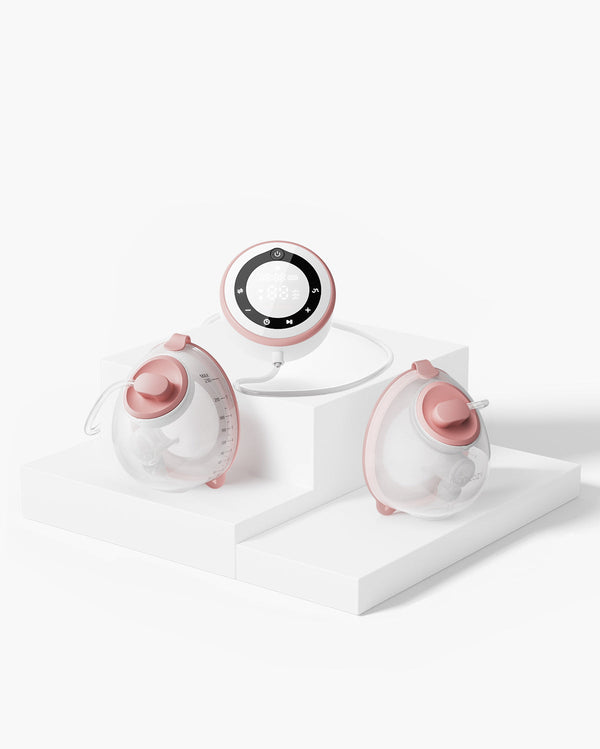
When breaks are tight, a hands-free wearable such as our Mobile Flow M9 can help you express at your desk without blocking the whole calendar. If discretion under work clothes matters, the ultra-slim Air 1 sits flatter in your bra than many cup-style wearables.


Label every container with date and time for nursery. Our breastmilk storage bags make fridge and freezer rotation simpler. Read breastfeeding essentials for working mums and our working-mums pump guide if you are still building the kit list.
How Long and How Often Should You Pump?
Most efficient sessions run 15 to 20 minutes with double pumping, plus two to five minutes after the spray slows. When you are learning, the NHS suggests allowing 30 to 45 minutes until the rhythm clicks.
Double pumping empties both sides faster than one breast then the other. A hands-free pumping bra holds the flanges so you can eat, hold the baby, or answer a message instead of staring at the collection cups.
Flange fit matters more than the highest suction setting. Pain means stop and resize. If output confuses you, read how much milk to pump and how long breasts refill. Breasts are never truly empty — they keep making milk between sessions.
Wash pump parts after use. Our cleaning guide covers safe, quick routines so you are not scrubbing valves at midnight every night.
Sample Pumping Schedules You Can Copy
These are starting points. Move a session when the day goes sideways. A missed pump is not failure — flexibility is the point.
Combo feeding at home (baby about 8 weeks)
| Time | Activity |
|---|---|
| 6:30 | Nurse |
| 7:00 | Pump 10 to 15 min (stash) |
| 9:30, 12:30, 15:30, 18:30, 21:30 | Nurse on cue |
| Overnight | Nurse as needed |
Working mum (baby about 4 months)
| Time | Activity |
|---|---|
| 7:00 | Nurse before commute |
| 10:00 | Pump 15 to 20 min — a wearable such as the M5 Smart fits a short break |
| 13:00 | Pump 15 to 20 min |
| 16:00 | Pump 15 to 20 min |
| 18:30 onwards | Nurse on reunion and overnight |
Browse our wearable breast pumps, hospital-grade range, electric pumps or read wearables for busy mums if you are still choosing.
When to Adjust Your Pumping Schedule
Sore or hard breasts, leaking between sessions, or repeated blocked ducts usually mean gaps are too long or a session got dropped one too many times. Pump to comfort, then add frequency before you drop overnight work in the early months.
To boost output, an extra morning pump after a feed for several days often works better than one marathon session. We do not recommend power-pumping protocols here — one sentence is enough: if supply worries you, ask a breastfeeding counsellor before you overhaul your day.
Weaning off pumping? Drop the least productive session every few days. Watch for engorgement. If you are exclusively expressing long term, our exclusive pumping guide covers gradual reduction in more detail.
Keep a simple phone note: tally nursing plus pumping for a day. Compare it to how your breasts feel and how much milk childcare uses. That daily removals tracker beats guessing.
Fever, flu-like aches, or a red painful wedge on the breast needs same-day advice from your GP, midwife or NHS 111 — not a higher suction setting.
FAQ
Do I need a pumping schedule if I am exclusively breastfeeding?
Not necessarily. If your baby feeds well at the breast and you are not apart for long stretches, you may never need a fixed pump routine. Add expressing only when you want a stash, relief, or prepare for work.
How often should I pump if I am also breastfeeding?
Many combo feeders manage two to four pump sessions a day once breastfeeding is established — often one after the morning feed plus sessions when you are apart from your baby.
When should I start pumping?
Usually not in week one unless there is a medical reason. From around four to six weeks, one optional daily pump after a feed is a common starting point if you want stored milk.
How long should I pump each session?
About 15 to 20 minutes with double pumping once practised, plus a few minutes after flow slows. Early sessions may take 30 to 45 minutes while you learn.
How often should I pump when I go back to work?
Aim for every three to four hours when separated — often two to three breaks in an eight-hour day — plus nursing when you are together.
Can I skip pumping at night?
If your baby nurses overnight, you may not need a separate night pump. If you are exclusively expressing or missing night feeds while apart, keep at least one overnight session early on unless your clinician advises otherwise.
Conclusion
A pumping schedule should support you, not stress you. Start with your goal, follow your baby's cues, and adjust when your body tells you the gaps are too long. If you are planning ahead, read our guide to when to buy a breast pump; if you are building a work rhythm, practise before day one and know your magic number of daily removals. And if you need a voice at 2 a.m., the helpline is still open.