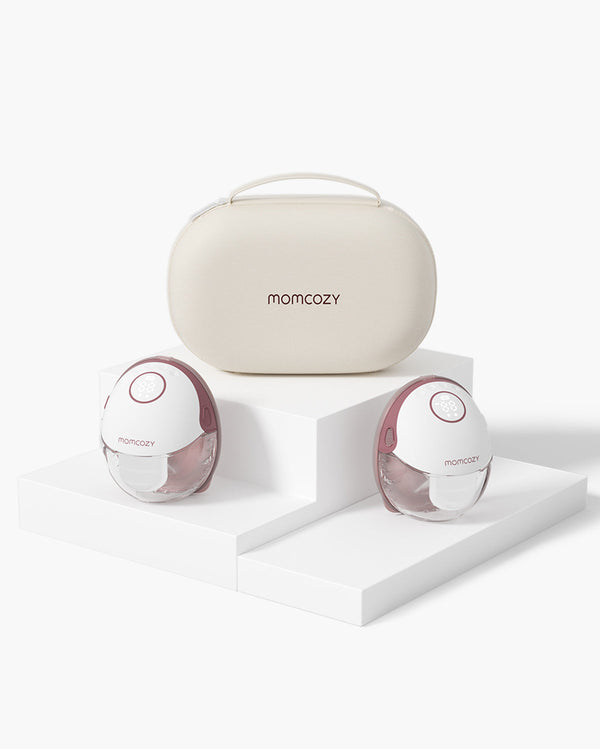
You sit on the sofa in a jumper. The wearable cups tip forward. Or you are at the dining table with both hands occupied, holding flanges that will not stay flush. Neither scene means your body is the wrong size for a pump.
Pumping with larger breasts is often a fit-and-support problem: the shield, the bra, and the angle. Cup size is usually a poor guide to flange size, and a poor guide to how much milk you can make. Quiet those three things, and the session often settles.
Key Takeaways
- Expressing with a fuller bust usually works better when the flange matches your nipple, a bra holds the cup still, and you are not sitting hunched. Cup size is usually a poor guide to flange size or suction.
- A flange that is too big can pull in areola, weaken the seal, and sting. Size down after measuring, rather than assuming a larger breast needs a larger shield.
- Wearable cups need enough bra depth and a band that does not crush the tunnel. If they keep tipping, loosen the band and check cup depth before you change anything else.
- Cup size is usually a poor guide to milk supply. Weight, posture, and incomplete emptying are more useful places to look than blaming the chest you have.
- Start suction low, add warmth and gentle compression on a well breast, and ask a midwife, health visitor or IBCLC to watch a session if pain or output stays off.
Why pumping with larger breasts feels different
Larger breasts change the mechanics of a session, not your right to a decent output. Weight pulls the shield off-centre. Wearable cups can crowd or tip. Sitting hunched to “see” the nipple strains your back and breaks the seal.
Cup size is usually a poor guide to millilitres. A G cup is not a promise of more milk, and a smaller cup is not a sentence of less. If someone sold you a pump on the bra tag alone, they started in the wrong place.
Are my breasts too big for a breast pump? Rarely as a body fact. What usually fails is the setup: a shield bought for the bra tag, a band cinched to keep a cup from sliding, or both hands holding flanges because nothing else will hold them. The same fuller bust can feed well at the breast with a supported hold, which is a different job from lining up a rigid tunnel. If latch is the bit that still feels awkward, how to breastfeed with big breasts is the attachment side of this, not a second pump lecture.
What you feel is real. What usually helps first is the kit and the angle, not a smaller chest.

Flange size is nipple size, not cup size
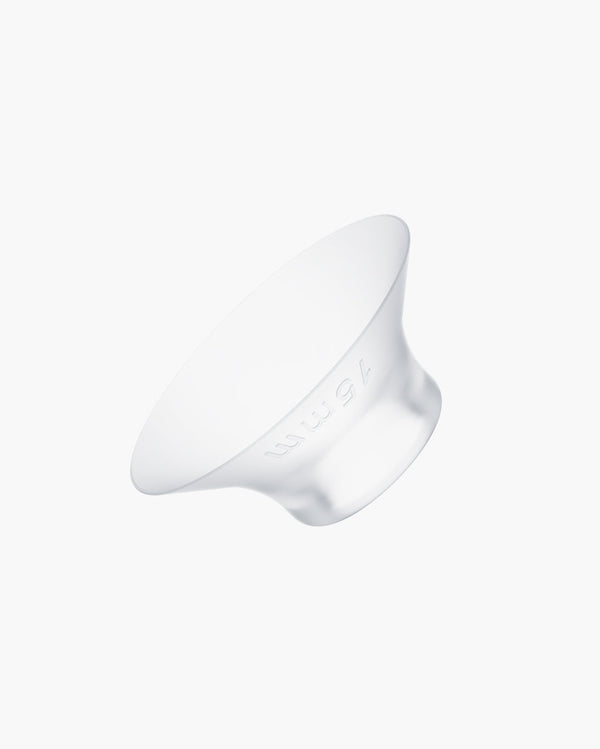
How big a breast pump flange should be depends on nipple diameter, not the number on your bra. Measure at the base of the nipple, in millimetres, and leave the areola out of it. A fuller bust can still need a smaller insert than the 24 mm shield that ships with many pumps. A smaller bust can need a wider tunnel. They are different measurements. NHS pages on expressing breast milk cover the wider how of expressing; flange millimetres come from your pump maker’s sizing card, then from what you see in the tunnel.
A larger nipple is a nipple measurement, not a cup-size problem. People looking for a bigger pump are often mixing the two up. Start with the nipple. Confirm in the tunnel while you pump.
- Before you pump, let the nipple sit at rest. Measure across the base. Do both sides. They can differ.
- Start with the closest tunnel or insert on the card that came with your pump. A paper ruler or the maker’s guide is a starting point, not a verdict. You still try neighbouring sizes on the pump.
- Watch a few minutes of suction. The nipple should stay centred and move freely. Little areola should enter the tunnel.
- If it rubs, size up a step. If a lot of darker skin is drawn in, or the seal feels sloppy, size down.
- Re-check in the early weeks, and again if pumping starts to sting. Nipples often swell later in the same session, so a fit that looked right at the start can feel tight before you finish.
Picking a 27 or 28 mm shield because the cup is large is a frequent mix-up in this search. Size the tunnel to the nipple instead.

Signs your breast pump flange is too big
If you are asking whether your breast pump flange is too big, look at the tunnel, not the bra tag. Too much areola in the tunnel is the usual giveaway. The nipple may bounce around, the seal may hiss, and the breast can feel poorly emptied even after a long sit.
- A wide ring of areola disappears into the flange.
- The nipple rubs the sides because it is not centred, or it looks swollen and misshapen afterwards.
- Suction drops when you lean, talk, or the bottle starts to fill.
- You chose a “large” shield for a large cup and the session got worse, not better.
A flange that is too small pinches and can blanch the nipple. A flange that is too big pulls tissue you did not mean to move. Neither is the safer default. Change size first, then suction. If it still hurts after a neighbouring size, check the maker’s assembly notes and fit — a breast pump that is not working is often a parts or seal problem, not a reason to twist the vacuum up. Pain that spreads, a hot red patch, or a flu-like feeling is NHS advice on breast pain and a call to your midwife, GP or NHS 111, not a wider tunnel.
A bra that holds the cup still without crushing
On a fuller bust, the bra is doing the holding so your hands can rest or compress. It needs enough cup depth for an in-bra pump to sit upright, and a band that does not carve a groove or squash the tunnel.
Under a work blouse, a tight band is a common reason a wearable stings on a low setting. Loosen first. If the cup still tips, you need more depth or a firmer hold around the cup, not a smaller band “for support”.
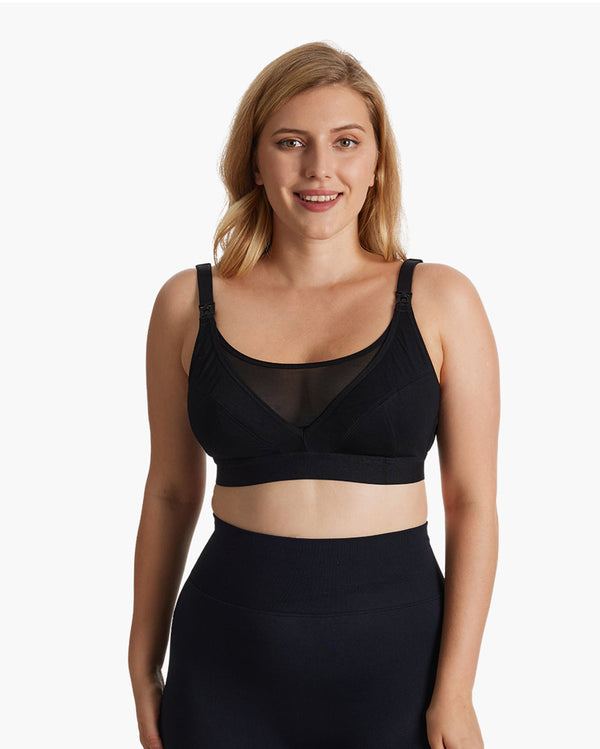
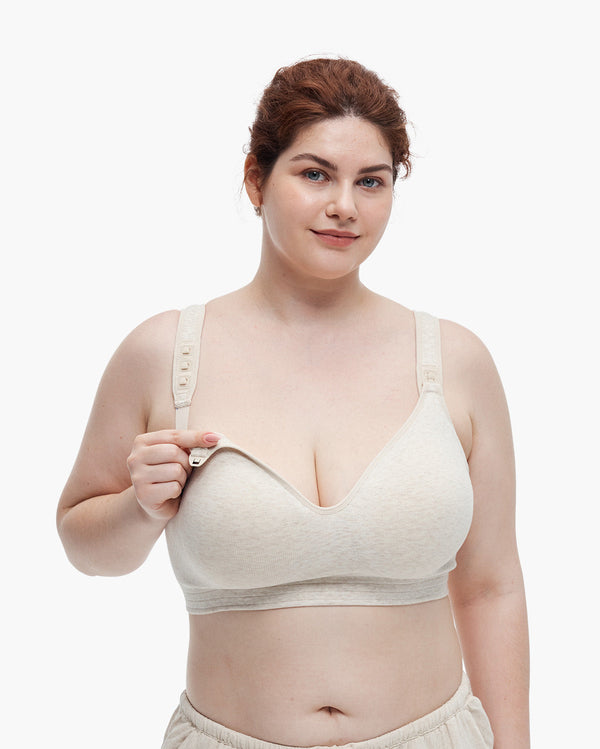
A pumping bra (high-street or specialist) should hold the cup without a red groove. Everyday nursing bras for large breasts still matter between sessions. They are not a substitute for a pumping bra while the cups are in.
Member price
£29.99Code Save 20%
Positions, angle, and supporting the breast
Bring the pump to the breast at rest. Do not hoist the breast into a cup and hope the seal survives when you let go.
Sit in a dining chair with your back supported. A slight forward lean can help if slouching breaks the seal. A rolled muslin or tea towel under the breast can lift the nipple into view without you folding in half. Watch for leaks at the underside of the shield: that is often angle, not “too much milk”.
Hands-on work around the pump still matters on a fuller bust. That is compression and support, not yanking tissue into the tunnel.
- A slow massage toward the nipple before you start, on a well breast only.
- Once milk is moving, compress with a C-shape behind the flange until the spray slows, then ease off.
- If double pumping feels unmanageable today, do one side properly rather than two badly.
A long shape or extra skin is not a character flaw. Support from below, then line up. Skip heat or digging if the breast is already angry.
Wearable or sit-down: choosing a pump that stays sealed
The kit that stays centred and empties you without a fight is the one worth using. Fit and support beat a “hospital-grade” sticker.
| Wearable, in-bra | Sit-down double electric (motor outside the bra) | |
|---|---|---|
| When it helps | Short work-room sessions once alignment is stable | You can see the tunnel, adjust angle, and support the breast with a hand |
| Watch-outs | Cups need bra depth; a tight band crushes the tunnel; 320 g cups can tip on a fuller bust | Less discreet; bottles can pull the flange down as they fill |
| Honest pick | Fine if the cup stays flush while you sit and stand | Easier to see the tunnel if in-bra cups keep breaking the seal |
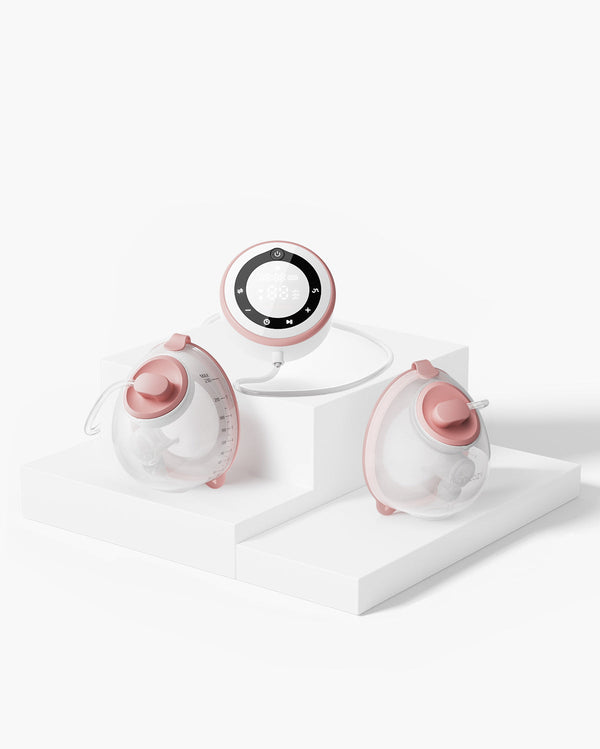
Look for a range of inserts, a seal you can check, and a bra that can actually hold the cup. A wearable breast pump is realistic on a fuller bust when those three are true. If they are not, keep in-bra cups for the easy sessions and use a motor that sits outside the bra when you need a clearer view of the tunnel, including a hospital-hire pump if you are building supply.
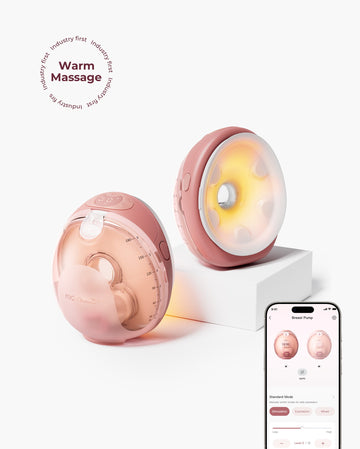
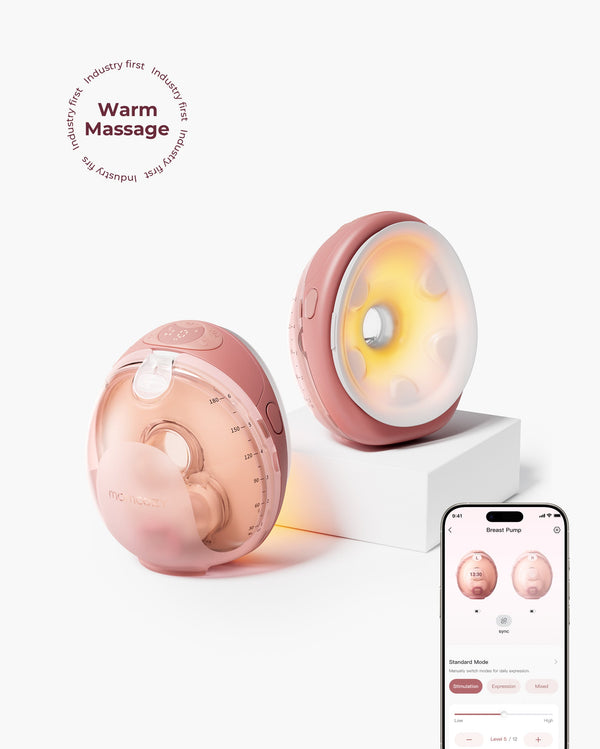
Shopping notes (kit, not treatment). Generic first: a sizing card or millimetre ruler, a pumping bra with real cup depth, and either a sit-down double electric or a wearable that stays flush. High-street pumping bras and NHS-hire motors count. If in-bra cups still wander after the bra and angle are sorted, a sit-down double electric is the shopping choice for sessions where output matters. A second in-bra cup rarely fixes a shallow bra. On our UK shop, a Momcozy Nipple Ruler is one card to start from; a Cool Breeze pumping and nursing bra is one plus-size cut for holding cups; a Busty Cotton nursing bra is everyday support when the cups are off; Wellness 1 is one in-bra option with wraparound warmth at 37°C, 39°C or 41°C and 24 mm plus 17 / 19 / 21 mm inserts. In-bra cups around 320 g can still tip on a fuller bust. Built-in warmth is a comfort feature on a well breast, not a medical device.
Member price
£29.99Code Save 20%
Let-down, suction, and emptying larger tissue
Suction need is not set by cup size. Use the highest setting you can sit with, not the maximum number on the dial. Start low. Wait for let-down. Then ease up only while it stays comfortable.
A cold shield in a British kitchen is one reason people twist the vacuum up. A warm flannel or a short shower on a well breast can help the first minute stay soft. Skip heat if the breast is red, hot, or you feel flu-like. No pump treats mastitis.
Hands-on compressions still help the sides empty. Watch comfort and flow, not a round millilitre target copied from a forum. Typical session volume sits in how much milk to pump once fit is right. If output stays low after flange, bra, and frequency are sorted, that is a midwife, health visitor or IBCLC conversation. If a local lump is not easing, speak to your midwife, health visitor or GP rather than adding extra high-vacuum sessions. If you feel flu-like or the redness spreads, follow NHS guidance on mastitis and contact your GP or NHS 111.
FAQ: Quick Answers to Common Questions
What if each nipple measures a different size?
Use the insert that matches that side. Many mums keep two sizes in the bag and swap when they switch breasts. Do not average the millimetres and hope one tunnel fits both.
Does breast size affect how much milk you pump?
Not in a reliable way. Cup size is usually a poor guide. Output depends on how well and how often milk is removed, plus how your body responds. A small pumped amount is not, on its own, proof of low supply.
Why does a flange that felt fine at the start sting later in the same session?
Nipples often swell after a few minutes of suction. Pause, check the tunnel, and try the next size down on the maker’s card if extra skin is being pulled in. If sting turns into spreading pain, heat, or you feel flu-like, stop the session and follow NHS advice on breast pain rather than pushing through.
What if I only have time to pump one side at work?
One side emptied well usually beats two rushed, leaky sides. Next session, start with the fuller breast. Keep the skipped side comfortable with a feed or a later pump, and talk to a midwife, health visitor or IBCLC if one side stays painfully full.
Can wearable cups stay put on a fuller bust?
They can, if the bra has depth and the band is not carving a groove. A tight band under a work blouse is a common reason the tunnel stings on a low setting — loosen first, then check whether the cup is sitting upright.
Does pumping make your breasts bigger?
Pumping does not enlarge the breast the way people mean when they ask this. Frequent, effective removal tells the body to keep making milk. Fullness after a session is milk and tissue swelling, and it settles.
Conclusion
Expressing with a fuller bust gets kinder when you stop choosing kit by cup size. Measure the nipple. Hold the cup still. Sit so the seal survives. Keep suction inside what you can stand.
Ask a midwife, health visitor or the National Breastfeeding Helpline on 0300 100 0212 if pain or output will not settle.