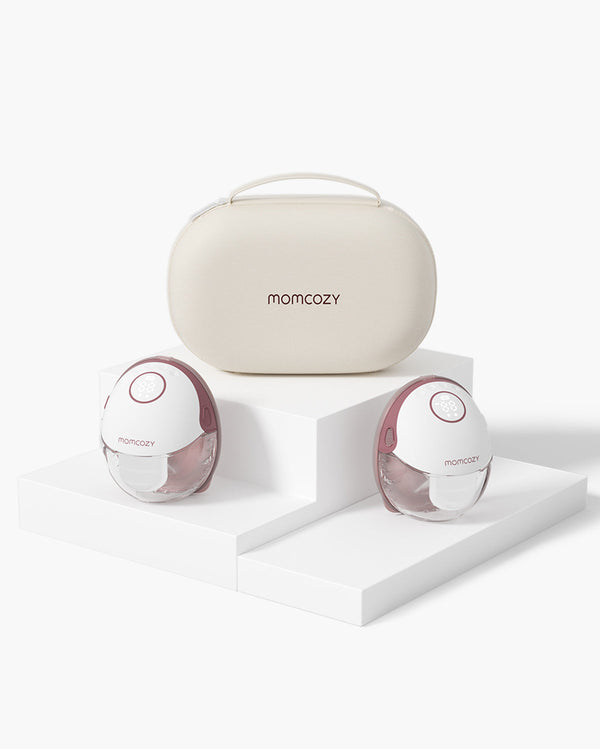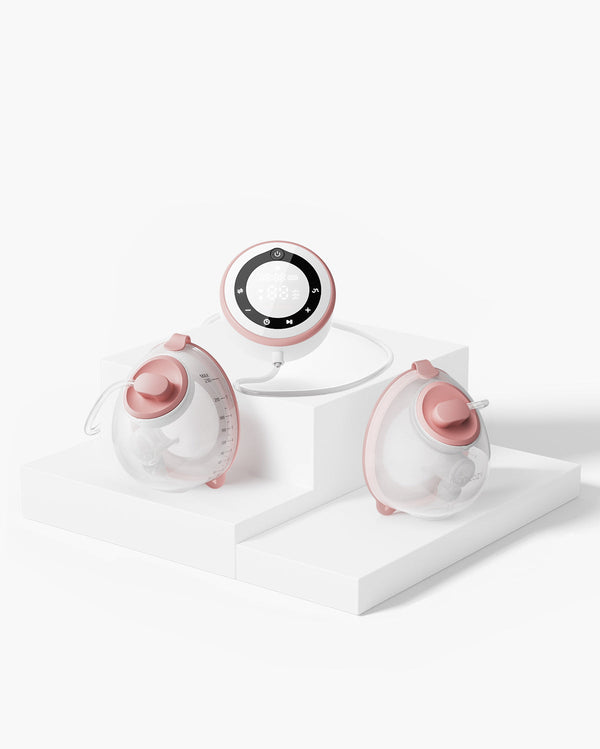
You sit down for a lunch-break express or you slip a wearable cup under a jumper before the next meeting. The first tug is a familiar one. Then it becomes a sting and you begin to count the minutes.
This is a question I bet many of us ask when we experience painful pumping: why does pumping hurt this much? It's possible for a short stretch to occur at the beginning. If the pain persists, or the nipple looks pinched afterwards, stop and change something rather than pushing through. Fit, suction or an already unhappy breast is typically behind it.
Key Takeaways
- Pumping is not expected to keep hurting: a short stretch at the start can be okay; pain after the first minute or two means stop and readjust.
- The most frequent causes of pumping pain are a flange that doesn't fit and suction set too high. Increasing the vacuum does not necessarily increase milk output; pump manufacturer guidance and common lactation support advice both point this way.
- Nipple or breast pain after pumping is not “just getting used to it”. It can follow friction, a session that ran too long, or a breast that is full, possibly blocked or inflamed.
- Fix the session first: centre the nipple, test another flange size, decrease the suction, shorten the pump and only use warmth on a well breast.
- In the UK, contact your midwife, health visitor or the National Breastfeeding Helpline (check the current number on their site; it is often listed as 0300 100 0212). See your GP or NHS 111 if you feel flu-like, your nipple is damaged, or you are no better within the window NHS guidance describes, commonly 12 to 24 hours.
Should pumping hurt?
Pumping is not expected to be painful for most people, although a brief tug or tingle at the start can be common. Persistent pain is not something to push through.
Once milk is flowing, a comfortable pump feels like a working rhythm: a pull, a stretch, then a pattern you can sit with. It should not usually pinch, rub or burn.
Some mums feel about the 10-15 seconds where they feel their tissue move or milk let down as it's beginning to happen. This can quickly disappear. Any pain lasting beyond the first few minutes, creating anxiety about the next session or white, purple, misshapen or cracked nipple is a sign of a need for change, not grit.
Pumping can still hurt when breastfeeding is OK. A baby's mouth is not a set thing. A flange is. If the session continues to be painful, follow NHS advice on breast pain and your pump manufacturer's instructions rather than turning the vacuum up.

Why does pumping hurt?
Pumping pain is often linked to a shield that does not fit or suction that is too high, but fullness, a possible blocked duct, inflammation or nipple damage can also play a part. Check your pump instructions first. If pain continues or you feel unwell, follow advice from your midwife, health visitor, GP or NHS 111.
People also refer to ducts that are clogged or plugged. In the UK, blocked milk duct is the common term and it is the same problem.
- If it hurts in the first minute: re-centre the nipple, lower the suction and check whether the flange is rubbing.
- If pain starts later in the session: stop and look for swelling, a pinched nipple, a tight bra, or a flange that felt fine at the start but now feels snug.
- If the breast feels full, lumpy or hot, or you feel flu-like: stop home troubleshooting and follow NHS guidance, or contact your midwife, GP or NHS 111.
- If yesterday was fine and today suddenly stings: check for a worn valve, a missed session, a different pump setup or a change in fullness before increasing suction.
Incorrect flange size
If it's too small, the nipple rubs the tunnel. If it's too big areola will be pulled in and will then swell or blister. Either way you get sore nipples when pumping, not a “stronger” session.
If you're considering a new flange, start with a simple fit check of the nipple base at rest (not the areola). A nipple ruler or a printable sizing guide can help you estimate a starting size, but comfort during the session matters more than the number on a card. If you want a shopping example, some parents use tools such as the Momcozy Nipple Ruler, but this is a brand option rather than medical guidance. Always confirm fit during pumping and follow your pump manual or a lactation professional's advice if pain continues.
Suction set too high
An electric breast pump hurts more when vacuum is the only lever you touch. If the stimulation mode is left on for too long, or if a 30-minute sit was done because it was thought that more means more milk, this is the same. A higher setting can also work against you: pain may slow let-down. Pump manufacturer guidance and common lactation support advice both say more vacuum does not necessarily mean more milk.
Start low. Turn up only to a level that you can handle without flinching. If output drops when you ease off, treat it as a breast pump that is not working because of fit or let-down, not as a reason to go back to max.
Wearable cups sitting wrong
It is easy to dislodge the cup under the jumper, and the tunnel cannot be viewed like it can with a bottle pump on the table.
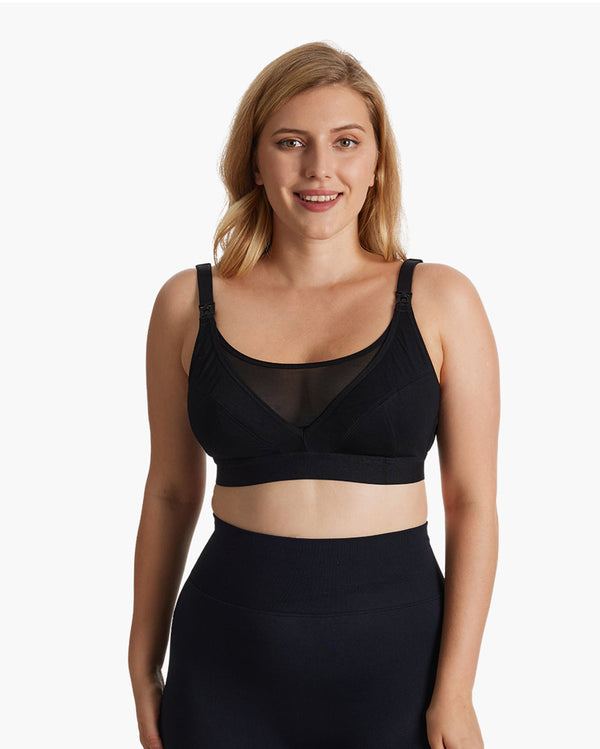
If you use wearable cups, choose a bra that holds the cup steady without compressing the tunnel. The useful tests are stable support, enough stretch and no pressure groove across the breast. As one brand option, the Momcozy Cool Breeze pumping and nursing bra is cut for in-bra cups, with mesh support and bamboo-soft fabric so you are not cinching the chest to keep the cup centred.
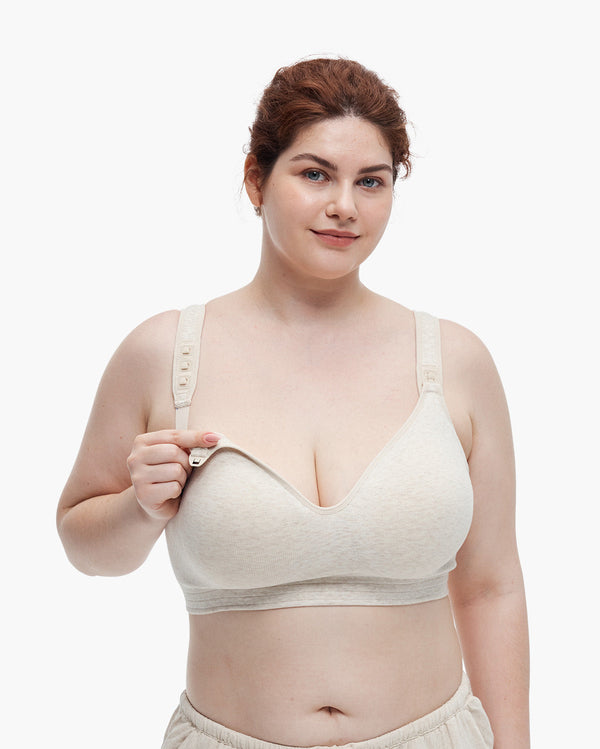
For the rest of the day, a well-fitting nursing bra should support without cutting in. As one brand option, a Momcozy Busty Cotton Nursing Bra is cotton against tender skin, cut for a fuller bust rather than a smaller band “for support”. If still rubbing, back to flange size, not tighter bra.
Member price
£29.99Code Save 20%
Why does pumping hurt all of a sudden?
A fine session yesterday and a sting today is a clue, not a character flaw. Each week at home may be a new fit challenge when a pump from the hospital is not the same as the one at home. An uncomfortable routine can be turned upside down by a worn valve, a missed work express, a growth-spurt night, or a lump in the breast this morning.
When the change is a tender lump, it can be a blocked milk duct, but only a midwife, GP or infant-feeding specialist can assess that. Do not add extra emptying to "clear it".
A full breast, a blocked duct, or mastitis
Breast pumping will hurt if the breast is angry. During engorgement, the nipple will be stiff to draw. A blocked duct can cause a localised ache. The entire session may seem impossible as well as the flu-like feeling you may get from mastitis.
If nipples are already damaged, or if there is a bleb, or if there is a change in colour, often with cold; the plan is not to “turn it up” but to figure out another way. White nipple and vasospasm may be a form of colour change after a pump. A deep ache in the breast is NOT a rubbed nipple. Never make a diagnosis based on an article.
| What you feel | More likely | First move |
|---|---|---|
| Pinch or rub during the session | Flange fit, centring, or suction | Stop, drop suction, re-centre, try a neighbouring size |
| Nipple sore after cups come off, fades in minutes | Friction from that session | Shorter next sit; air the skin; cream only if intact |
| One-sided lump or deep ache after pumping | Fullness or a possible blocked duct | Usual feeds; no digging; do not force-empty |
| Hot, spreading redness, flu-like | Needs a same-day check (may be mastitis) | GP or NHS 111; switch warmth off |

Why do my nipples and breasts hurt after pumping?
A little rough and tumble can be followed by tenderness that fades in minutes. If the pain persists or the breast still hurts after pumping, it's not something that should be endured.
What causes nipple pain while pumping?
Friction, a flange that was just a bit off, or suction that was just right for 10 minutes, and a little too much for 20. After taking the cups off, skin continues to complain.
Why is my breast sore after pumping?
Residual fullness, a possible blocked duct, engorgement or inflammation can sit behind it, rather than “just the pump”. Minutes of ordinary tenderness are different to hours of a hot lump or shooting pain.
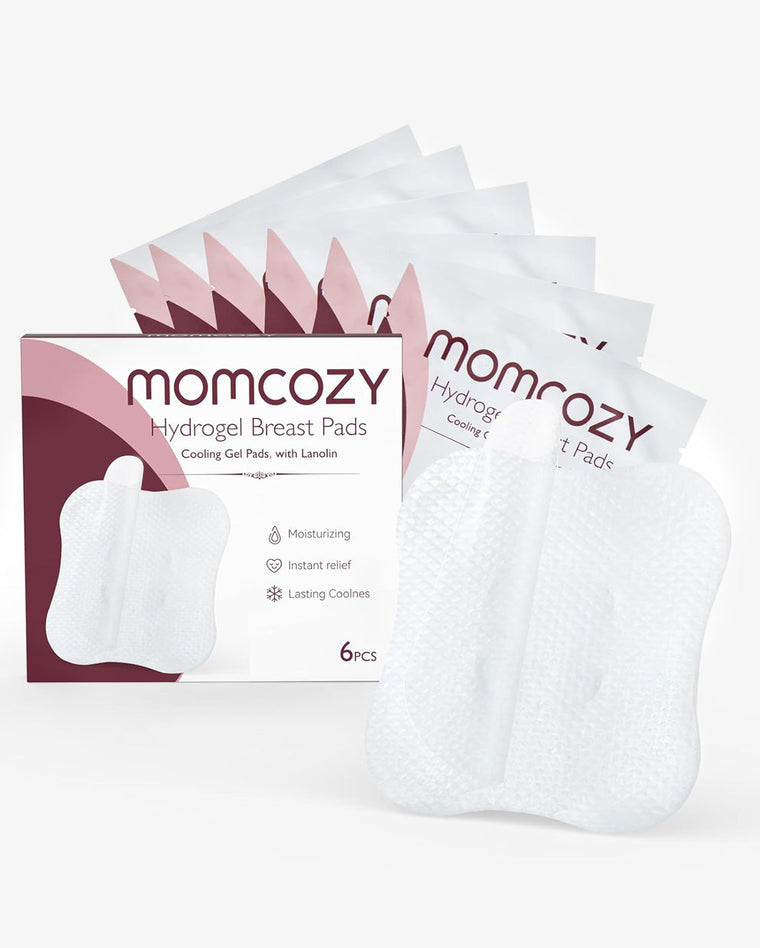
If the breast is otherwise well, and just a little achy, a cold muslin or a fridge-cool gel pad can take the edge off after a usual session. As one brand option, Momcozy Soothing Gel Pads are made for that short sit. For ordinary over-fullness with no infection signs, some mums use cabbage leaves for engorgement as comfort only; they are not a treatment and they do not replace clinical advice. Avoid cold packs when the breast is hot, red and/or if you feel unwell.
If it continues to hurt after, discontinue that session's vacuum. Protect supply with a gentler express or a feed. Do not push through a full-length pump on an injured nipple. Check the pack or ask a pharmacist, but if you can normally take paracetamol or ibuprofen then this can help to ease regular aches.
How to reduce pain while pumping
Many mums find it helps to fit the flange, reduce the suction level and keep the pump session short to minimise the discomfort of pumping. Endurance is not a technique!
- Stop. Drop suction. Re-centre the nipple before you finish on damaged skin.
- Refit the flange. Measure at rest, then a neighbouring size, then re-measure half way, since nipples tend to swell.
- Make sessions shorter and more frequent than one long high vacuum sit. In general, frequency is greater than max suction.
- If you have a warm flannel or a shower before you begin, you'll be able to have a lower suction on a well breast. If the breast is hot and red, or if it feels like a flu, skip the heat.
- A little hand expression can help ease the nipple if the breast is tight. Lubricant can only be used if it is recommended by the pump manufacturer and it will not compromise the seal.
- If you have a power pumping schedule, remove the flanges during the breaks to not leave tissue in vacuum.
If the suction drops and there is panic about yield, how much milk to pump in a normal session might be more of a question than cranking the vacuum again.
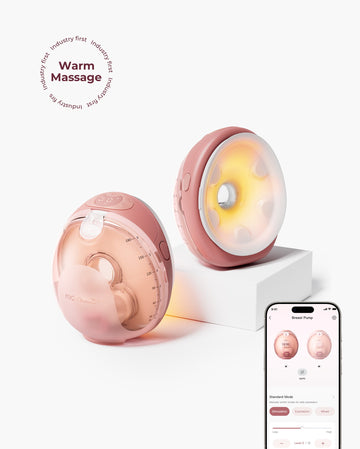
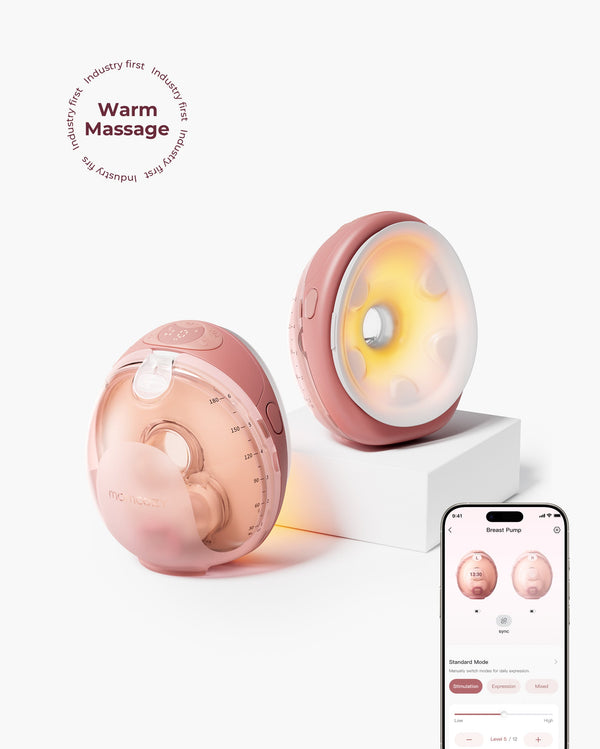
Warmth before a usual session can be a flannel or shower first. A cold shield is one reason people twist the suction up. If you want that warmth in the cup rather than a kettle run, one brand option is Momcozy Wellness 1. It is built around a more comfortable express, not around more vacuum: wraparound warmth at 37°C, 39°C or 41°C, a SoftPulse micro-pulse closer to a mouth than a hard tug, and five-zone massage that follows the same rhythm as the suction. Comfort here means a gentler session. It does not mean more milk from a higher number, and it is not treatment.
Member price
£299.99Code Save 25%
Member price
From£13.99Code Save 20%
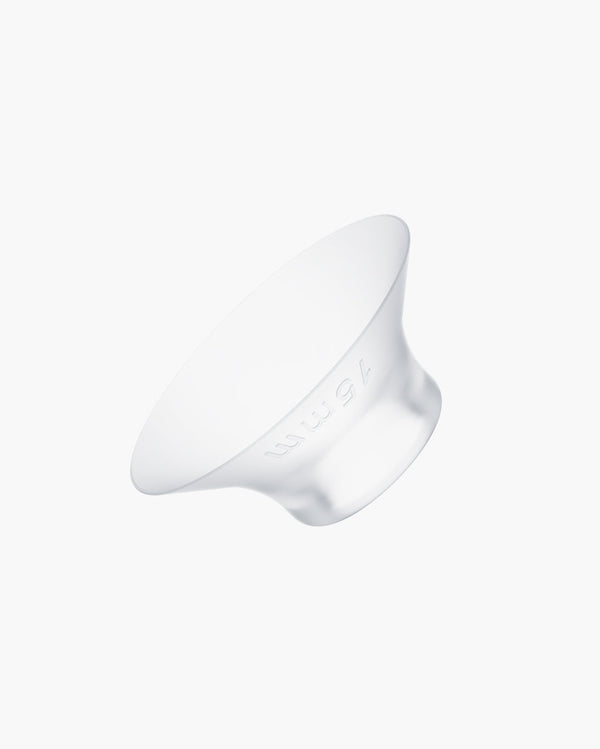
Switch warmth and massage off if the breast is tender, red or you feel flu-like. DoubleFit flanges ship with a 24 mm shield plus 17 / 19 / 21 mm inserts, and a clear top helps you check alignment under a jumper. Fit still beats any heat setting, including on a warm-massage breast pump.
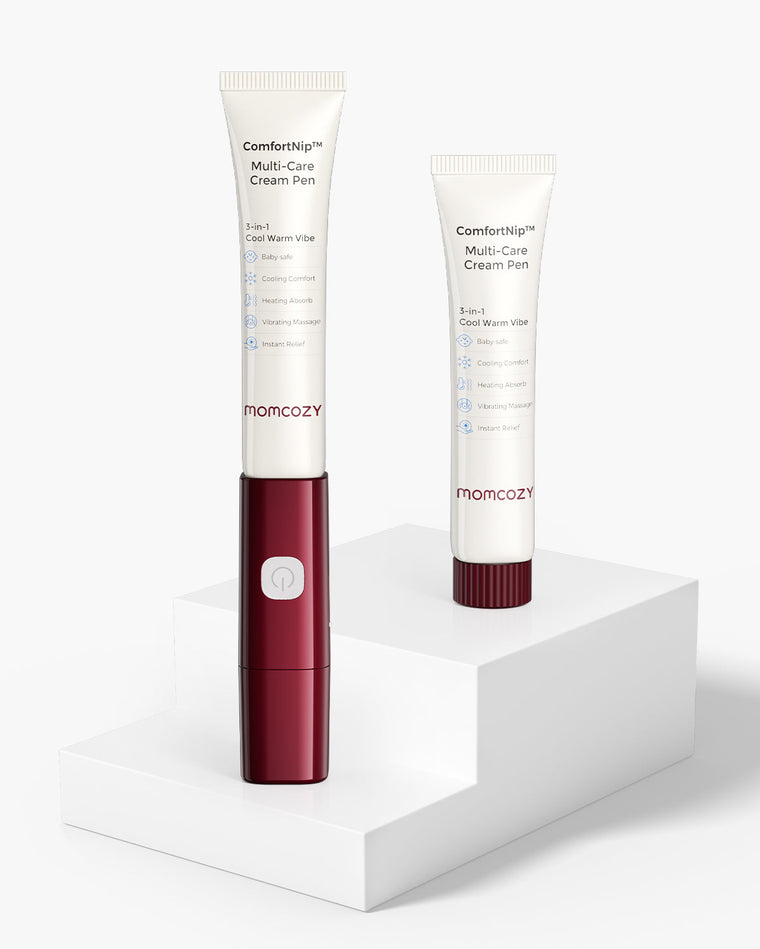
Aftercare for rubbed nipples is air, then a thin layer of cream on intact skin if you use one. As one brand option, the Momcozy ComfortNip Multi-Care Nipple Care Pen is a between-session cream, not a treatment for broken skin, thrush or mastitis. Get a skilled latch or pump review if the same damage keeps coming back.
Why does pumping hurt my back?
Common causes of pumping pain often include a flange that does not fit well and suction that is set too high. For many parents, increasing the vacuum does not necessarily improve milk output, and it may make the session less comfortable. Check your pump manufacturer's guidance first, and if pain continues, follow NHS guidance or ask a midwife, health visitor or lactation professional for individual advice.
You're hunching over bottles, the height of the table is too low, or you're getting a heavy kit and watching bottles rather than sitting back. Feet flat. Pump at mid-torso. If wearing cups, sit down, do not hover. When it comes to the pain in your chair, it's not a crisis. Severe back pain suddenly accompanied with fever is GP's business.
When to get help in the UK
Don't call a pump setting, call a person if pain isn't a quick tweak.
Same day: fever, shivers, spreading redness, feeling very unwell or a nipple that is bleeding or misshapen after each session. Seek advice from your GP or NHS guidance on mastitis and NHS 111. NHS guidance commonly uses a 12 to 24 hour window if you are no better, or sooner if you feel worse.
This week: pain after the first few moments while pumping, damaged nipples, or baby not transferring milk. Contact your midwife, health visitor, NCT, local infant-feeding team or the National Breastfeeding Helpline (check the current number on their site; it is often listed as 0300 100 0212). The Breastfeeding Network has some straightforward information about pain awaiting an appointment.
If breast symptoms are accompanied by vomiting, confusion or dizziness, do not wait! This is urgent care. Usually, continuing feeding and/or expressing comfort is appropriate, unless directed otherwise by a clinician. Avoid holding a painful vacuum on a damaged nipple.
FAQ: Quick Answers to Common Questions
Should pumping hurt, and how should it feel if everything is working?
It is not expected to keep hurting. A tug and a brief stretch can be normal. If a pinch, rub, burn or pain lasts past the first couple of minutes, stop and change fit or suction. A working session feels like a rhythm you can sit with, not a test of will.
Why does pumping hurt all of a sudden?
A change in the kit or the breast: a swollen nipple, a worn valve, a skipped session or a lump that was not there yesterday. In cases of changing from a hospital pump to a home pump, the size of the shield may not correspond. A new lump or flu-like feeling is a reason to call.
Why do my nipples hurt after pumping?
The tunnel was likely too hard, too long or too far off to the side. That can be followed by tenderness that only lasts a short while. If cracks, blisters or colour change occur, a fit review is required and if they persist, a midwife or an infant-feeding specialist. Once the cause is resolved, cream follows.
Why does my breast still hurt after pumping?
A nipple that is rubbed and a sore, full or lumpy breast are two separate issues. These can be residual fullness, duct blockage or inflammation. If it is hot, red or makes you feel unwell, please get medical advice from your GP or NHS 111.
If it hurts, should I stop pumping?
End vacuum of that session. Do NOT complete "just to empty". Protect supply with a gentler express or a feed, then fix fit and suction before the next sit.
Is it more painful to pump than to breastfeed?
It can, for a flange doesn't stretch like a mouth. It can also cause less pain if there was a poor attachment at the breast. These should not keep aching. Only compare the two to determine what caused them; not to determine which pain to take on.
Is 30 minutes too long to pump?
It may be, when the suction is high or milk has slowed. Many mums prefer to pick up a shorter session and another one later than a long grind. Look for comfort and flow, DO NOT look for the round number on your phone.
Is there a link between blocked milk ducts and post pumping breast pain?
Yes. This painful or tender lump may feel sore during and after a session. Continue normal feeding/expressing routine. Avoid digging and do not increase the number of pumps. Get medical advice if you think you might have the flu, or if you have not improved after the window NHS guidance describes, commonly 12 to 24 hours.
Why does an electric breast pump hurt even on a low setting?
Fit is still the initial suspect, including a size that narrows down as the nipple increases. A tight bra or an off-centre cup will sting at low vacuum also. If the band leaves the grooves, loosen the band or swap to a better-fitting nursing bra that does not cut in. If every setting still hurts, stop and get the pump and breasts checked.
Why does a wearable pump hurt under my bra?
The cup tends to knock off-centre and a tight band can crush the tunnel. Align, release and verify flange size. A well-fitting pumping and nursing bra should hold the cup without a crush. Do not turn suction up first.
Conclusion
Pumping is not expected to keep hurting. Flange fit and lower suction often settle the session. Pain that stays, spreads or makes you unwell is not a pump setting.
On an ordinary day, comfort is the point, not pushing through pain. Measure before you order another flange size. A pumping or nursing bra should not leave red grooves. Brand options can help with fit and comfort; they do not treat mastitis.
If you are in any doubt, consult a midwife, health visitor or GP. A new lump needs a skilled check, not another painful session.